

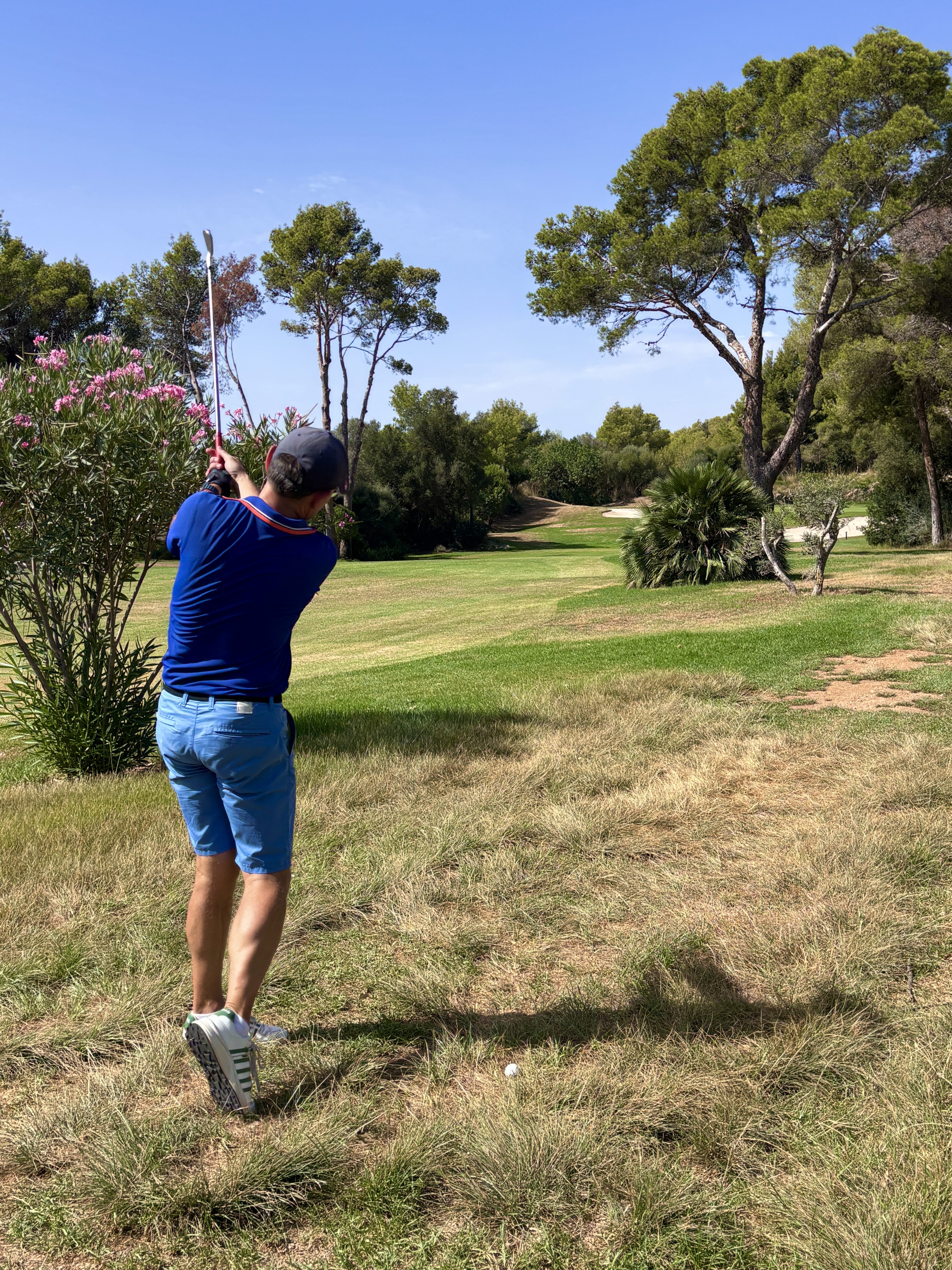
Many golfers know approximately how far they hit each club. Far fewer know how high their golf balls actually fly.
This information usually becomes important only when a branch, hedge, wall or another boundary restricts the ball flight.
In these situations, it is not enough to know that a 7-iron normally carries a certain distance. The golfer also needs to estimate the launch angle, how the ball gains height over distance and what height it will have at a particular point.
Personal height control therefore does not mean hitting every ball at exactly the same height. It means understanding your own ball flight realistically and allowing for its normal variation when making a decision.
Club distance alone does not describe the ball flight
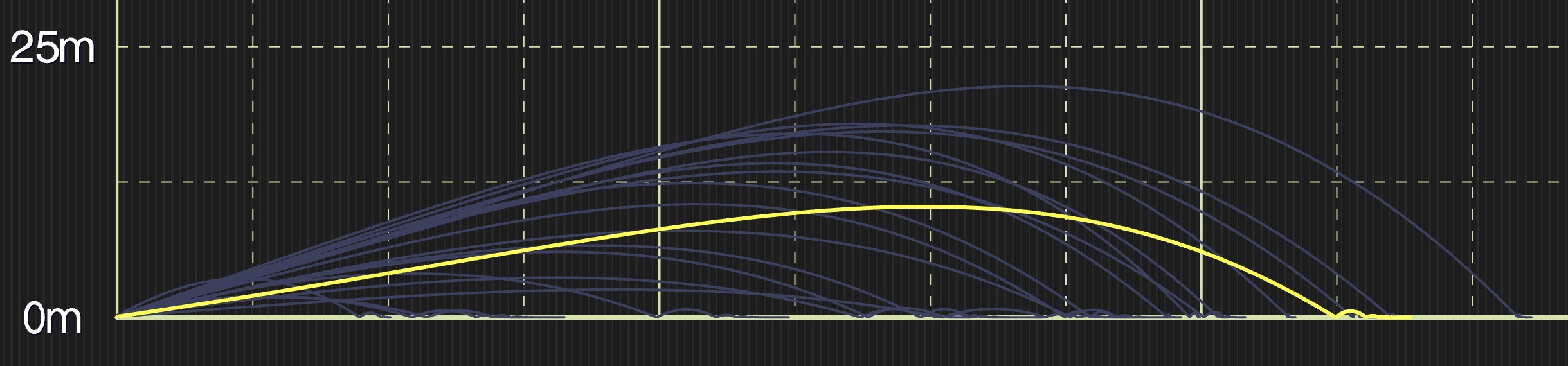
A golfer may know that their 7-iron carries about 130 metres. But this does not yet tell them whether the ball will fit underneath a branch or clear an uphill bank early enough.
Further information is needed:
- What launch angle does the ball start with?
- How quickly does it gain height?
- Where does it reach its highest point?
- How much does this profile vary across several attempts?
Two shots with the same total distance can have very different heights during the early part of the flight. Personal ball-flight knowledge should therefore not end with carry distance.
We explain how launch angle, early height development and height at a critical distance work together in Launch windows and ball-flight height profile in golf.
Every golfer has a personal height profile
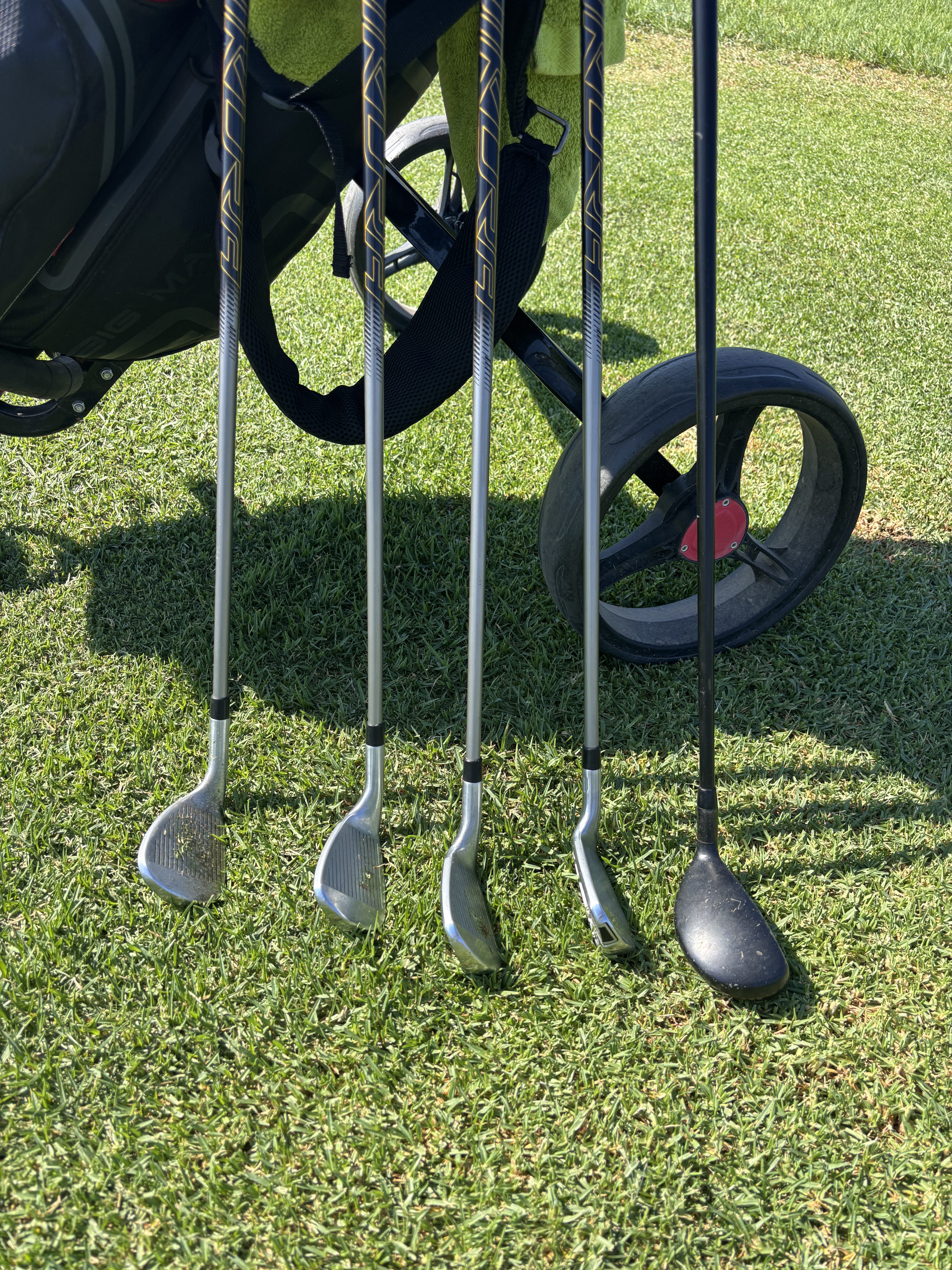
Ball flight is created by the interaction of club, speed, strike location, dynamic loft, spin and lie.
These factors differ from golfer to golfer. There is therefore no universal ball-flight height that applies to every player using the same club.
A golfer with lower ball speed may hit a 7-iron lower and shorter than another player. With a higher-speed player, launch angle, spin and the later height profile may develop differently. The ball may therefore gain height more quickly or reach its apex at a different point in the trajectory.
Differences also occur within a golfer’s own shot series. A well-struck ball can fly very differently from a thin, heavy or off-centre strike. Ball start, speed, spin, height and distance can all change at the same time.
Key point: A decision should be based not on the theoretical trajectory of a club, but on the ball flight the golfer actually produces under real conditions.
We explore why the same club can produce different height profiles in Why the same golf club can produce different ball-flight heights.
One shot is not enough
One particularly good attempt can create a misleading impression.
If that ball flies exactly through a narrow window, it still does not mean that the golfer can reproduce the same height profile reliably.
Only several shots show what is genuinely typical. They reveal:
- how much the ball start varies,
- which heights are reached most often,
- which variations are normal,
- and how much safety margin a playable window requires.
Personal height control is therefore not created by the best shot. It develops from a realistic understanding of the entire shot series.
We explain how a golfer’s normal variation should be included in planning in Safety margin and margin for error in golf.
The early part of the ball flight is especially important
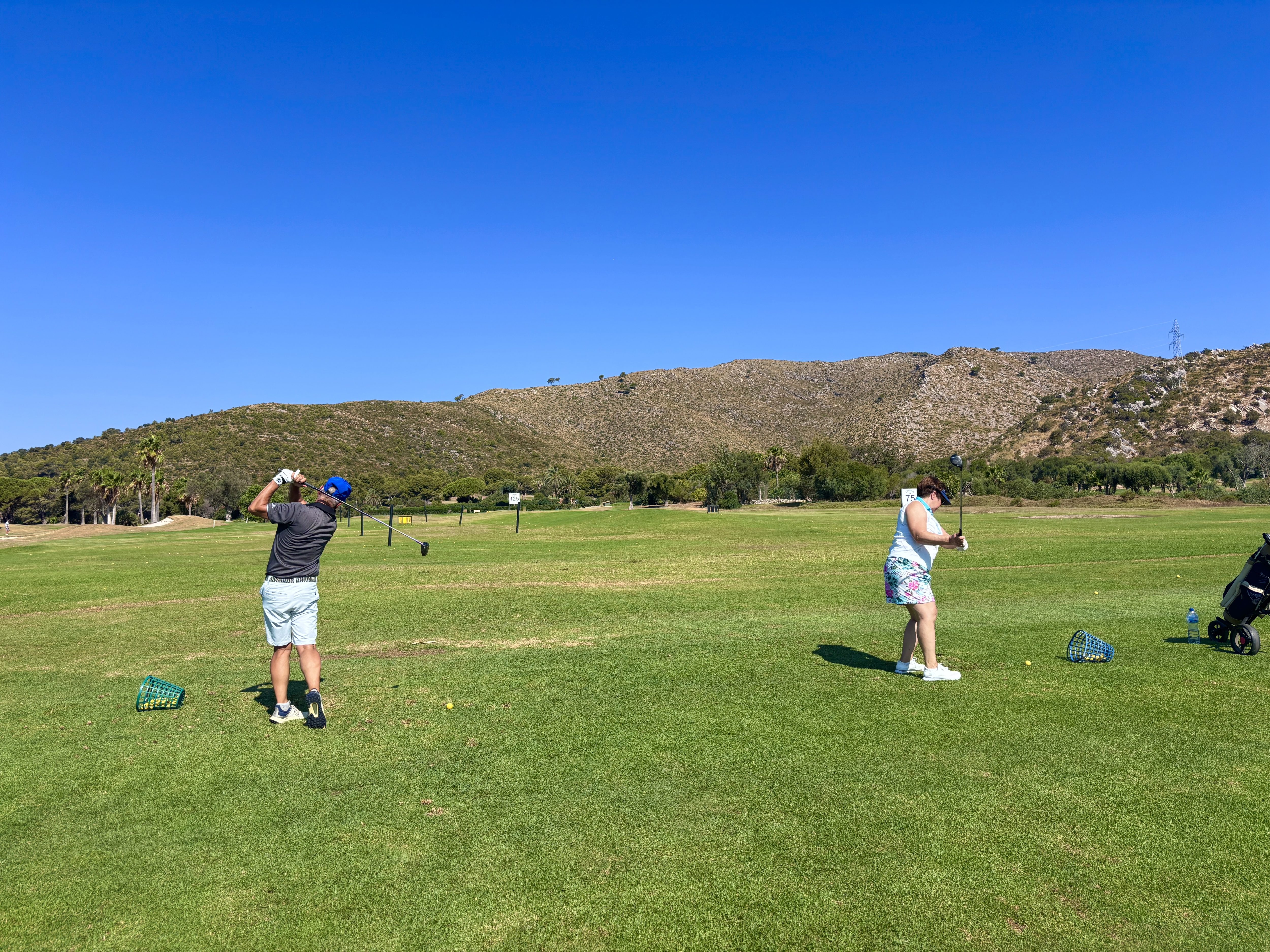
On the driving range, golfers often watch the complete ball flight until it lands. But when playing through a window, the first few metres can already be decisive.
If a branch is directly in front of the ball, the ball needs to remain below that boundary immediately after impact. If the boundary is farther away, what matters is how much height the ball has gained by the time it reaches that point.
A golfer should therefore not only know how high the ball flies overall. They should also understand how its height develops over distance.
A low start can later develop into a significantly higher ball flight. Conversely, the ball may remain lower than expected if ball speed, launch angle, spin or strike location differ from the golfer’s prediction.
We explain how this development connects with upper and lower boundaries in How to read height corridors in golf.
Different clubs create different height profiles

Short irons, long irons, hybrids and fairway woods differ in more than distance.
They can launch the ball at different angles, gain height at different rates and reach maximum height at different points in the trajectory.
A longer club is therefore not automatically the better choice for a low shot. Equally, a shorter club does not guarantee that the ball will safely clear an early boundary.
The decision needs to fit the golfer’s personal ball flight. A club that launches low for one golfer may fly considerably higher for another because of differences in speed, strike location and dynamic loft.
The lie changes the available height control
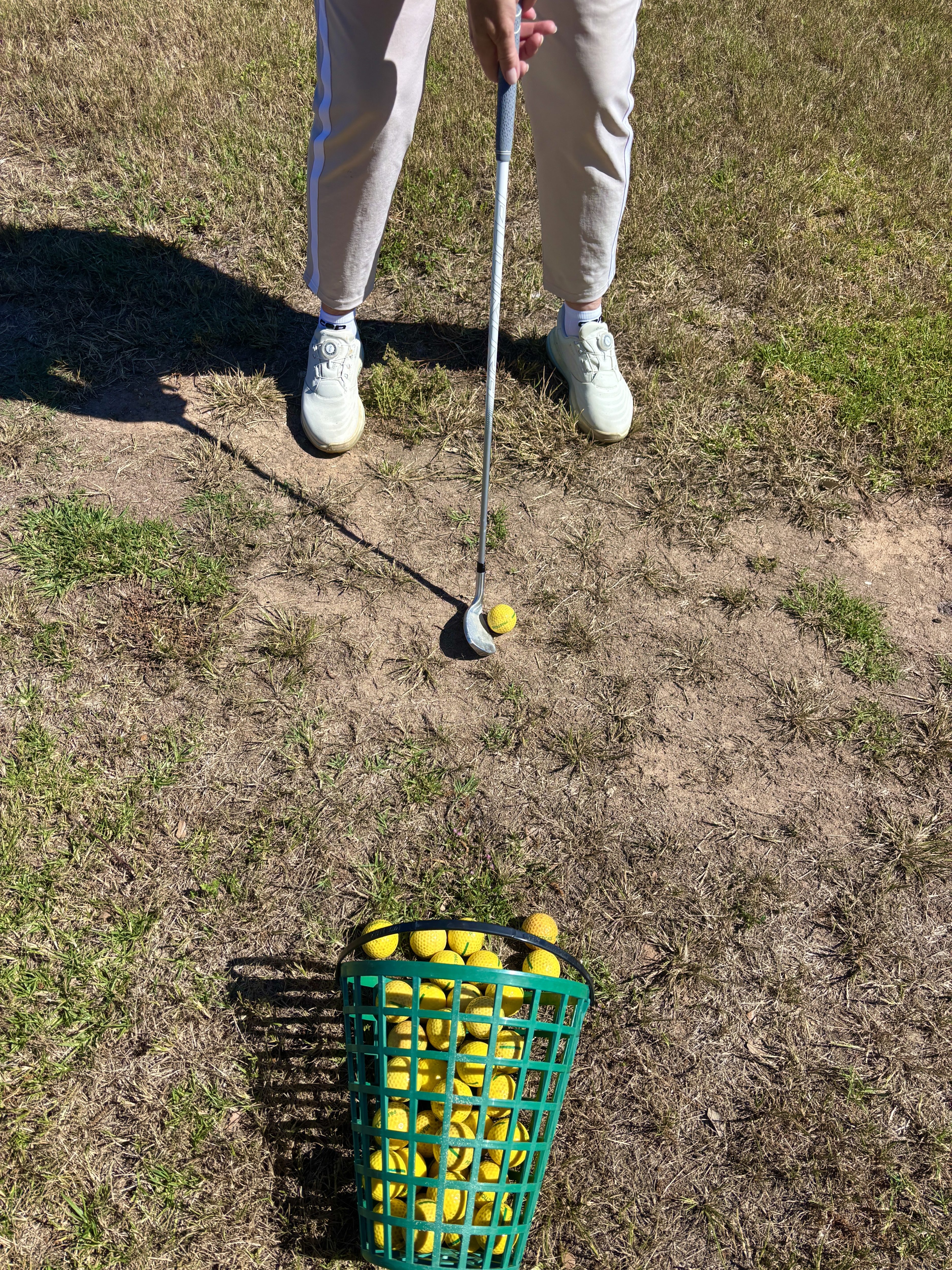
A ball on a level, closely mown lie is usually easier to control than one in rough, on a bare patch or on a slope.
The lie can influence:
- how cleanly the ball is struck,
- how much speed is transferred,
- how launch angle and early height development change,
- and how reliably the intended trajectory can be repeated.
A ball flight that works on the driving range is therefore not automatically available from every lie on the golf course.
Personal height control also means recognising when the current lie no longer supports the intended solution reliably enough.
This shows why a visible opening can be playable from a good lie but no longer playable from rough or a sloping lie. We explain the basic difference in Visible window and playable window.
Control does not mean complete repeatability
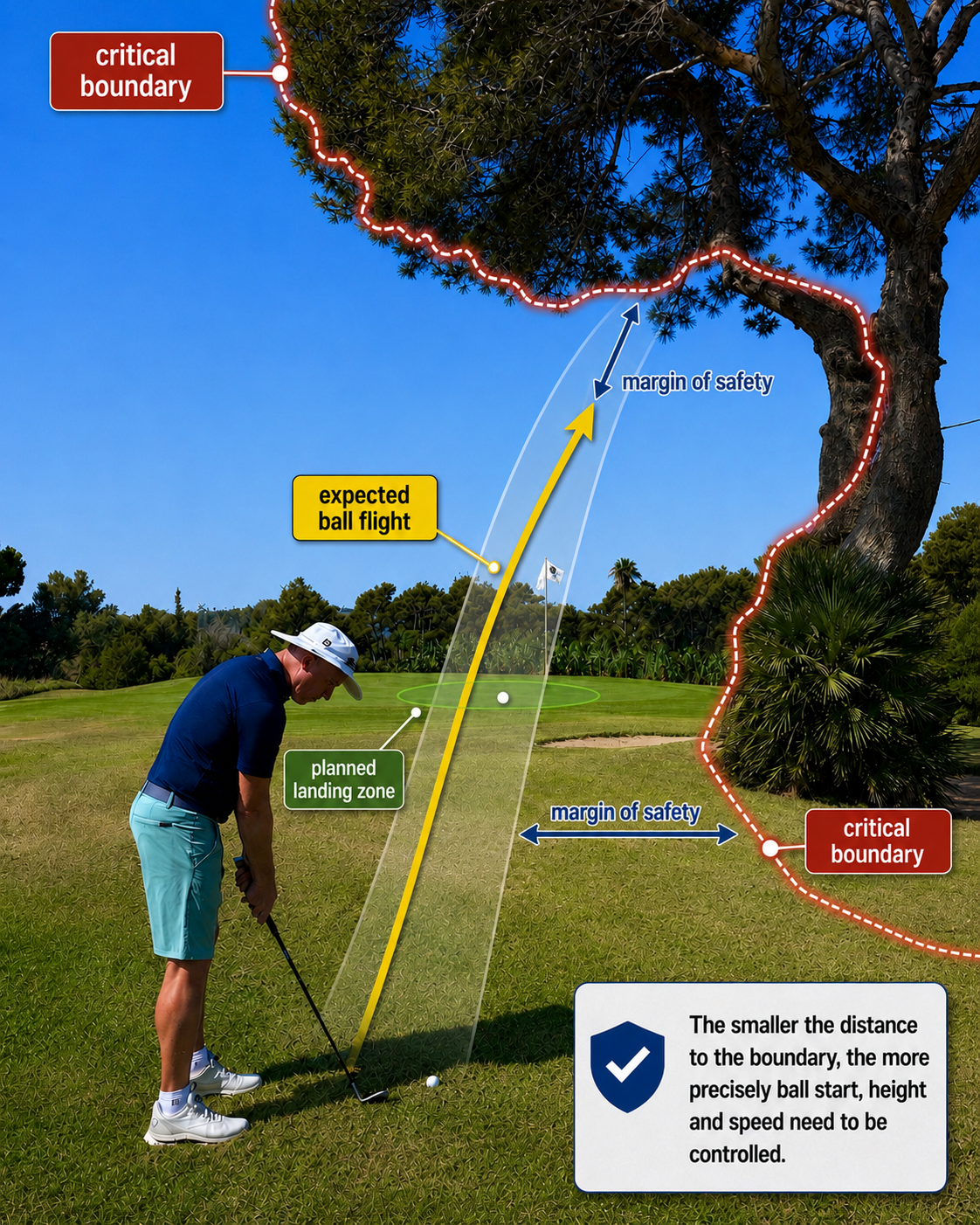
No golfer produces exactly the same ball flight on every attempt.
Even good players have variation in launch angle, ball speed, strike location, flight height and direction.
The goal is therefore not to eliminate every variation. It is more important to understand the personal range of variation and include it in planning.
A window may look visually large but still provide too little room for the golfer’s normal ball flight. Only when upper and lower variations are allowed for does a realistic safety margin emerge.
Height control therefore does not only show itself in the ability to deliberately hit a ball higher or lower. It also shows in recognising early enough when a window is too narrow.
Technology can make personal ball flight visible

Many differences in the height profile are difficult to judge accurately with the naked eye.
With our portable FlightScope Mevo+ radar, different shots can be compared. This can make launch angle, ball speed, maximum height, carry distance and the shape of the trajectory visible.
Video recordings and graphical representations can additionally show how much individual attempts differ from one another.
Technology is one of our tools, not the teaching method itself. It helps make differences visible and supports the golfer’s own perception. What remains decisive is that the golfer understands their ball flight and can use that information in a real playing situation.
In the Practice Lab, we therefore connect measured data with observation, practical experience and decisions on the golf course.
Height control needs to transfer to the golf course

Measured data on the driving range is useful. But it does not solve a playing situation by itself.
On the golf course, additional factors come into play:
- different lies,
- wind,
- uphill and downhill slopes,
- pressure,
- restricted visibility,
- and the possible consequences of a miss.
The golfer needs to learn how to adapt known ball flights to these conditions. Sometimes a shot remains technically possible but no longer provides enough margin for error in the real situation.
Personal height control therefore becomes truly valuable only when it leads to a better decision on the golf course.
This connection between personal ball flight, lie, possible consequences of a miss and shot selection is a central part of our Strategy Lab.
What a golfer should know about their ball flight
A golfer does not need to memorise every number to make a realistic assessment.
More important is a reliable understanding of:
- which clubs tend to launch lower or higher for them,
- how quickly their typical ball flights gain height,
- how much well-struck and less well-struck shots differ,
- which lies reduce control,
- and when a window provides too little safety margin.
This information forms the basis for better decisions. Through the personal learning process, the golfer develops a realistic picture of the ball flights that are actually available. This personal ball-flight knowledge becomes part of golf shot planning when the golfer has to judge which trajectory is realistically available from the current lie and whether it provides enough room for normal variation.
From knowledge to personal skill
A golfer can know the important terms relating to ball flight and height corridors and still struggle to apply them to their own shots.
The decisive development begins when general knowledge is connected with the golfer’s personal ball flight.
In the Window Programme and in our golf courses in Mallorca, we therefore do not only observe whether a ball clears an obstacle. We connect the visible trajectory with the lie, club selection, personal shot pattern and intended next position.
During coaching, the tasks and evaluations are adapted to the golfer’s personal ball flight, experience and typical playing situations. This turns individual pieces of information into an ability that can later be used independently.
This connection between personal ball flight, practical experience and independent application is a fundamental principle of our Golf Learning System.
Developing personal height control in golf lessons
Personal height control is best developed when the golfer observes several of their own ball flights and compares club, lie, launch angle, height profile and normal variation. This turns general club data into a realistic picture of the ball flights that are actually available in the golfer’s own game.
If you would like to experience our training concept yourself, we offer suitable programmes for beginners and experienced handicap golfers, as well as golfers who want to develop course strategy and decision-making in greater depth through our Strategy Lab.
You do not only learn how high a club can theoretically fly the ball. You learn which ball flights are actually available to you, how much they normally vary and when a playing situation requires more safety margin.
[booking]

Personal height control does not mean hitting every ball at the same height. It means understanding your own ball flight and its normal variation realistically.
The result: the golfer becomes better at recognising which window fits their actual ball flight and when a simpler solution provides more safety.
Professionally developed by Michel Monnard
PGA Golf Professional Michel Monnard has 30 years of experience in golf coaching, course strategy and ball-flight analysis. He teaches at Capdepera Golf in Mallorca and develops the content of the Golf Learning System from real coaching and playing situations.
Basis for this article
This article is based on observations made by Michel Monnard during golf lessons, shot series in the Practice Lab and real playing situations at Capdepera Golf. It focuses on the golfer’s personal height profile, typical variation, different lies and the transfer of these observations to decisions on the golf course. The individual training and evaluation structure is adapted to the golfer in personal coaching and within the Window Programme.
Contents: Personal height control and playable ball flights
This part of the Playable Windows series focuses on how golfers can develop a realistic understanding of their own ball-flight height, normal variation, club-specific trajectories and the safety margins needed to use those ball flights reliably on the golf course.
- Playable windows in golf
An overview of how visible space, ball flight, height corridors, safety margins and on-course decisions work together. - Visible window and playable window
Why a visible opening only becomes playable when lie, ball flight, personal ability and possible finishing position are considered. - Launch windows and ball-flight height profile in golf
How launch angle, early height development and distance determine whether a golf ball can travel through a restricted opening. - Why the same golf club can produce different ball-flight heights
How dynamic loft, speed, strike location, spin and lie can change the trajectory produced with the same golf club. - Safety margin and margin for error in golf
Why good golf planning needs to allow for normal shot variation rather than relying only on the perfect strike. - How to read height corridors in golf
How upper and lower boundaries, distance, rising trajectory and apex create the three-dimensional space available for a golf shot. - Planning the entire shot trajectory in golf
Why shot planning should include launch, height profile, landing, runout and the position prepared for the next shot. - Comparing prediction and reality in golf
How comparing the expected ball flight with what actually happens improves learning, judgement and future decisions. - Developing personal height control in golf
Why golfers need to understand their own height profiles, normal variation, different club trajectories and the ball flights that are realistically available to them. - Integrating playable windows into decisions on the golf course
How lie, shot pattern, safety margin, consequences and the next playing position determine whether a technically possible shot is also a sensible strategic choice.
For beginner golfers
- How beginners can get back into play from difficult lies
How new golfers can use larger openings, familiar shots and safer target areas to recover from difficult positions and prepare a normal next playing situation.
The Window Programme within the Golf Learning System
How the Window Programme makes our Golf Learning System visible
This concluding article shows how ball-flight understanding, skill development, Practice Lab, Strategy Lab, technology and transfer to the golf course work together within the Golf Learning System.
[booking]
The strongest core message of this article is
Personal height control does not mean hitting every ball at the same height. It means knowing your own height profile and its normal variation well enough to make better decisions.


