

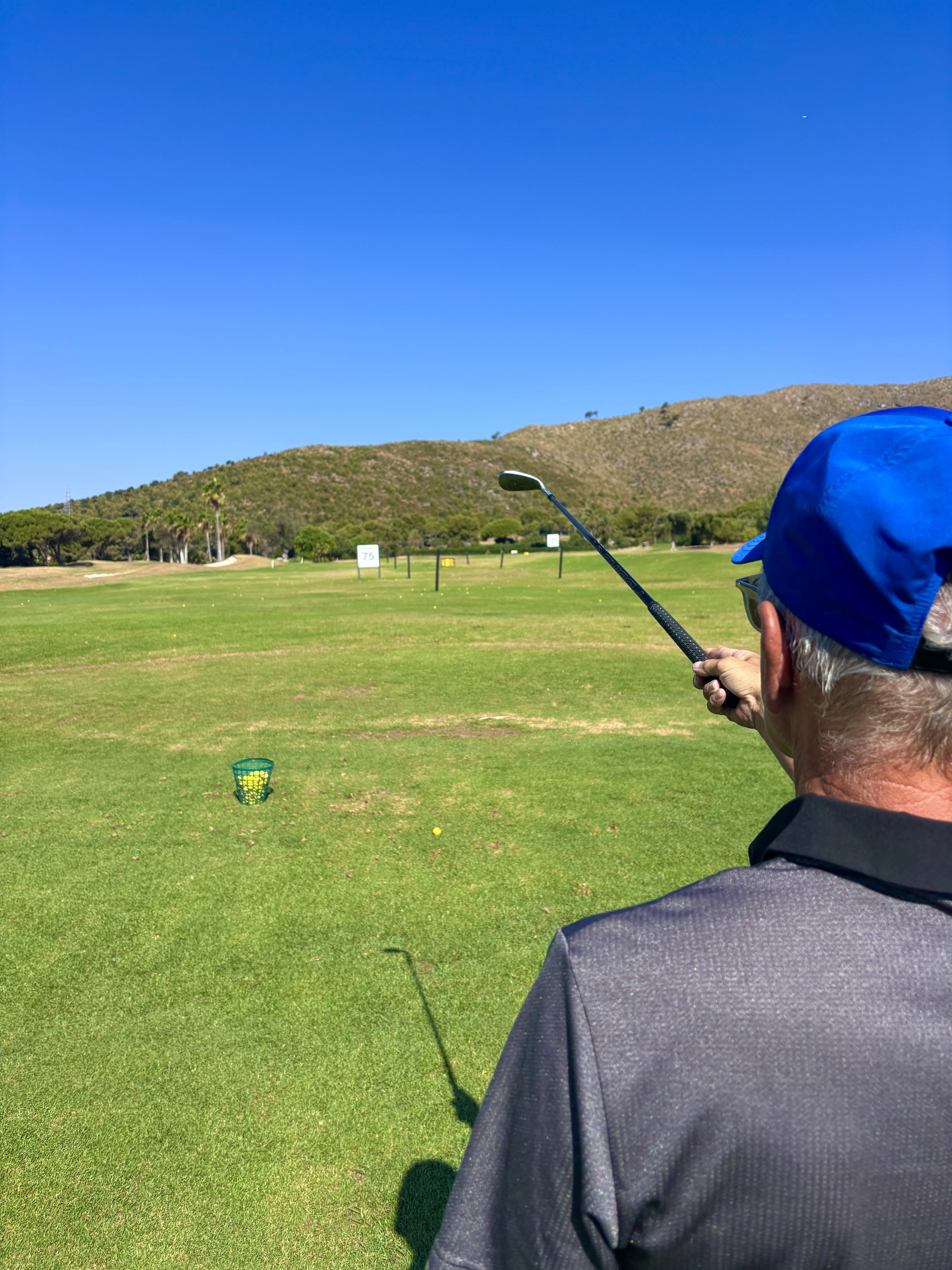
Before a difficult golf shot, the golfer creates an idea of what should happen.
They expect the ball to start low, travel underneath a branch, land in a particular area and then roll into an open position.
After the shot, it becomes clear how closely this prediction matched reality.
The ball may start higher than expected, rise earlier, fly shorter, run farther or finish in a different position.
This difference is not automatically a failure. It gives the golfer important information about their actual ball flight.
Golfers who deliberately compare prediction and reality gradually develop a more accurate picture of their own abilities.
We explain how golfers develop a realistic picture of the height profiles available to them in the chapter Developing personal height control in golf.
A decision begins with a prediction
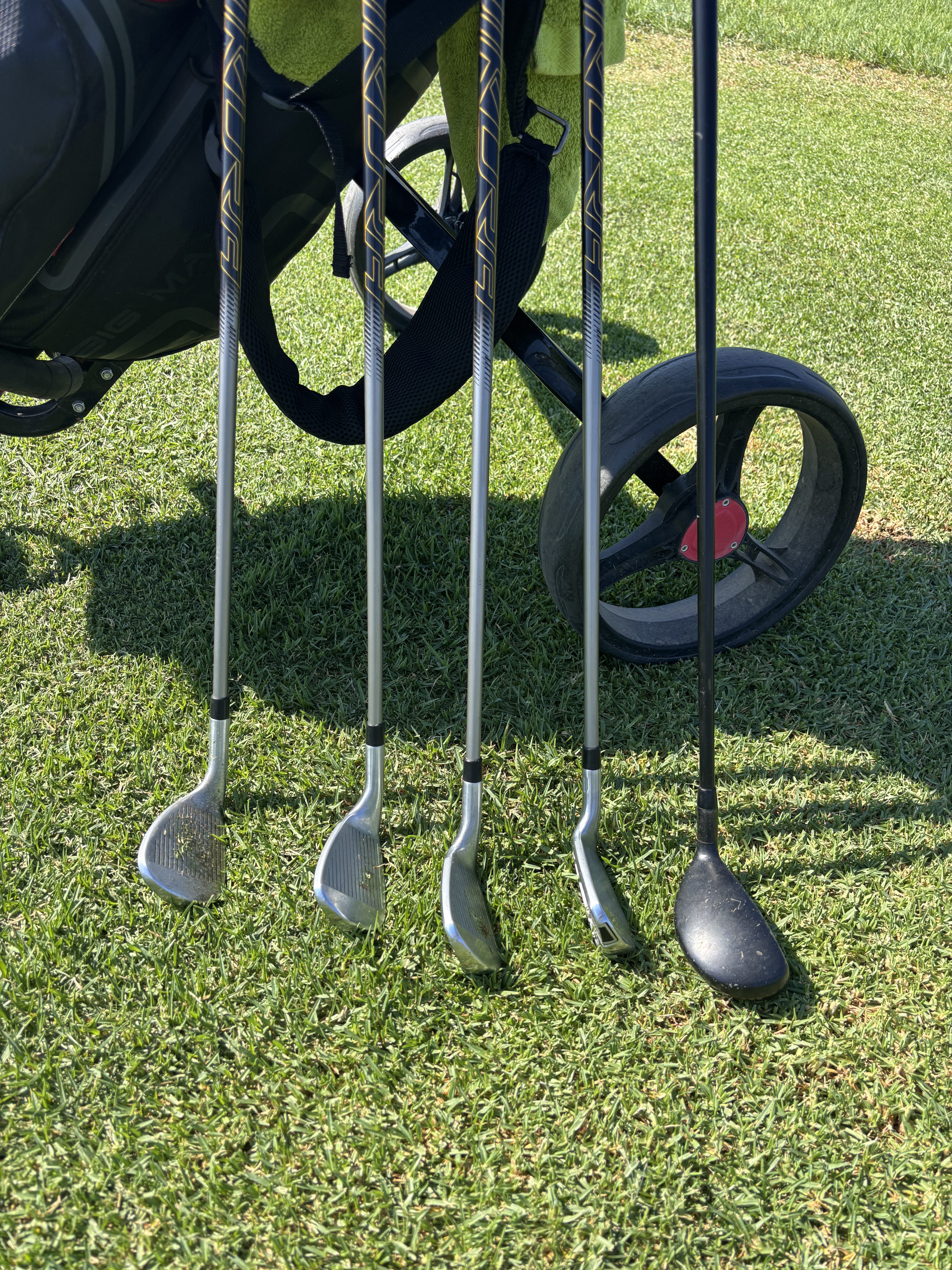
Every planned golf shot contains a prediction. This prediction is part of golf shot planning: before the shot, the golfer forms an expectation about the required ball flight, the target area and the position the shot should create.
The golfer chooses a club, a type of shot and a direction because they expect a particular ball flight.
For a shot through a playable window, this expectation includes:
- the ball start,
- its height profile,
- the height at a critical boundary,
- the landing,
- and the eventual finishing position.
This prediction does not need to be perfect. But it should be specific enough for the golfer to recognise after the shot what happened differently.
Without a prediction beforehand, the assessment often remains very general:
The shot was good or bad.
This assessment is too imprecise for effective learning.
The result alone does not explain the shot
A ball can finish in a good position even though it flew differently from the plan.
Conversely, an appropriate ball flight can still finish in a difficult position because of an unfortunate bounce or a small variation.
Four areas should therefore be separated:
- the decision: Which solution was chosen?
- the prediction: What was expected to happen?
- the execution: How was the ball actually struck?
- the result: Where did the ball finally come to rest?
These four areas may correspond with one another, but they do not have to.
A good result proves neither that the decision was good nor that the prediction was accurate. Equally, an unfavourable result does not automatically mean that the chosen solution was wrong.
Key point: The final position of the ball matters, but it does not tell the whole story of the shot.
We explore how decision, execution and result should be separated on the golf course in the chapter Integrating playable windows into decisions on the golf course.
Variations provide information
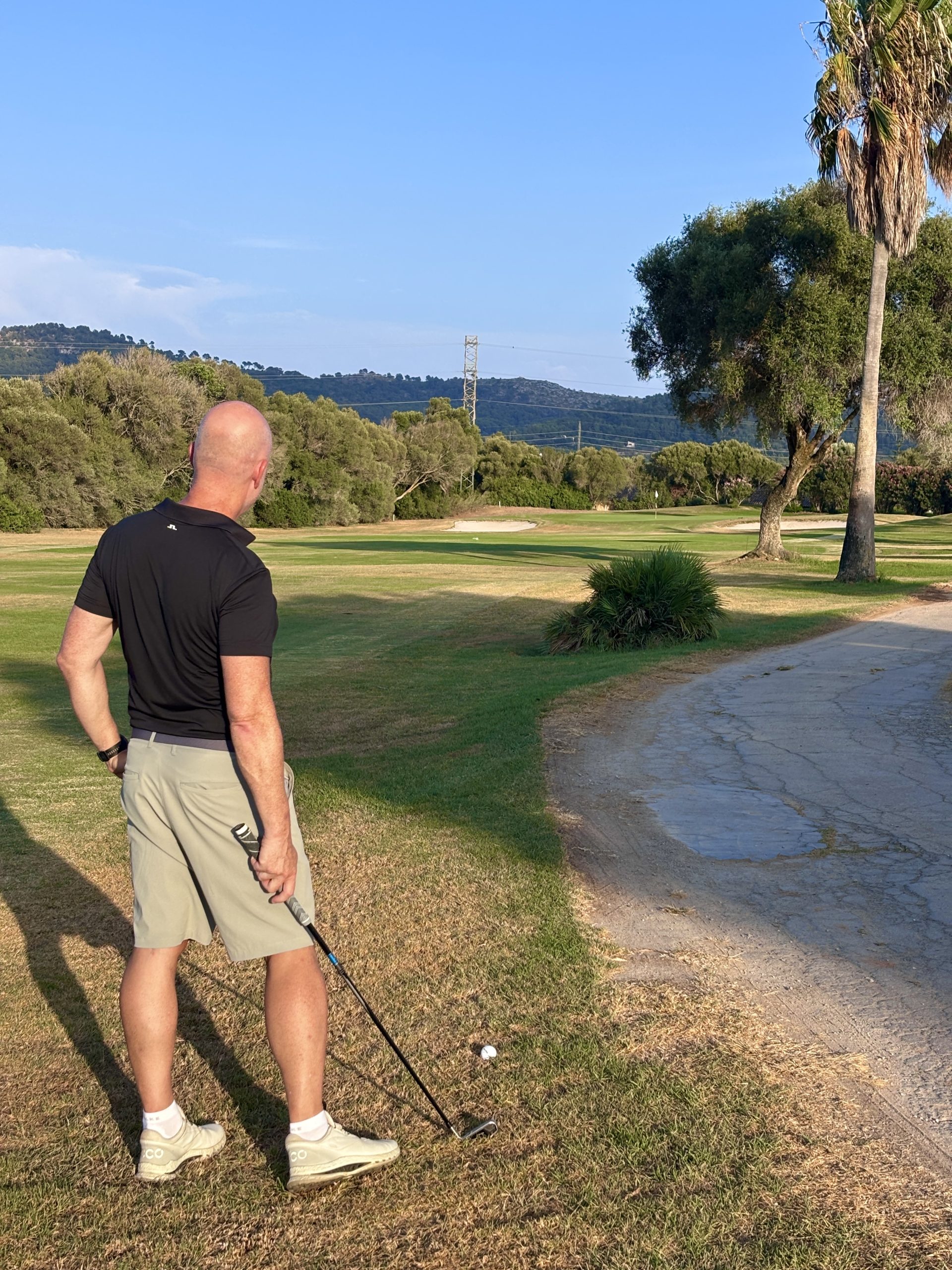
Many golfers respond to an unexpected ball flight by immediately making a technical correction.
If the ball flies too high, the golfer may try to play the next shot especially low. If the ball finishes short, they may hit the next attempt significantly harder.
Such quick corrections can make the problem worse if the reason for the variation has not yet been understood.
A variation can have different causes:
- the original prediction was unrealistic,
- the club did not suit the intended ball flight,
- the lie was assessed incorrectly,
- a different strike location changed ball start, speed or spin,
- or the ground influenced landing and runout more than expected.
Only when the golfer recognises which part differed from the prediction can the next decision be adjusted meaningfully.
An unexpected ball flight is not automatically an error
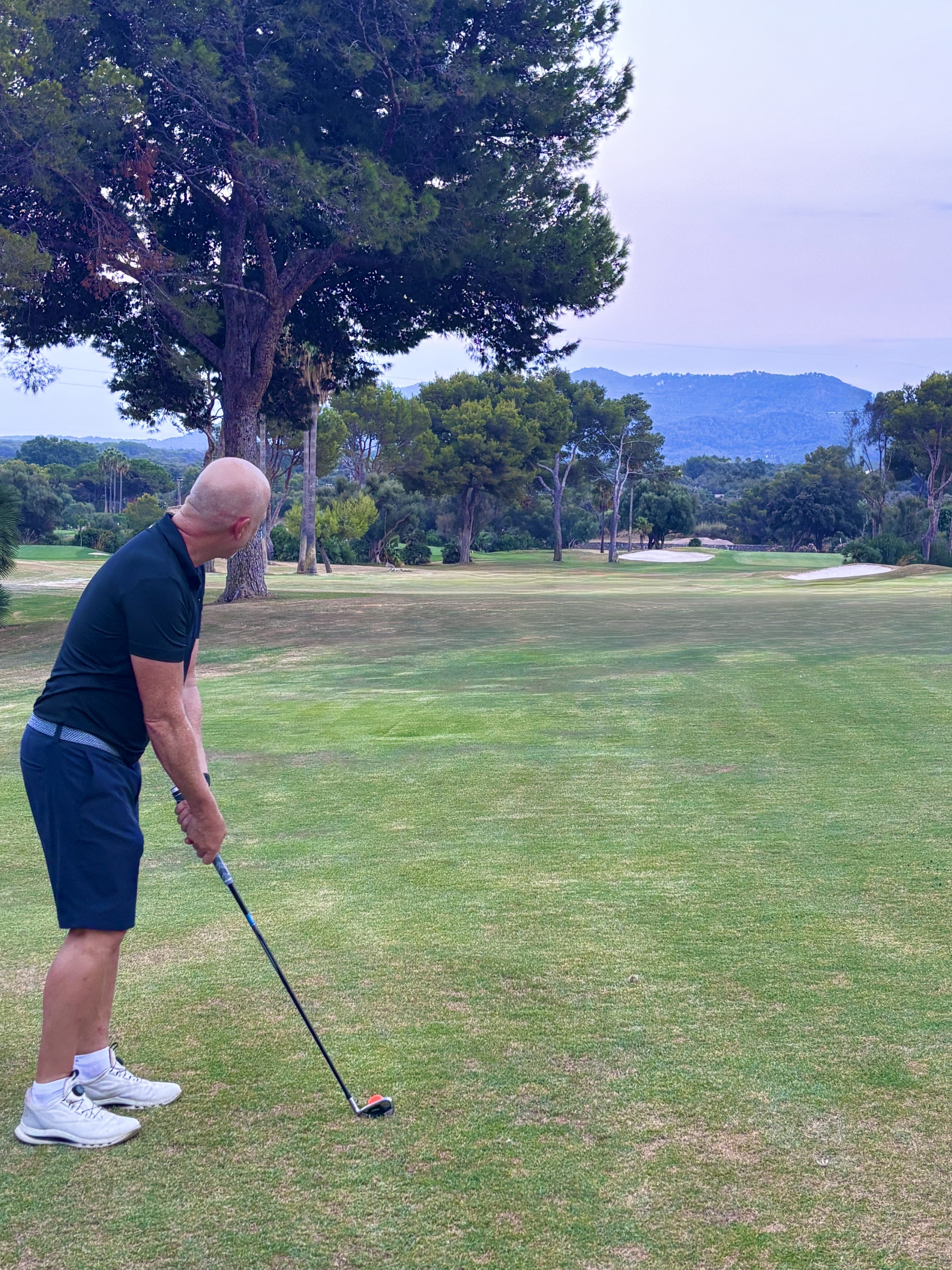
During learning, situations occur in which the ball does not do exactly what the golfer expected.
This is necessary. If every attempt immediately matched the prediction, the golfer would have no reason to test their assumptions.
In learning research, this idea is related to desirable difficulties. These are learning conditions that can initially make practice more demanding, but may support deeper processing and better transfer of learning over time.
Applied to golf practice, this does not mean that every difficult task or unsuccessful shot is automatically valuable. What matters is that the golfer observes the result, understands it and uses it for the next prediction.
Small variations in particular can reveal:
- which height can actually be controlled,
- how much strike location varies,
- how much safety margin is required,
- and which solution remains reliable under pressure.
The attempt can therefore still have learning value even when the result is not perfect – provided that the variation is noticed, interpreted and used for the next prediction.
The normal ball flight matters more than the best attempt

A single perfect shot can create a false sense of security.
The ball may fly exactly through the intended window. But that does not yet mean that this ball flight can be repeated reliably.
For a decision on the golf course, the best attempt is therefore not the only thing that matters. What matters more is which trajectory is commonly produced with normal strikes.
Several attempts can show:
- how much the early height varies,
- which area is reached most often,
- which variation is typical,
- and whether a window provides enough margin for error.
A playable solution should not fit only the perfect shot. It should also accommodate a normal attempt with a small amount of variation.
We explain how much additional room is required in the chapter Safety margin and margin for error in golf.
Technology can make differences visible
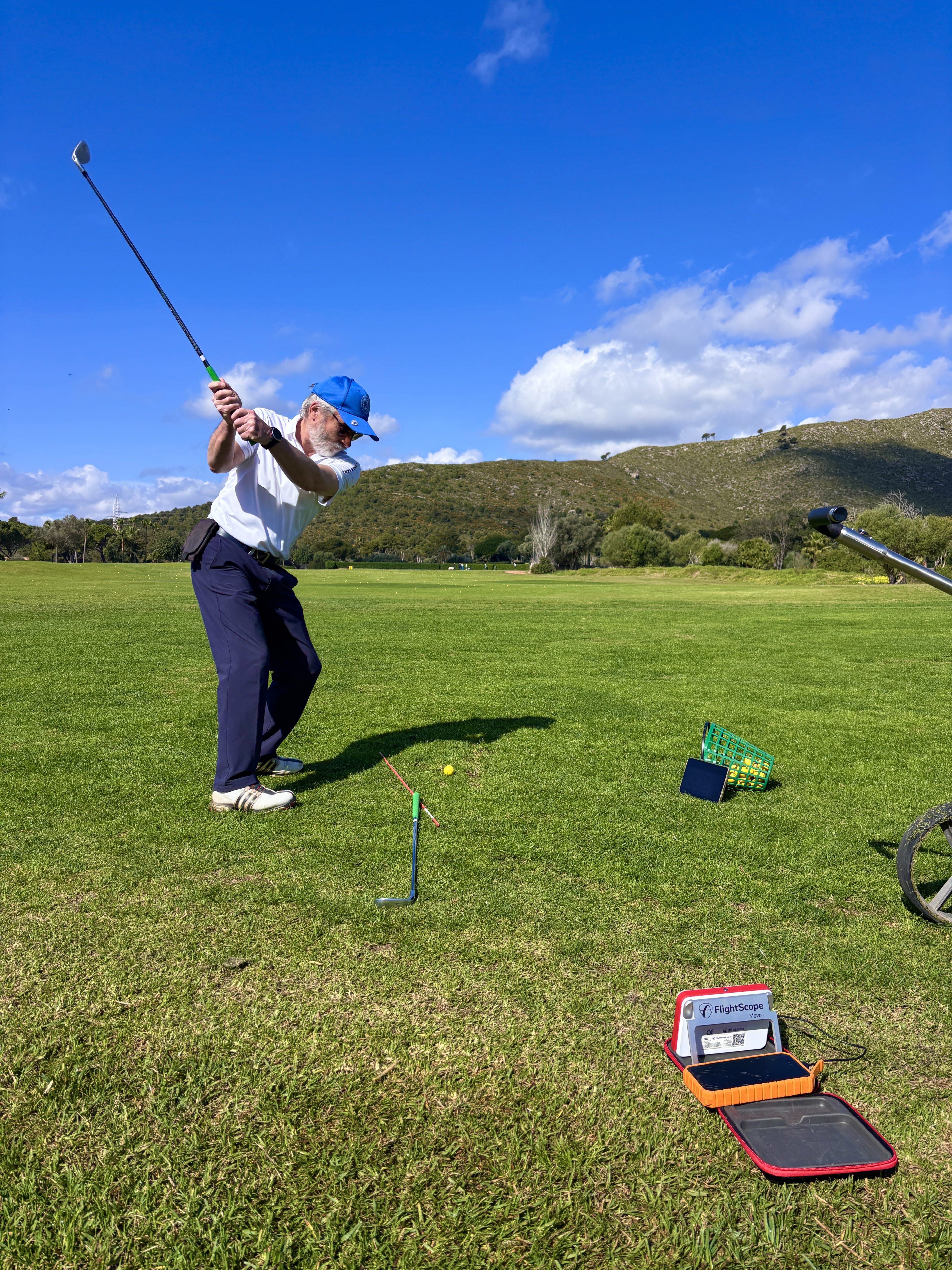
Not every difference in ball flight can be recognised reliably with the naked eye.
Our portable FlightScope Mevo+ radar can, for example, show that two shots that look similar have different launch angles, height profiles, maximum heights or flight distances.
Video recordings and graphical representations can also help compare the golfer’s prediction with the actual trajectory.
Technology is one of our tools, not the teaching method itself. It can make differences visible, but it neither makes the decision for the golfer nor explains by itself which adjustment is appropriate.
In the Practice Lab, we connect measured data with personal perception, practical experience and real playing situations. What matters is that the golfer understands the information and can later use it independently.
A better prediction changes the decision
Every deliberate observation improves the basis for the next shot.
The golfer may recognise that a particular club rises earlier than expected. Or that a low recovery shot runs considerably farther on firm ground.
This learning does not only change the execution. It can also lead to a different decision.
A window that previously appeared playable may suddenly offer too little safety margin. A shorter and wider solution may therefore become the better option.
The learning process therefore does not only improve the shot. It improves the selection of which shots should be attempted in the first place.
This connection between personal ball flight, realistic expectations and shot selection is a central part of our Strategy Lab.
Why this ability matters on the golf course
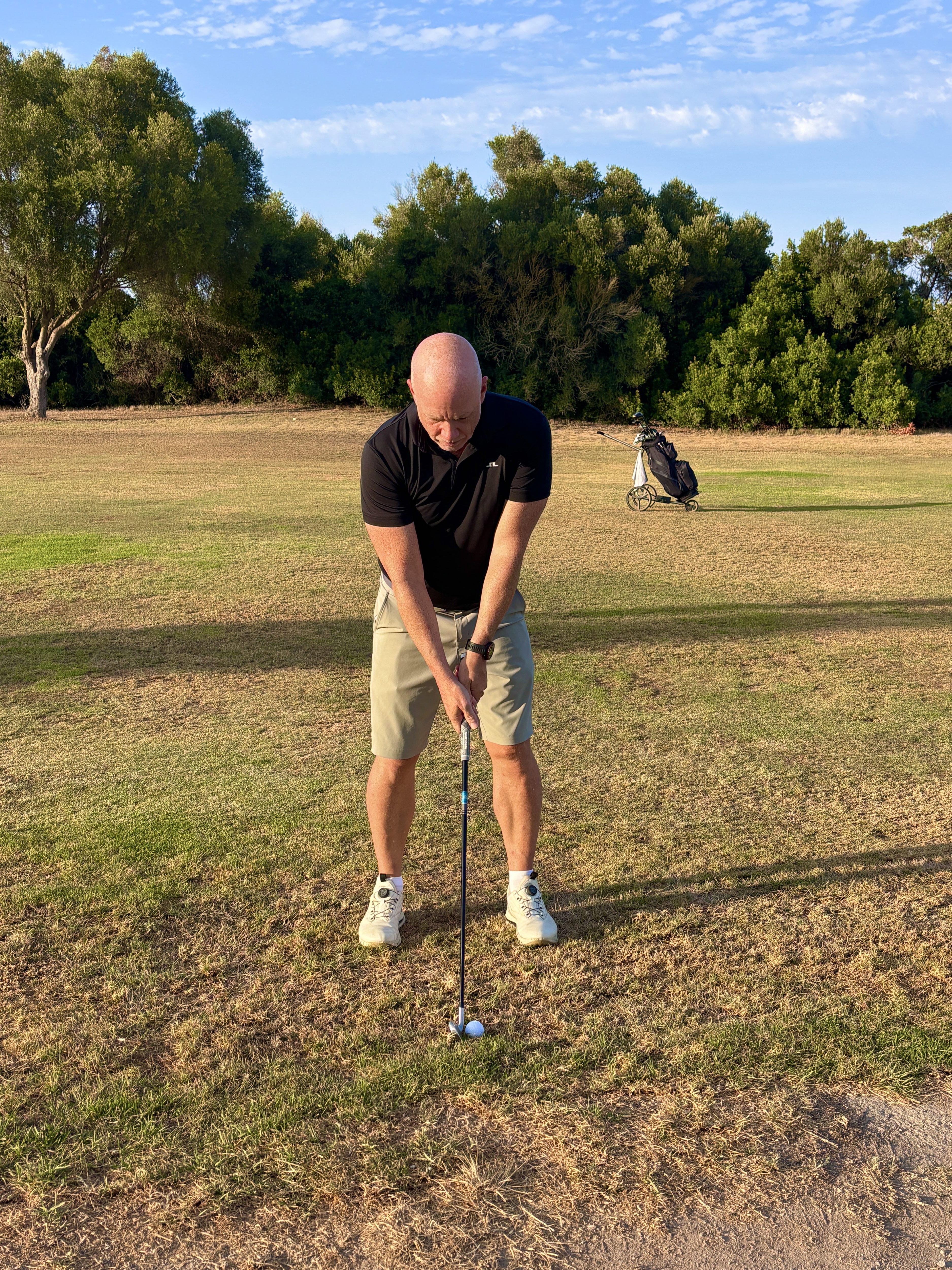
On the driving range, a golfer can play several attempts from the same position. On the golf course, there is usually only one attempt. The golfer therefore needs to assess as realistically as possible before the shot what the ball is likely to do.
Golfers who understand their own ball flights can:
- distinguish more reliably between playable windows and windows that are too narrow,
- choose sufficient safety margins,
- avoid unnecessary speciality shots,
- and recognise simpler solutions earlier.
A realistic prediction therefore protects the golfer not only from a poor shot. It also protects them from choosing a solution that has too little margin for error from the outset.
We explain how golfers develop a realistic picture of the height profiles available to them in the chapter Developing personal height control in golf.
From observation to a personal learning process
The basic idea is simple: the golfer visualises a ball flight, plays the shot and observes what actually happens.
Learning, however, only develops when the golfer recognises and interprets the differences between the prediction and the actual ball flight.
The purpose is not to try a new technique after every shot. The golfer should recognise which expectations are realistic and which parts of the plan need to be adjusted.
IIn the Window Programme and in our golf courses for handicap golfers in Mallorca, the golfer learns to organise these observations and transfer them to different playing situations.
In real situations on the golf course, we connect perception, ball flight, decision and result. This allows individual attempts to develop into an ability that the golfer can later use independently.
This connection between prediction, execution, observation and adjustment is a fundamental principle of our Golf Learning System.
Comparing prediction and reality in golf lessons
How realistically a golfer assesses their own ball flight becomes clearest when expectation and actual outcome are compared directly. On the driving range and in real playing situations, it becomes visible which heights, distances, directions and variations occur regularly and where the golfer’s own prediction still needs to be adjusted.
If you would like to experience our training concept yourself, we offer suitable programmes for beginners and experienced handicap golfers, as well as golfers who want to develop course strategy and decision-making in greater depth through our Strategy Lab.
You do not only learn to produce a ball flight. You learn to compare your previous prediction with what actually happened, use variations as information and develop more realistic decisions for the next shot.
[booking]

We do not assess an attempt only by where the ball finishes. We compare what the golfer expected with what actually happened.
The result: consciously observed variations lead to better predictions and more appropriate decisions.
Professionally developed by Michel Monnard
PGA Golf Professional Michel Monnard has 30 years of experience in golf coaching, course strategy and ball-flight analysis. He teaches at Capdepera Golf in Mallorca and develops the content of the Golf Learning System from real coaching and playing situations.
Basis for this article
This article is based on observations made by Michel Monnard during golf lessons, ball-flight tasks in the Practice Lab and real playing situations at Capdepera Golf. It focuses on predicting a ball flight, actual execution, the result and the deliberate processing of variations. The complete observation, evaluation and adjustment structure remains part of personal coaching and the Window Programme.
Contents: Prediction, feedback and ball-flight learning
This part of the Playable Windows series focuses on how golfers improve judgement by comparing the ball flight they predicted before the shot with what actually happened, using the difference as feedback for learning, future shot selection and on-course decisions.
- Playable windows in golf
An overview of how visible space, ball flight, height corridors, safety margins and on-course decisions work together. - Visible window and playable window
Why a visible opening only becomes playable when lie, ball flight, personal ability and possible finishing position are considered. - Launch windows and ball-flight height profile in golf
How launch angle, early height development and distance determine whether a golf ball can travel through a restricted opening. - Why the same golf club can produce different ball-flight heights
How dynamic loft, speed, strike location, spin and lie can change the trajectory produced with the same golf club. - Safety margin and margin for error in golf
Why good golf planning needs to allow for normal shot variation rather than relying only on the perfect strike. - How to read height corridors in golf
How upper and lower boundaries, distance, rising trajectory and apex create the three-dimensional space available for a golf shot. - Planning the entire shot trajectory in golf
Why shot planning should include launch, height profile, landing, runout and the position prepared for the next shot. - Comparing prediction and reality in golf
How comparing the expected ball flight with the actual result helps golfers improve judgement, recognise meaningful variation and make better future decisions. - Developing personal height control in golf
Why golfers need to understand their own height profiles, normal variation, different club trajectories and the ball flights that are realistically available to them. - Integrating playable windows into decisions on the golf course
How lie, shot pattern, safety margin, consequences and the next playing position determine whether a technically possible shot is also a sensible strategic choice.
For beginner golfers
- How beginners can get back into play from difficult lies
How new golfers can use larger openings, familiar shots and safer target areas to recover from difficult positions and prepare a normal next playing situation.
How the topic connects to our Golf Learning System
- How the Window Programme makes our Golf Learning System visible
How understanding, technical foundations, skill development, Practice Lab, Strategy Lab, technology and on-course transfer combine within one connected learning process.
[booking]
The strongest core message of this chapter is:
A shot only becomes useful learning information when the golfer compares the prediction made beforehand with what actually happened.


