

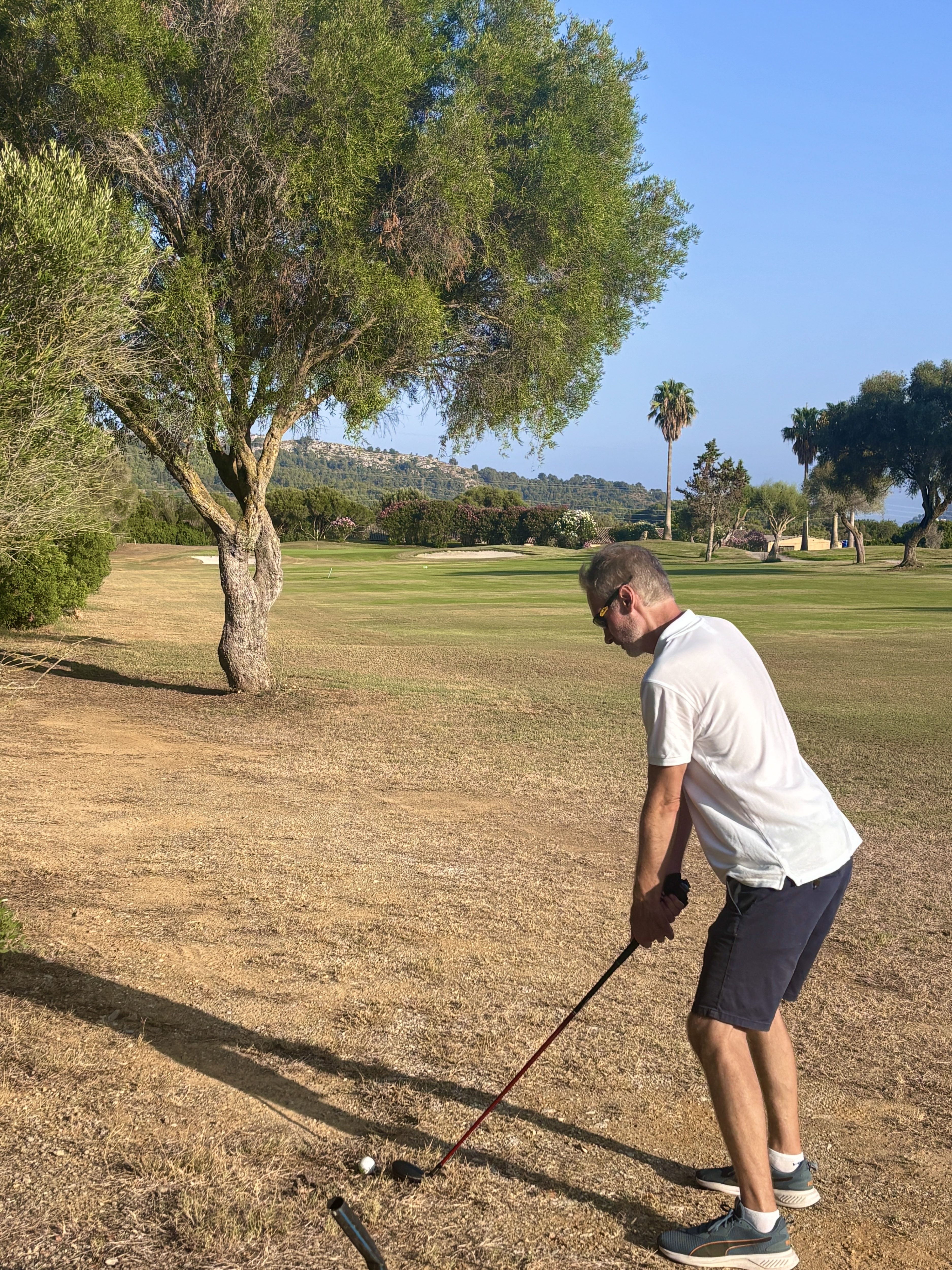
A golfer sees a branch ahead and decides: the ball needs to start low. But that does not yet fully describe the task.
A ball may initially travel underneath a branch and still be too high only a few metres later. It may rise early, reach its highest point too soon or hit a tree canopy farther along the flight. Conversely, a ball may start very low but carry so little speed that it never reaches the intended target area.
For a playable window, it is therefore not enough to consider only how high or low the ball starts. What matters is the entire height profile: from launch angle and early height development through the rising trajectory to the highest point, landing and subsequent ground reaction.
The key question is:
Where is the ball at the point in its trajectory where height becomes critical for the playing situation?
What is a launch window?
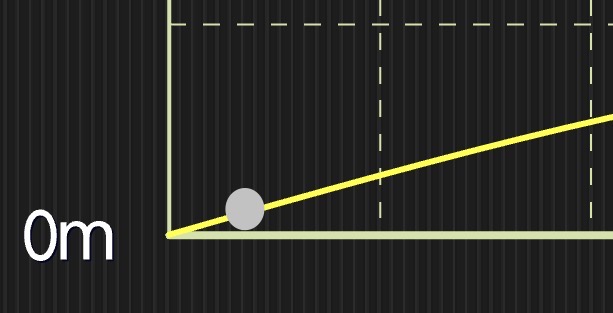
The launch window describes the space in which the ball is allowed to start immediately after impact and during the early part of the flight.
This space may be restricted both laterally and vertically. A tree trunk may define the left boundary, a bush the right boundary and a branch the upper limit. In other situations, the ball may need to rise over a change in ground level and therefore also has a lower boundary.
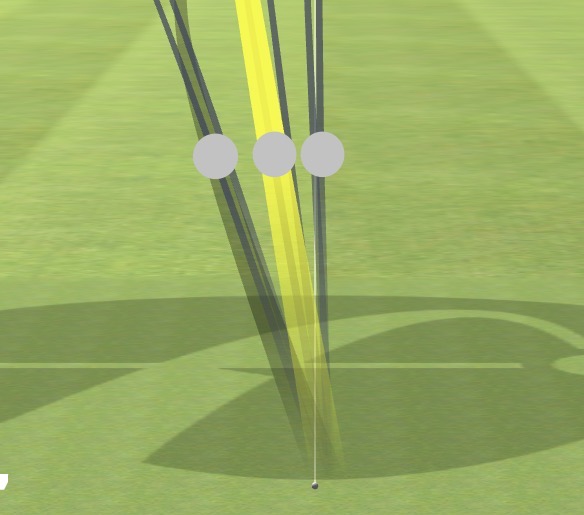
The launch window initially answers questions such as:
- On which line does the ball need to start?
- How high may it be immediately after impact?
- How much room is available to the left and right?
- Is there an upper or lower boundary?
- How far is the first critical point from the ball?
The launch window is therefore the first part of the planning process. But it does not yet tell us whether the ball will remain inside the required height range later in the flight.
We explain how a visible opening becomes a playable solution only when ball flight, lie and finishing position are considered in the article Visible window and playable window.
Key point: A suitable start is necessary, but it does not guarantee a suitable ball flight.
The ball has a different height at every distance
A ball flight is not a straight line from the ball to the target. After impact, its height changes continuously.
The ball:
- starts in a specific direction and at a specific launch angle,
- rises at a particular rate,
- reaches its highest point,
- then begins to descend,
- lands at a particular angle,
- and then reacts to the ground.
That is why the statement “This ball flies about twenty metres high” is only of limited use in a specific playing situation. The golfer also needs to know when that height is reached.
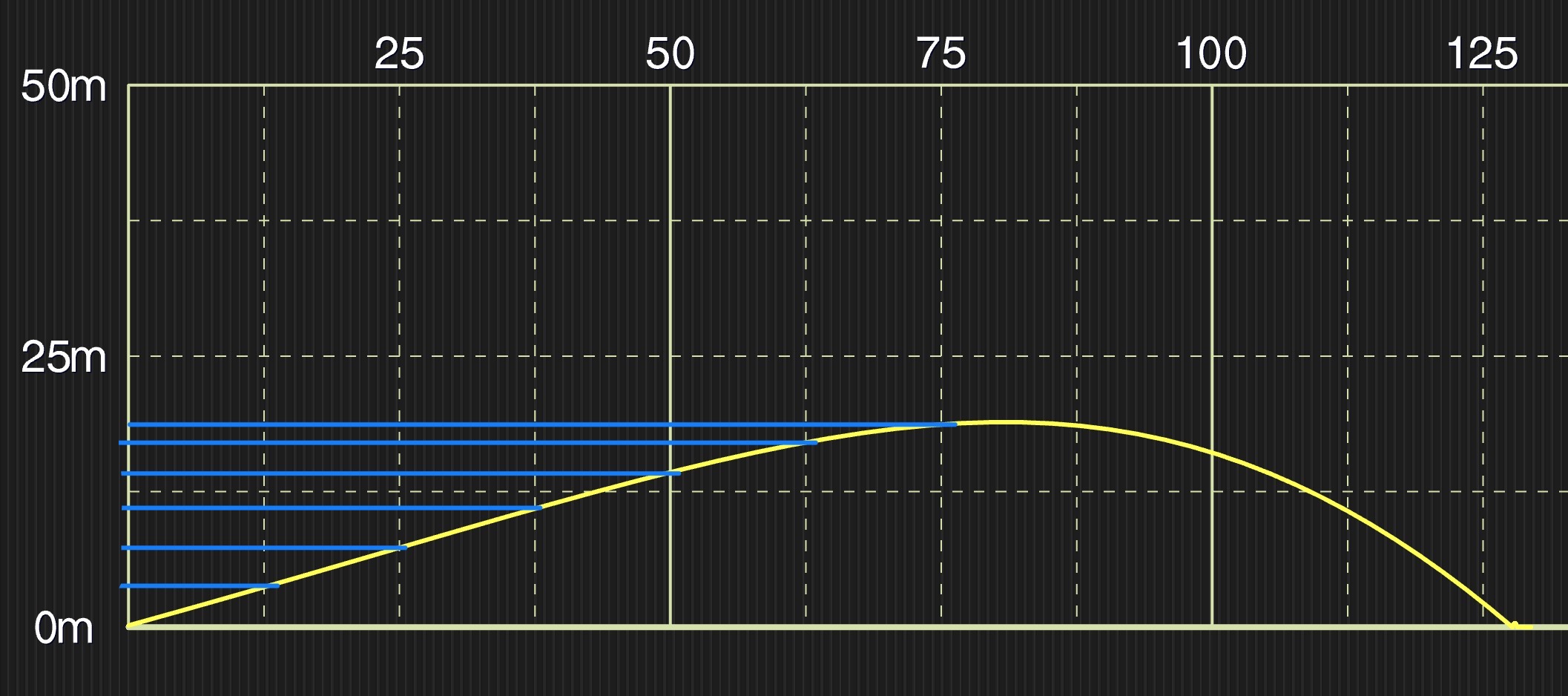
One ball may reach its maximum height well beyond the obstacle. Another may reach a similar maximum height later in the flight but rise earlier and already be too high at the critical distance.
Image explanation: The blue comparison lines show that the ball is at a different height at every distance. This is exactly why it is not enough to describe a ball flight simply as high or low. What matters is the height the ball reaches at the point where the obstacle becomes critical for the playing situation.
For the playable window, therefore, it is not only the highest point of the entire flight that matters. What matters is the height of the ball at the distance where the branch, tree canopy, bush, change in ground level or another boundary is located.
The critical distance changes the decision

A branch hanging five metres in front of the ball requires a different ball flight from a tree canopy that only becomes relevant forty metres farther away.
With a nearby obstacle, the immediate start of the ball matters most. The ball needs to remain inside the launch window during the first few metres.
With an obstacle farther away, the rising trajectory becomes more important. A ball may start underneath the first branches but then rise strongly enough to hit a later boundary.
In another situation, the ball may need to rise over a bush or change in ground level after a short distance. In that case, a start that is too low may also be unsuitable.
The golfer should therefore not only assess the height of the obstacle. Its distance from the ball also needs to be considered.
A complete description is not:
The ball needs to stay under the branch.
Instead, it might be:
The ball needs to stay below the height of the branch for the first twelve metres and may only begin to rise more clearly after that.
This turns a general intention into a specific requirement for the ball flight.
Launch angle, early height and rising trajectory are not the same thing
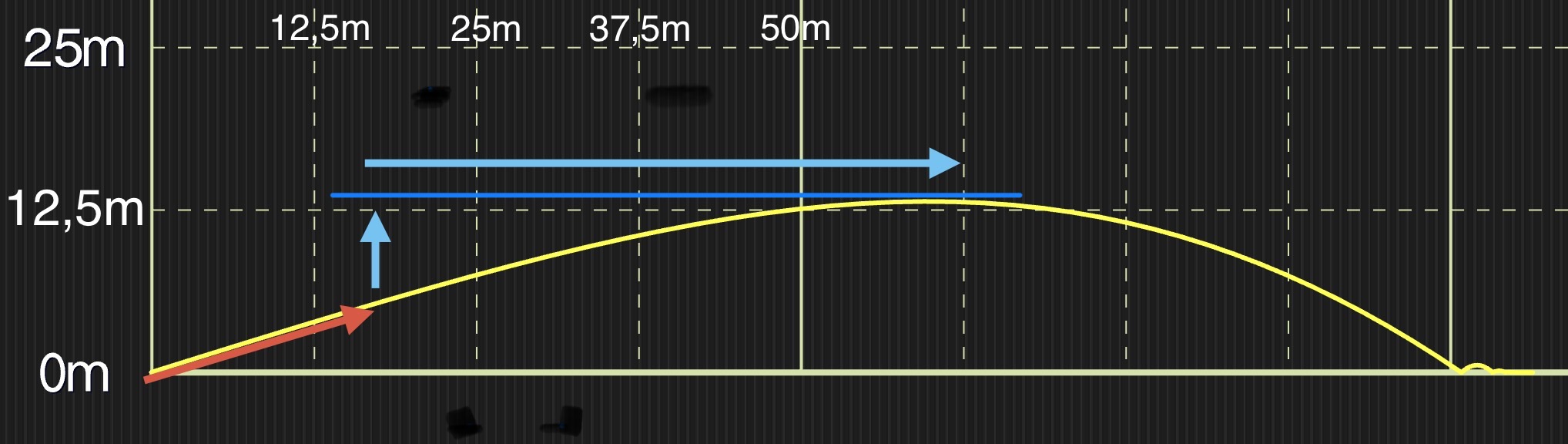
Golfers often use “low” as a general description. In doing so, different parts of the ball flight are mixed together.
The launch angle describes the angle at which the ball leaves the impact area. The early height describes the actual height the ball reaches during the first few metres. The rising trajectory then describes how the height continues to develop over the following distance.
A ball can:
- start relatively low and then rise quickly,
- start slightly higher but continue to rise more slowly,
- start low and remain low for a longer distance,
- or build too much height very early.
In a restricted playing situation, these differences can be decisive. A shot may fit through the first opening but leave the required height corridor only a few metres later.
Key point: A low launch does not automatically mean a low ball flight.
Speed and dynamic loft influence the height profile
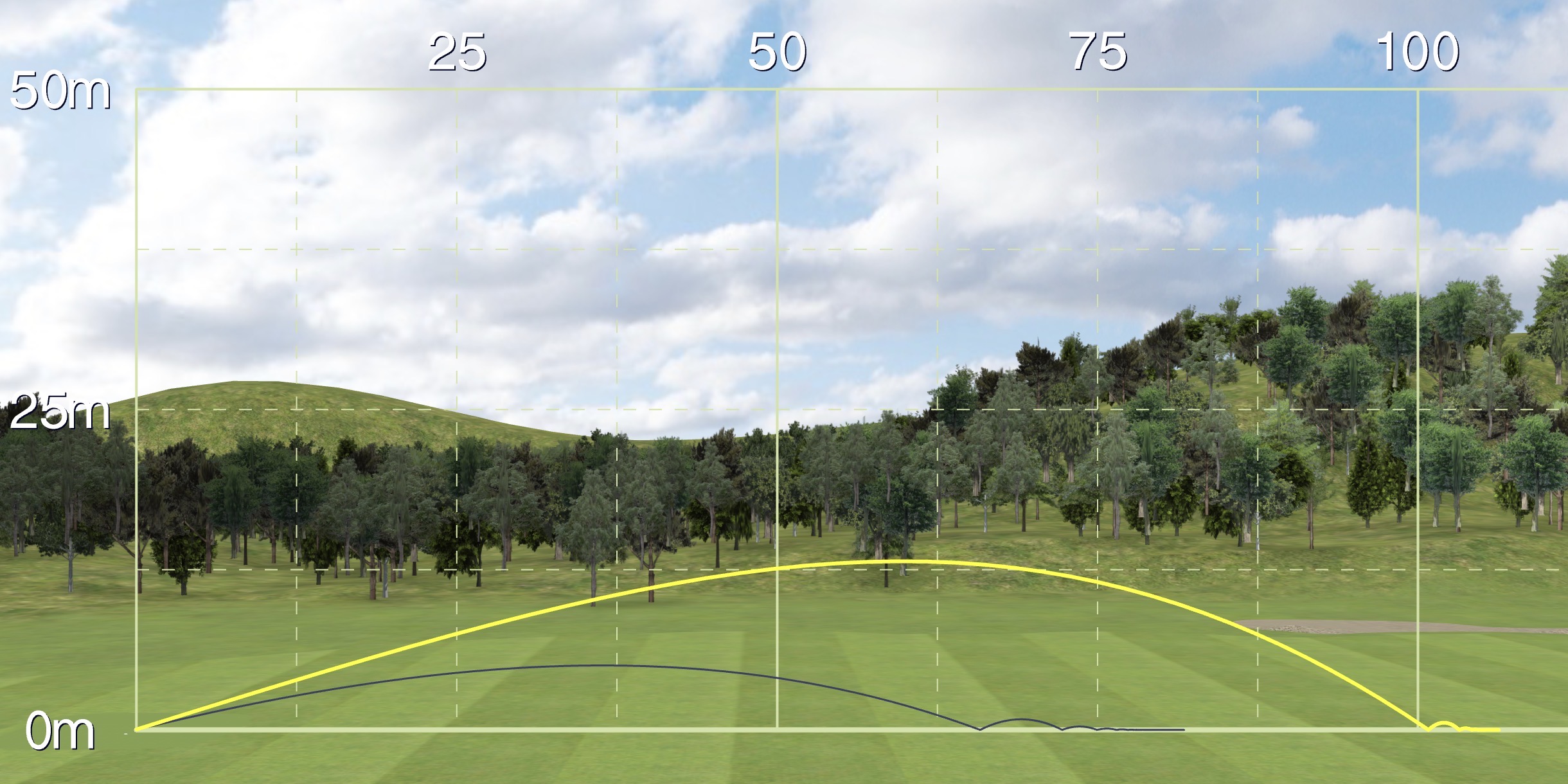
Ball speed does not only change distance. It also influences how the trajectory develops over the full flight.
A golfer may choose a club with less loft to start the ball lower. The longer club, however, will often produce more ball speed. As a result, the ball may still gain considerable height farther along the flight.
Conversely, a club with more loft may start the ball higher and produce a different combination of ball speed, spin and launch, which can change how quickly the trajectory develops and how far the ball travels forward.
This explains why the simple rule “less loft always means lower” is not sufficient for real playing situations.
The golfer needs to consider the relationship between:
- club loft,
- dynamic loft at impact,
- ball speed,
- launch angle and early height development,
- rising trajectory,
- and the distance to the critical point.
Only this combination shows which club can remain within the required height profile.
Explanation: Static loft is the built-in loft of the golf club. It does not change as long as the same club is used.
Dynamic loft is the angle presented by the clubface at impact. It depends on how the clubhead reaches the ball. Clubface orientation, shaft and hand position, ball position, movement and strike location all contribute to how much loft the club actually presents to the ball.
The same club can therefore produce different launch angles, early heights and overall height profiles. Static loft remains the same, but the conditions at impact change.
The same club does not always produce the same height

Golfers often associate each club with a fixed ball flight. In their mind, a 7-iron flies at a certain height, a hybrid lower and a pitching wedge higher.
This can be useful as a general reference, but it is incomplete.
Different trajectories can be produced with the same club. Changes in speed, strike location, dynamic loft, ball position and movement already influence the ball during the first few metres.
In a test series with the same iron, several balls can therefore be at clearly different heights at the same early measurement point. The narrower the window and the smaller the safety margin, the more important this natural variation becomes.
For the golfer, this means:
- The name of the club does not describe the exact ball flight.
- One successful shot does not yet prove height control.
- Normal variation needs to be included in the planning process.
- Narrow height windows require more than remembering the best attempt.
We explore the relationship between static and dynamic loft, speed, strike quality and lie in more detail in the article Why the same golf club can produce different ball-flight heights. For the launch window, the important point is that flight height should not be treated as a fixed property of a club.
A height corridor can have several boundaries
Some situations have only one visible upper boundary. The ball may simply need to remain underneath a branch.
Other situations require a more complex trajectory:
- first start underneath a nearby branch,
- then rise enough to clear a bush or change in ground level,
- later remain underneath a tree canopy,
- and finally land at a suitable angle.
The ball is then not moving through only one window. It needs to remain inside a height corridor over several distances.
This corridor can change throughout the shot. It may be very narrow at the beginning, then become wider and later narrow again.
For decision-making, it helps to divide the situation into sections:
- Where is the first boundary?
- What height may the ball have there?
- Where is the next boundary?
- Does the ball need to rise or remain low until that point?
- How does the trajectory continue from there until landing?
This turns a visually complex situation into a sequence of specific requirements.
The spatial assessment of upper and lower boundaries is explored in more detail in the chapter How to read height corridors in golf.
Making height profiles visible on the driving range

Flight height becomes easier to train when the golfer can use visible reference lines.
On the driving range at Capdepera Golf, we use existing reference points for this purpose. The upper parts of our pitching-distance posts can mark a low corridor. The different power lines create intermediate height levels. The mountain ridge provides another reference for higher ball flights.
This turns the general instruction “Play the ball lower” into an observable task:
- The ball should remain below a reference line at a specific distance.
- It should travel between two visible height levels.
- It should initially remain below one line and later reach a higher reference.
- Several clubs should be compared at the same distance.
The black distance posts also help connect height with distance. The golfer does not only see how high a ball flies, but can observe where along the trajectory that height is reached.
This provides the foundation for later transfer to the golf course. There, branches, tree canopies, changes in ground level and other visible points take over the role of reference lines.
Predict the height profile before the shot
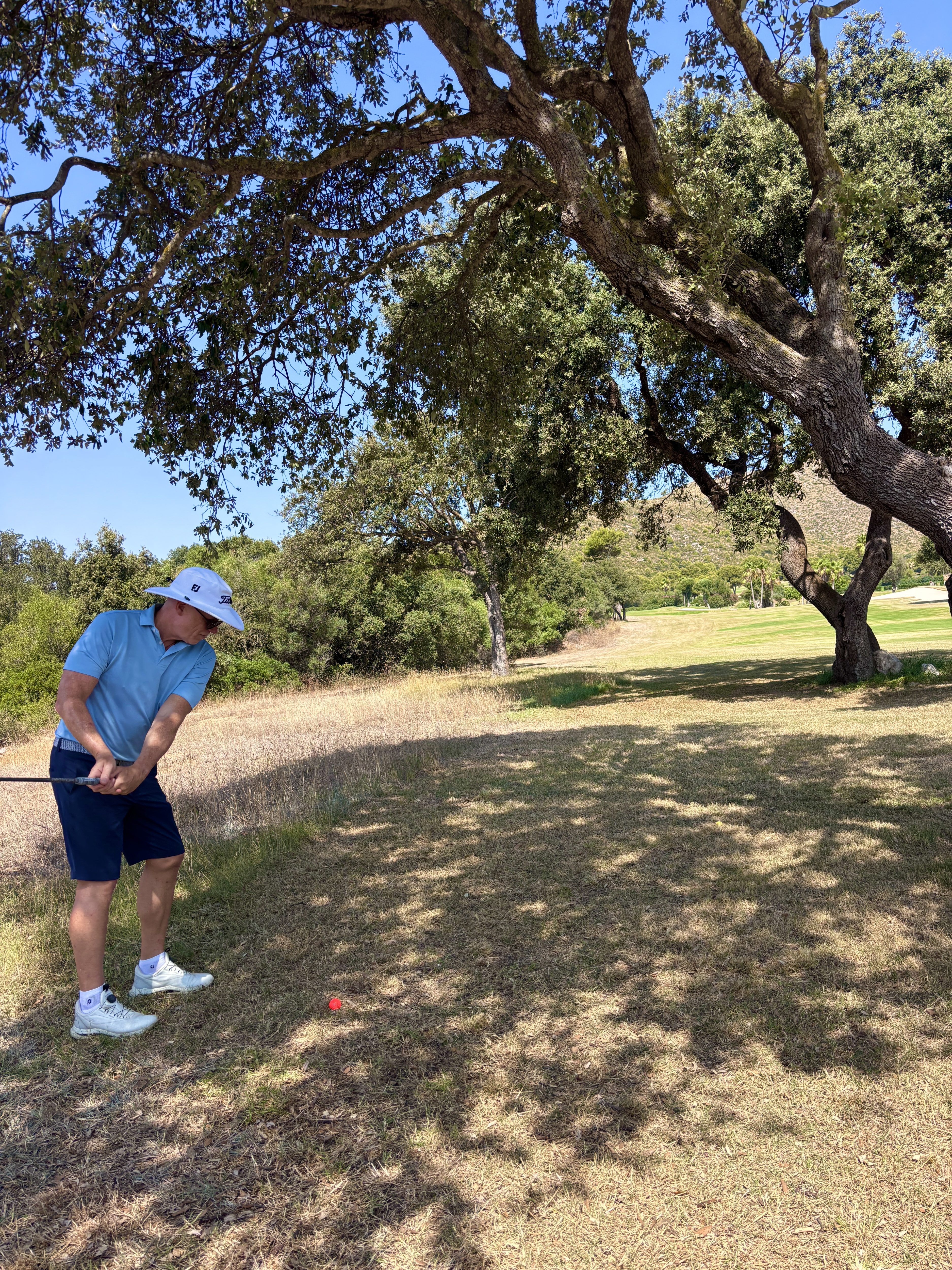
A golfer learns only a limited amount by hitting the ball and afterwards simply deciding whether it flew high or low.
Before the shot, the golfer should make a specific prediction:
- Below which reference will the ball start?
- How high will it be at the first distance post?
- When will it begin to rise more clearly?
- Which intermediate height line will it reach?
- Where does the golfer expect the highest point?
- How will the ball move from there towards landing?
After the shot, the golfer checks which parts of the prediction were correct.
The ball may have started correctly but risen earlier than expected. It may have stayed within the planned height corridor but carried too little speed. Or it may have flown significantly higher than the previous attempt despite using the same club.
This comparison improves more than shot execution. It develops the golfer’s ability to assess ball flight more accurately before a real playing situation.
We explore the relationship between static and dynamic loft, speed, strike quality and lie in more detail in the article Why the same golf club can produce different ball-flight heights. For the launch window, the important point is that flight height should not be treated as a fixed property of a club.
Measured data supports observation

The eye provides important information about ball flight. With small differences during the first few metres, however, visual judgement is not always sufficient.
In the Practice Lab, we can therefore use our portable FlightScope Mevo+. The radar can be used on the driving range, from natural grass and, where suitable, from different lies.
Measurement does not replace observation. Technology is a tool in our coaching, not the teaching method itself. We use it where it can make small differences visible, support the golfer’s perception or make it easier to compare expected and actual ball flight.
What remains decisive is that the golfer observes and understands the ball flight personally and can then transfer that information to a real playing situation.
The golfer can, for example, compare:
- the launch angle and early height development they expected,
- the ball launch shown by the measurement,
- how different clubs compare,
- how much several attempts with the same club vary,
- and whether the intended change actually occurred.
This turns a subjective impression into information that can be checked more objectively.
Transfer to the golf course
On the driving range, a ball flight can be repeated and compared several times. On the golf course, there is usually only one attempt available.
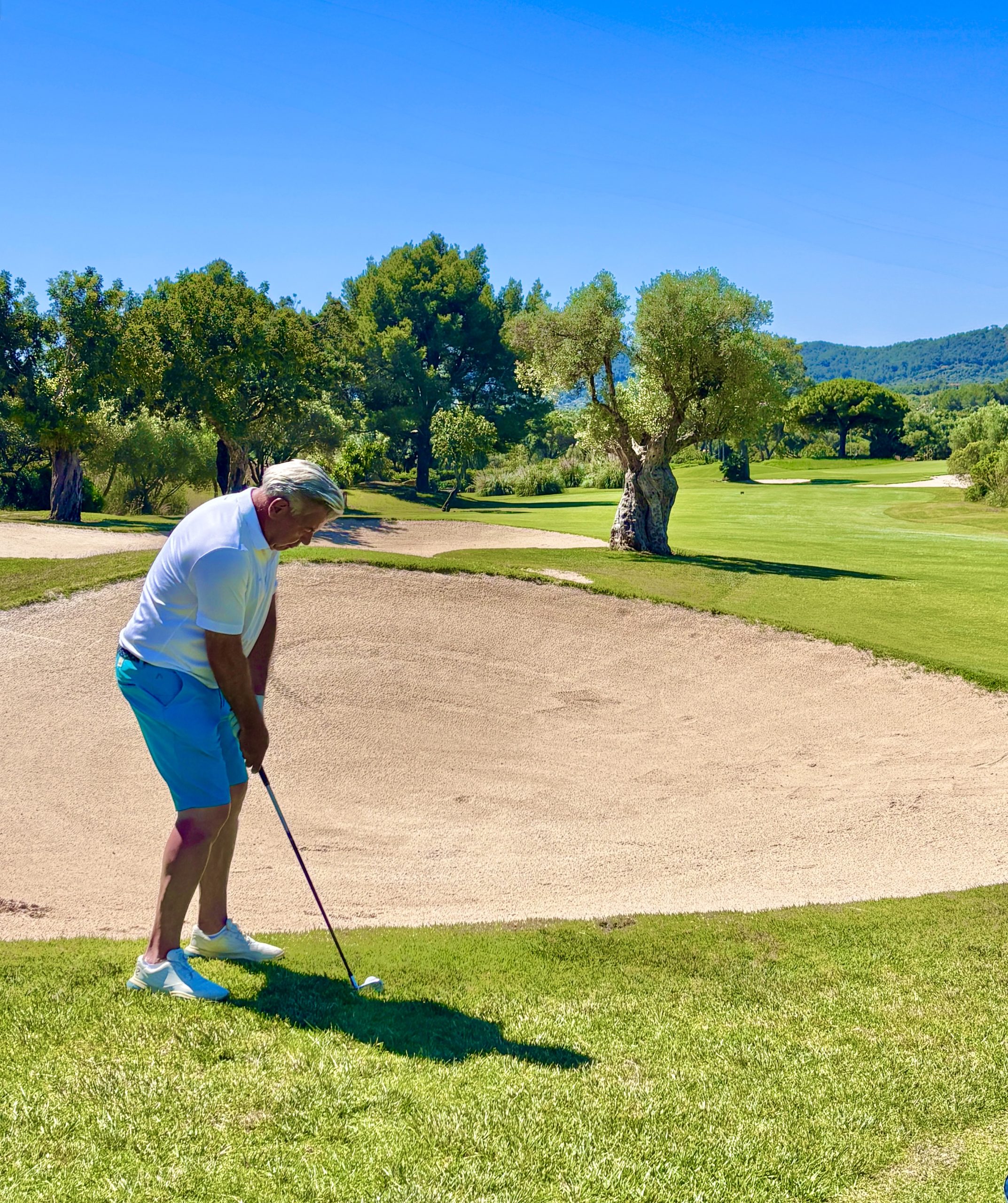
The golfer should not think about every technical detail at the same time. Instead, the golfer needs a simple process that makes the decisive information clear.
Before a shot with restricted flight height, the golfer can check:
- Where is the first critical boundary?
- How far is it from the ball?
- What height may the ball have there?
- Is there another upper or lower boundary farther along the flight?
- Which club produces the required trajectory?
- How reliably can this ball flight be produced?
- What happens after the final obstacle?
This information becomes part of golf shot planning when the golfer has to decide whether the required trajectory is realistically available from the current lie and whether it provides enough room for normal variation.
We explain how height profile, safety margin and possible consequences of a miss later become part of a complete on-course decision in the article Integrating playable windows into decisions on the golf course.
This connection between perception, measurement, practice and transfer to real playing situations is part of our Golf Learning System.
What makes a controllable height profile
A controllable height profile is not created because one ball happened to pass underneath a branch once.
The golfer needs a realistic understanding of:
- how the ball starts immediately after impact,
- how quickly it rises afterwards,
- what height it reaches at a particular distance,
- how much the same club varies from one attempt to the next,
- and which trajectories remain usable even with a normal miss.
The launch window forms the beginning. The height profile determines whether the ball remains inside the available playing situation throughout the rest of the flight.
The decisive question is therefore not only:
How low does my ball start?
But rather:
What height does my ball have at the point where height becomes decisive for this playing situation?
Training launch windows and height profiles in golf lessons
Launch windows and height profiles are best trained when the golfer can observe their own ball flight and compare it with visible references, real obstacles and different distances.
If you would like to experience our training concept yourself, we offer suitable programmes for beginners, experienced handicap golfers and golfers who want to develop course strategy and decision-making in greater depth through our Strategy Lab.
You do not only learn to play the ball generally higher or lower. You learn what height your ball actually reaches at a particular distance and whether that height profile matches the playing situation.
If you would like to experience our training concept yourself, we offer suitable programmes for beginners and experienced handicap golfers, as well as golfers who want to develop course strategy and decision-making in greater depth through our Strategy Lab.
[booking]

We do not train flight height simply as “high” or “low”. We train what height the ball needs to have at a specific point of its trajectory.
The result: the golfer recognises earlier which ball flight fits through a real playing situation.
Professionally developed by Michel Monnard
PGA Golf Professional Michel Monnard has 30 years of experience in golf coaching, course strategy and ball-flight analysis. He teaches at Capdepera Golf in Mallorca and develops the content of the Golf Learning System from real coaching and playing situations.
Basis for this article
This article is based on observations made by Michel Monnard during golf lessons, practical height-control tasks on the driving range at Capdepera Golf and ball-flight analysis with FlightScope. It focuses on launch angle, early height development, rising trajectory, critical distance and personal variation. The complete training sequence and individual evaluation remain part of personal coaching and the Window Programme.
A practical example from our golf coaching, using a 7-iron test series with different early flight heights, is shown in the Golf Learning Insight Four metres of difference in ball flight.
Contents: Launch windows and golf ball-flight height
This part of the Playable Windows series focuses on how launch angle, early height development, rising trajectory and distance determine whether a golf ball can fit through a restricted window and remain playable beyond the first obstacle.
- Playable windows in golf
An overview of how visible space, ball flight, height corridors, safety margins and on-course decisions work together. - Visible window and playable window
Why a visible opening only becomes playable when lie, ball flight, personal ability and possible finishing position are considered. - Launch windows and ball-flight height profile in golf
How launch angle, early height development, rising trajectory and distance influence whether a golf ball can travel through a restricted window. - Why the same golf club can produce different ball-flight heights
How dynamic loft, speed, strike location, spin and lie can change the trajectory produced with the same golf club. - Safety margin and margin for error in golf
Why good golf planning needs to allow for normal shot variation rather than relying only on the perfect strike. - How to read height corridors in golf
How upper and lower boundaries, distance, rising trajectory and apex create the three-dimensional space available for a golf shot. - Planning the entire shot trajectory in golf
Why shot planning should include launch, height profile, landing, runout and the position prepared for the next shot. - Comparing prediction and reality in golf
How comparing the expected ball flight with what actually happens improves learning, judgement and future decisions. - Developing personal height control in golf
Why golfers need to understand their own height profiles, normal variation, different club trajectories and the ball flights that are realistically available to them. - Integrating playable windows into decisions on the golf course
How lie, shot pattern, safety margin, consequences and the next playing position determine whether a technically possible shot is also a sensible strategic choice.
For beginner golfers
- How beginners can get back into play from difficult lies
How new golfers can use larger openings, familiar shots and safer target areas to recover from difficult positions and prepare a normal next playing situation.
How the topic connects to our Golf Learning System
- How the Window Programme makes our Golf Learning System visible
How understanding, technical foundations, skill development, Practice Lab, Strategy Lab, technology and on-course transfer combine within one connected learning process.
[booking]


