

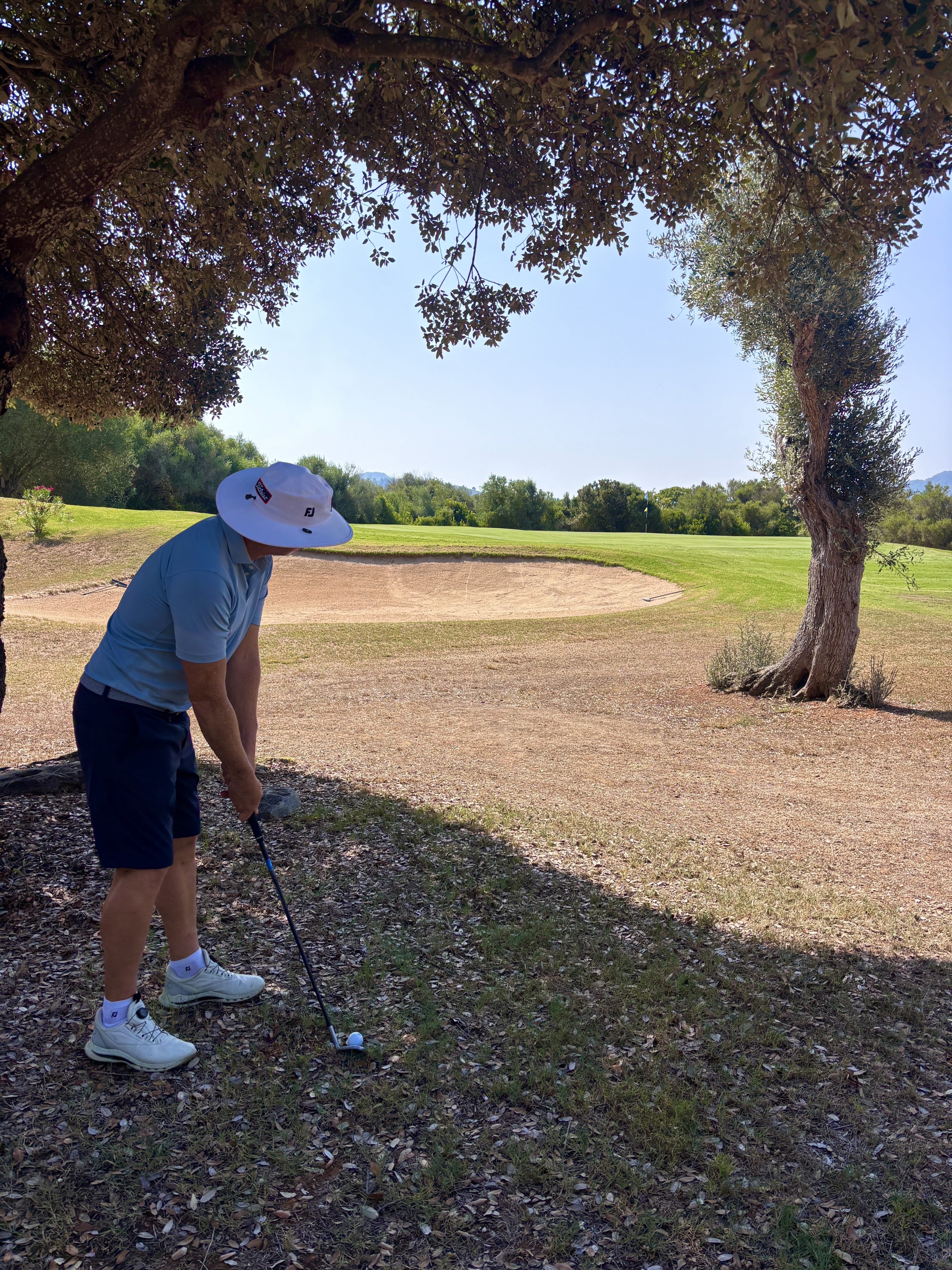
On the golf course, the task of a shot often seems obvious: get the ball as close to the hole as possible.
Sometimes that is exactly right. But certainly not always.
A shot may also have the task of getting the ball safely back into play, avoiding a difficult side of the hole, creating a better angle for the next shot or simply regaining control of the situation after a mistake.
Before we think about how to play a shot, we should first understand what that shot actually needs to achieve.
Not every shot needs to be played towards the flag
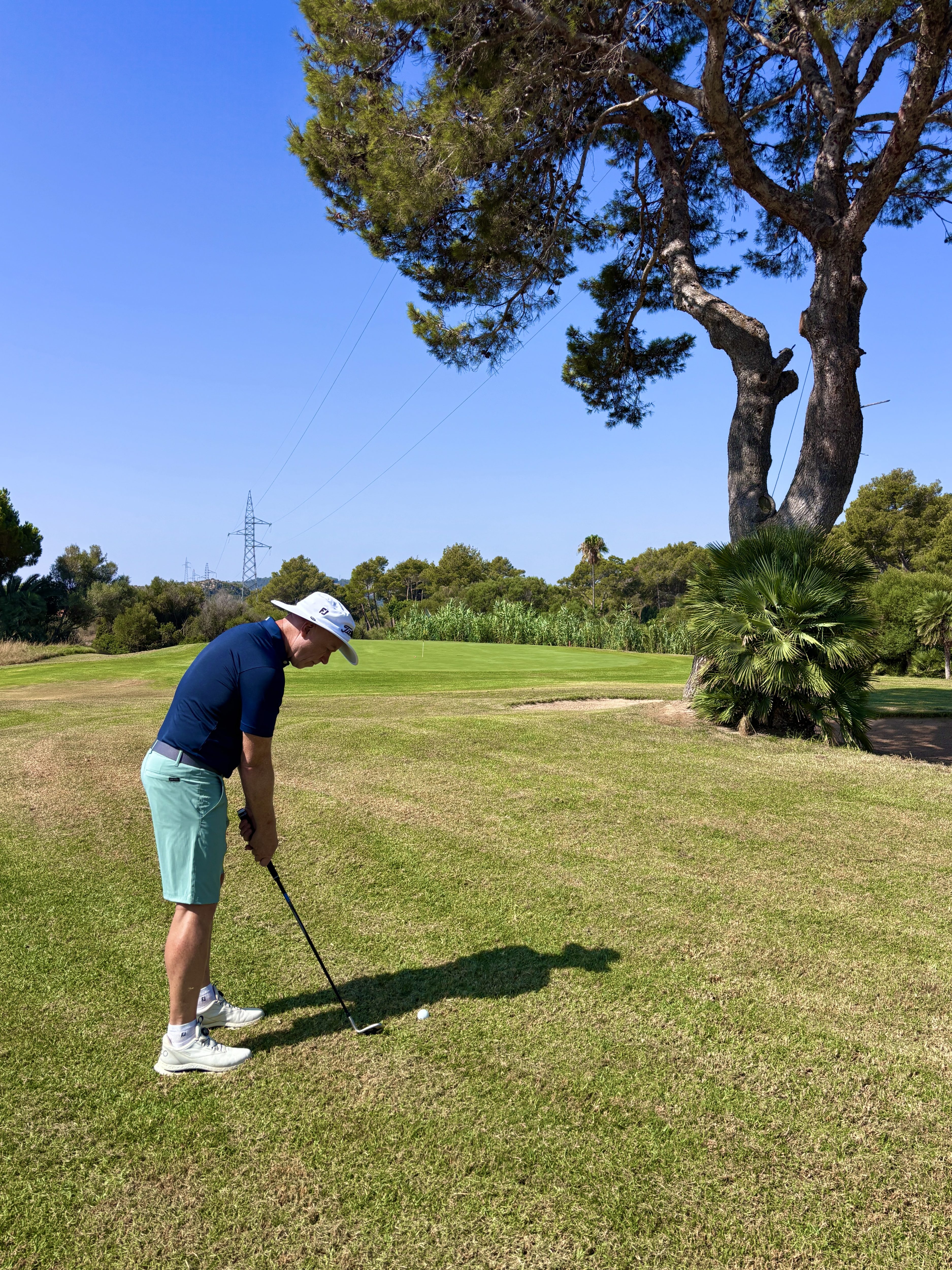
The flag is the most obvious reference point on the golf course. That is why our attention is naturally drawn towards it.
But the flag only tells us where the hole is. It does not automatically tell us what the current shot needs to achieve.
If the ball is lying well, there is enough room around the flag and our normal shot dispersion fits the situation, playing towards the flag may make sense. But if the ball is in the rough, behind a tree or on a difficult side of the hole, the same target can suddenly make the shot unnecessarily difficult.
When the situation changes, the task of the shot has to change with it.
Sometimes the task is simple: get the ball back into play

After a poor tee shot, golfers often want to recover as much of the lost distance as possible with the very next shot. That is exactly how an ordinary mistake can quickly become an expensive one.
If the ball is between trees, in deep rough or in a position with very little room, the most sensible task may be much simpler:
Get the ball back into a playable position.
It may not look spectacular. But it can be exactly the shot that prevents a bogey from suddenly turning into a triple bogey.
One shot can prepare the next
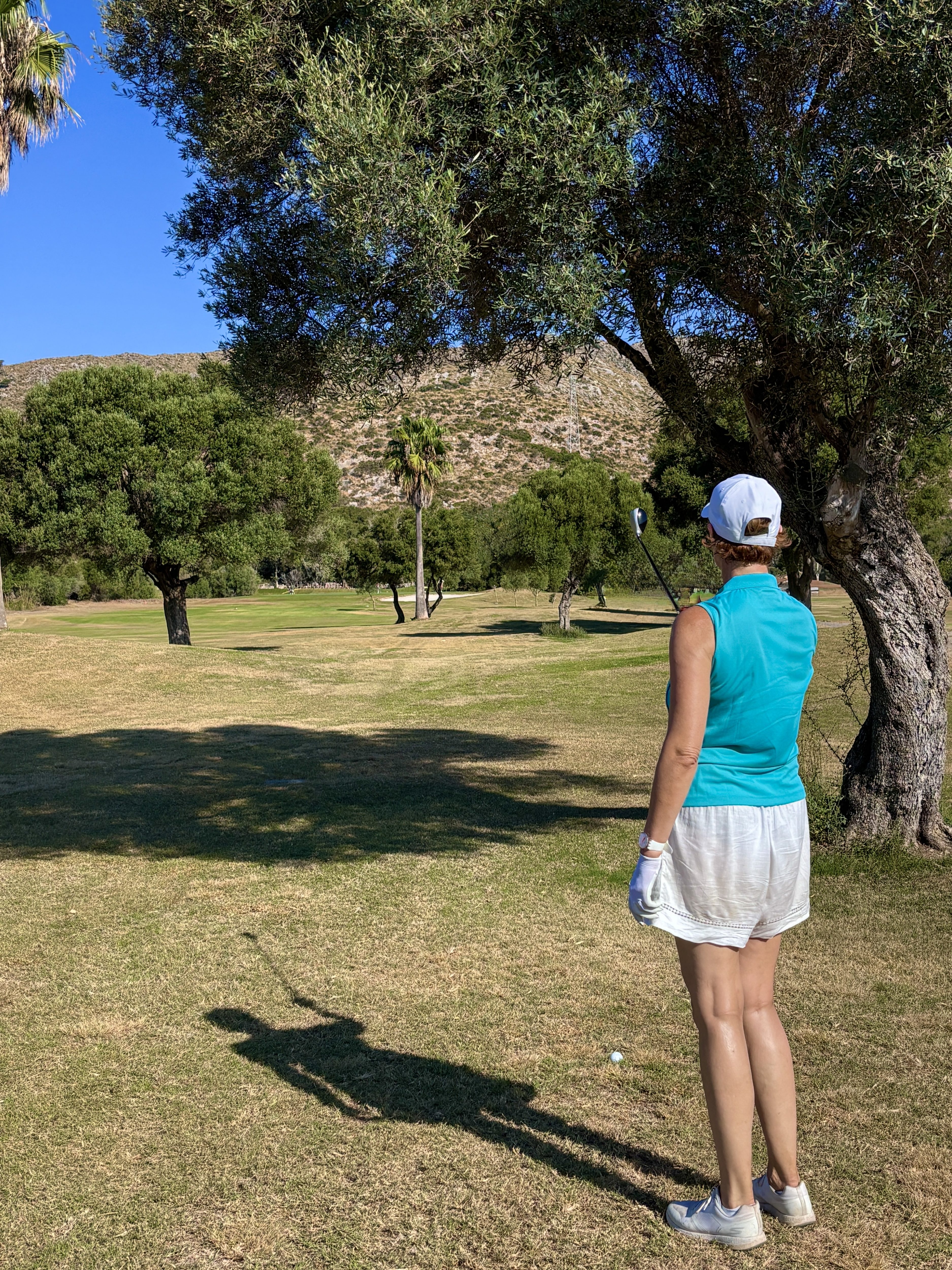
A good shot does not always need to produce the maximum possible distance. Sometimes where the ball finishes is more important.
On a par 5, for example, it may make sense to plan a lay-up that leaves a comfortable distance into the green. On a recovery shot, creating a clear line for the next shot may be more valuable than gaining another 20 or 30 metres with elevated risk.
The finishing position of the current shot becomes the starting position for the next.
That is why the situation we want to create for the next shot is already part of the task of the current one.
Sometimes the task is to avoid one side of the hole

A target area is not only defined by what good things can happen there. It is just as important to understand what is waiting on the different miss sides.
If there is water on the left and plenty of room on the right, the task of the shot may be to take the left side out of play as much as possible. If the flag is positioned directly behind a bunker, a larger target area in the middle of the green may make more sense than attacking the flag directly.
This is not about playing cautiously all the time. It is about recognising which miss is acceptable in this situation and which one could become expensive.
And sometimes attacking is exactly the right task
Shot planning does not mean avoiding opportunities. Quite the opposite: when a situation genuinely gives us enough room, we should be able to take advantage of a good opportunity.
The important question is whether that opportunity is really there. Does the distance fit? Is the lie good enough? Is there enough room for our normal dispersion? And does a normal miss still leave us in an acceptable situation?
If these factors fit together, the task of the shot may absolutely be: attack.
But in golf, one of the hardest skills to learn is knowing when not to attack and when playing safe is actually the better decision.
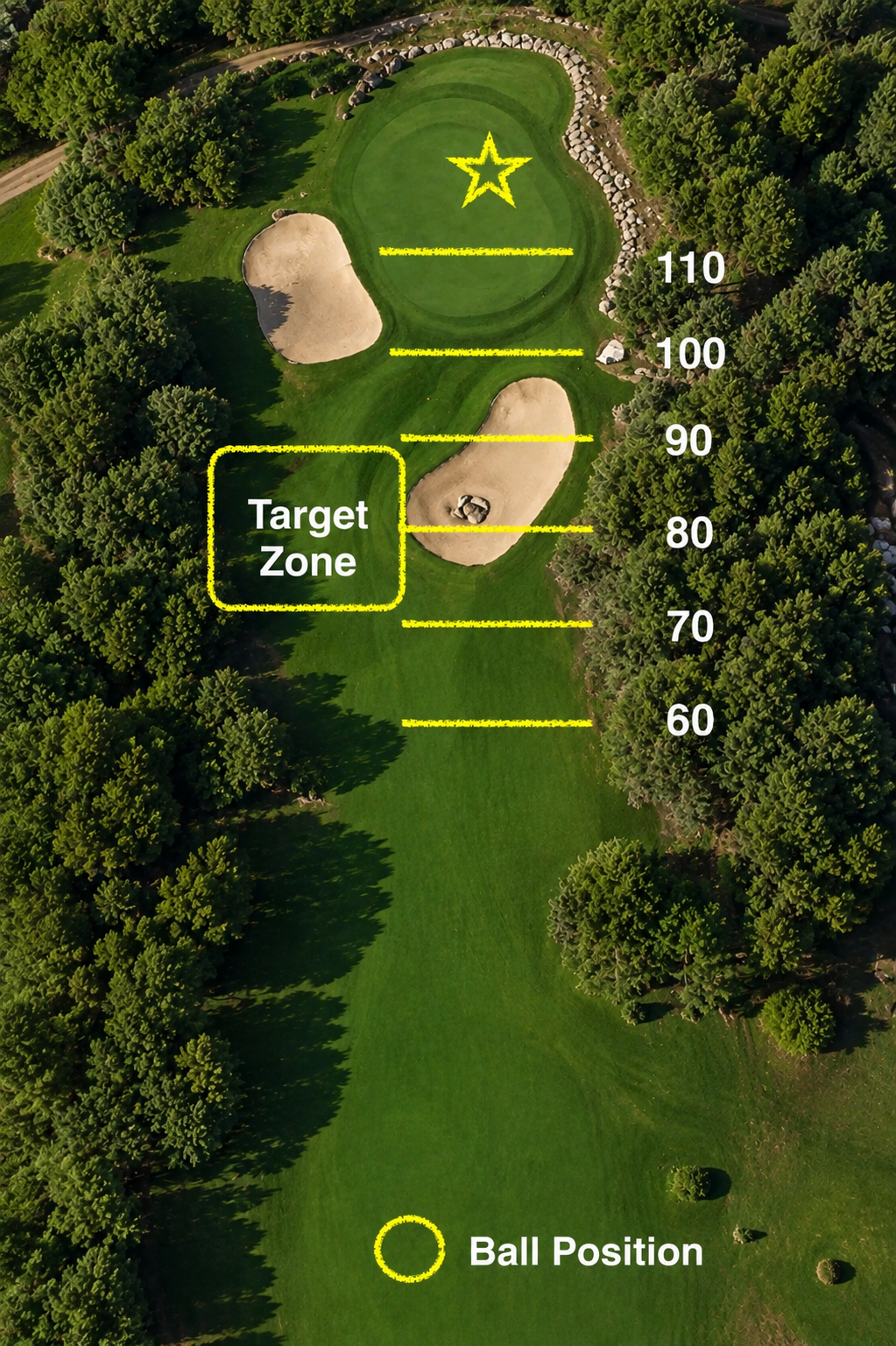
This image on the left shows a typical situation in which higher-handicap female golfers often face a difficult decision. Emotionally, it can be hard to lay up from 110 metres, but for many of these players, carrying the ball more than 100 metres through the air is already a significant challenge.
For a better male golfer, simply add around 70 – 90 metres to these distances and ask the same question: does laying up still feel comfortable, or would you be tempted to attack the green? There is also a third option that often sounds sensible: aiming for the so-called “target zone” left of the bunker. In reality, this may be the worst place to play the ball.
The problem is not only the bunker. It is especially the trees on the left. Many golfers look at a situation like this and say, “I’ll just aim slightly left of the bunker.” What they often fail to notice is that the space left of the bunker is not really open at all. It is bordered by trees, so normal dispersion can quickly turn a supposedly safe target into a very poor position. When I then ask, “Are the trees on the left not a problem?”, the answer is often still: “No, I’m only aiming slightly left of the bunker.”
That is exactly the perception problem. The golfer sees the bunker clearly because it is an obvious hazard, but fails to recognise the forested area around it as part of the real risk of the shot. Aiming slightly left of the bunker does not mean that the entire shot pattern will finish there. The target only becomes useful when there is enough space around it for the golfer’s normal dispersion.
We look more closely at the relationship between attacking and risk in our article “Attacking in golf – when risk makes sense and when it costs shots”.
The task can change after every shot
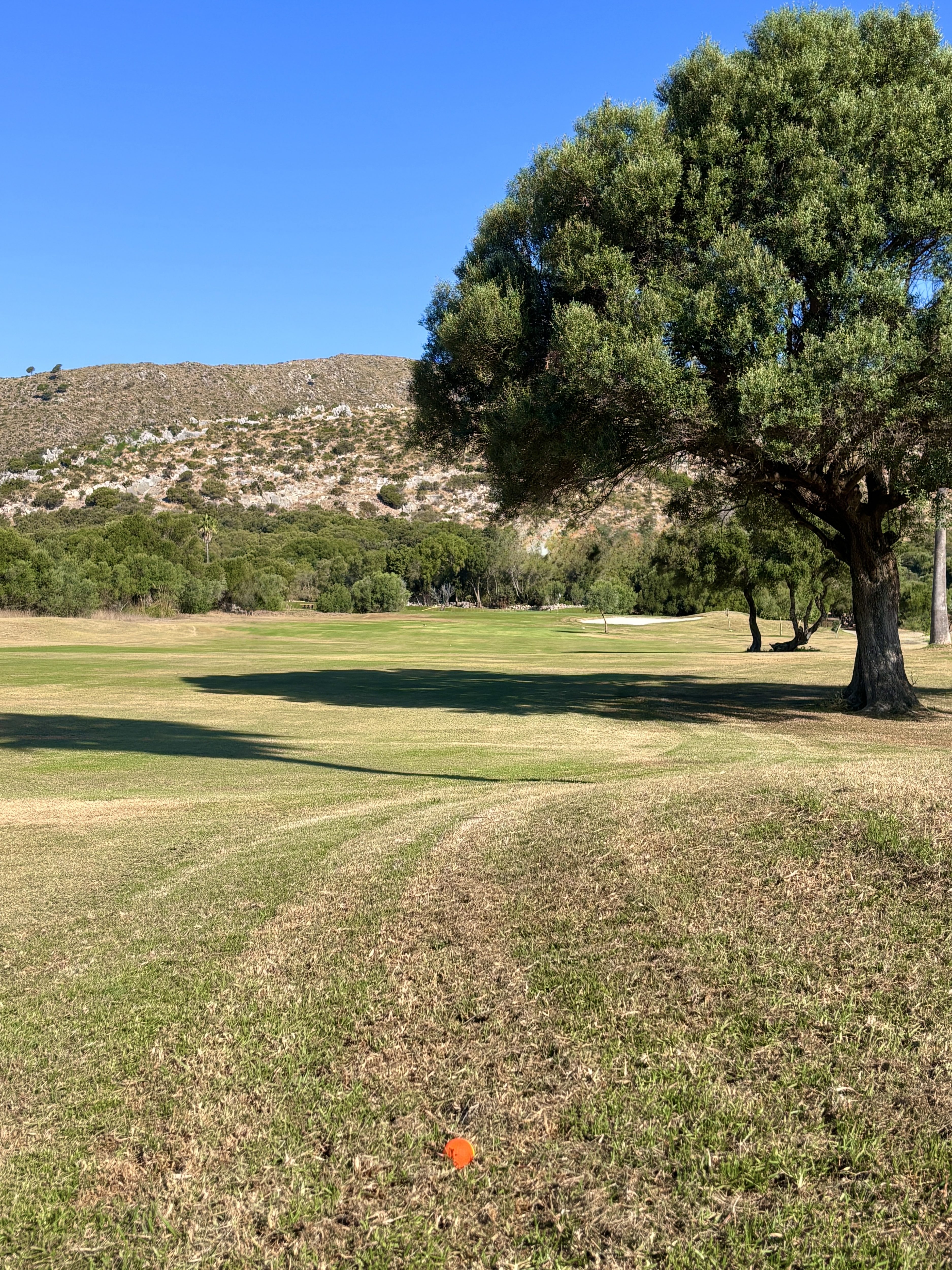
We can have a good plan before playing a hole and still face a completely different task after just one shot.
The tee shot finishes in the rough. The wind gets stronger. The ball sits deeper than expected. A tree blocks the direct line to the green. Or a shot finishes much shorter than planned.
At that point, sticking rigidly to the original plan does not help.
The situation determines the task. Not the plan we would have preferred to play.
After a mistake, there is a new task
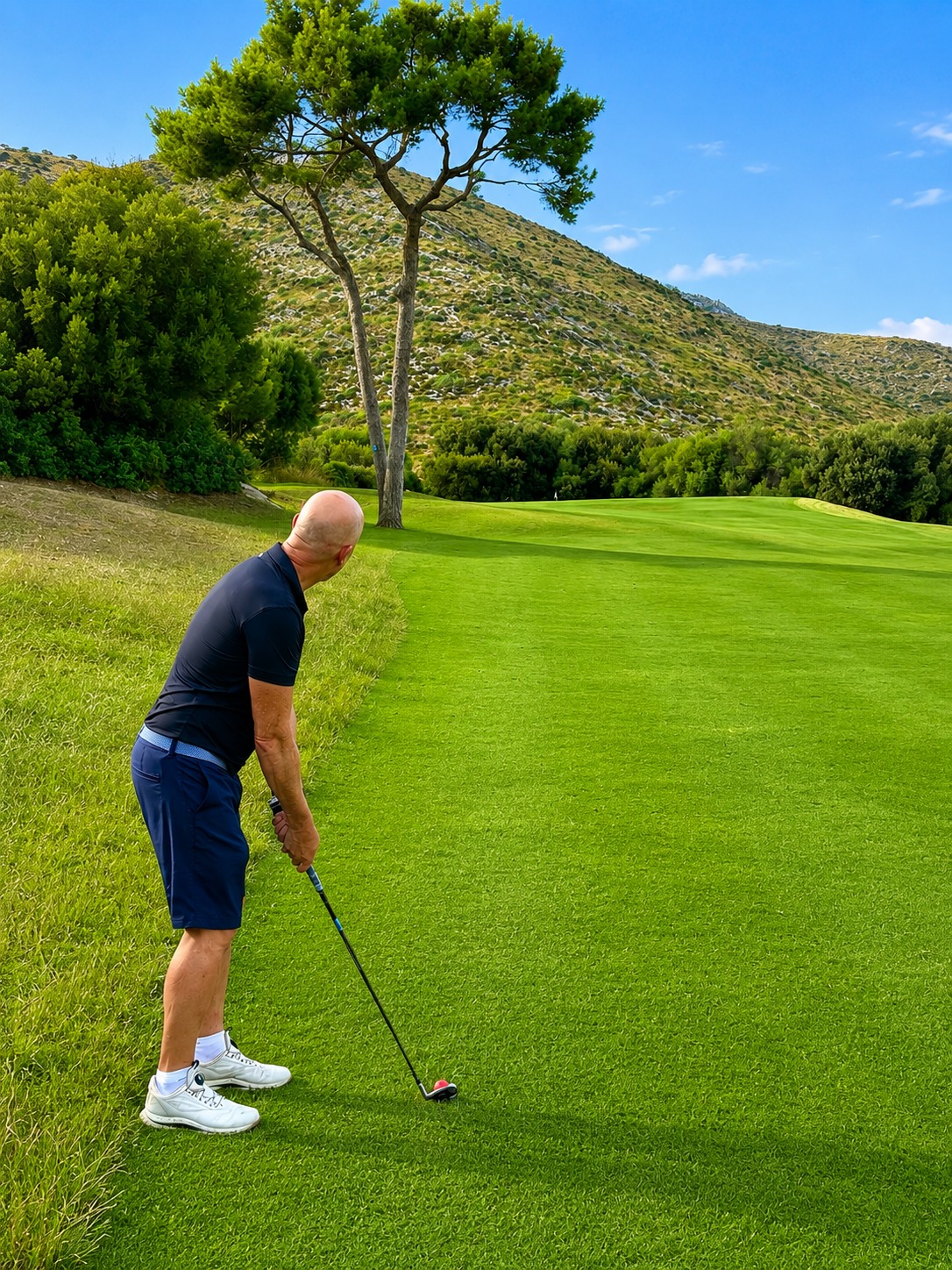
This idea becomes particularly important after a poor shot. Many golfers are still thinking about the previous mistake: the shot was poor, the score may suffer and they want to recover the lost shot immediately.
None of that helps very much with the next decision.
The previous shot is over. In front of us is a new situation, and with it a new task.
The most important question is therefore not: How do I make up for the mistake? It is: What does this situation need from me now?
This way of thinking helps golfers break mistake chains early and return to making sensible decisions more quickly after a poor shot.
The task has to fit the golfer

The same situation can create different tasks for two golfers. One player may be able to hit the ball safely high over a bunker, while another produces a much lower ball flight with the same club. One golfer’s big miss may be to the right, while another’s is to the left.
How we are playing that day and our confidence in a particular shot also matter. If a certain shot has failed several times that day, that information should influence the next decision.
Good shot planning therefore does not search for a theoretically perfect solution.
It looks for a task that fits both the situation and the golfer’s own game.
We do not have to guess at much of this information. On our driving range in Mallorca, we can specifically test distances, dispersion and different ball flights. At Capdepera Golf, the next step is learning how to transfer that information into real situations on the golf course.
One simple question before the shot
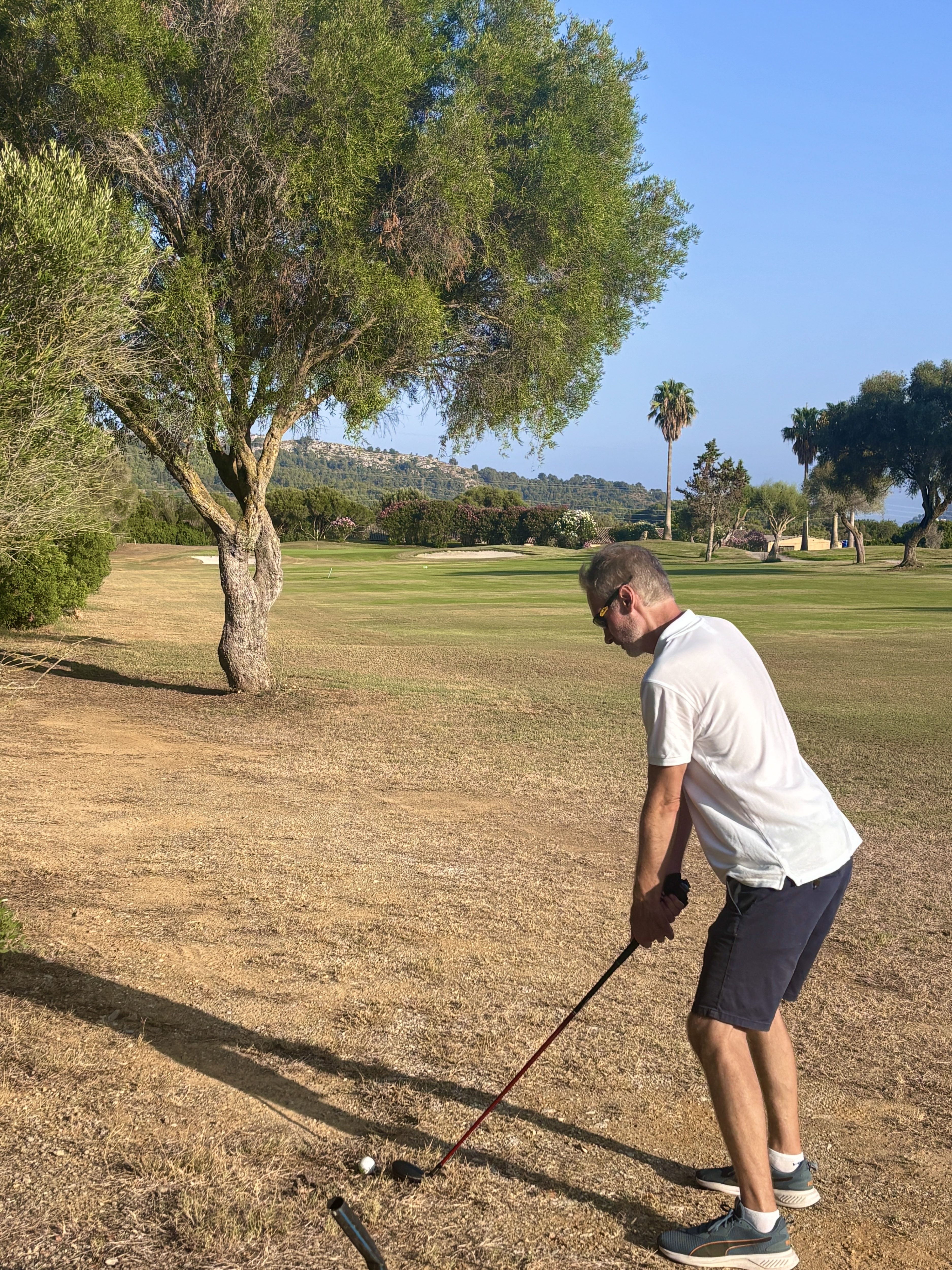
In our lessons, we try not to make shot planning unnecessarily complicated. Often, one simple question is enough:
What does this shot need to achieve for me?
The answer can be very different depending on the situation: get the ball back into play. Avoid one side. Create a better position. Prepare the next shot. Limit the damage after a mistake. Or take advantage of a genuine opportunity.
Only once that task is clear does the choice of target, club and type of shot really start to make sense.
How this connects to golf shot planning
The task of a golf shot is a central part of golf shot planning. There, we look at the complete decision before a shot: the situation, target area, dispersion, carry, runout, risk and the situation we want to create for the next shot.
The task of the shot connects all of this information.
We do not start by deciding which shot we want to play. We first try to understand what kind of shot the situation actually requires.
Shot planning in our advanced golf course
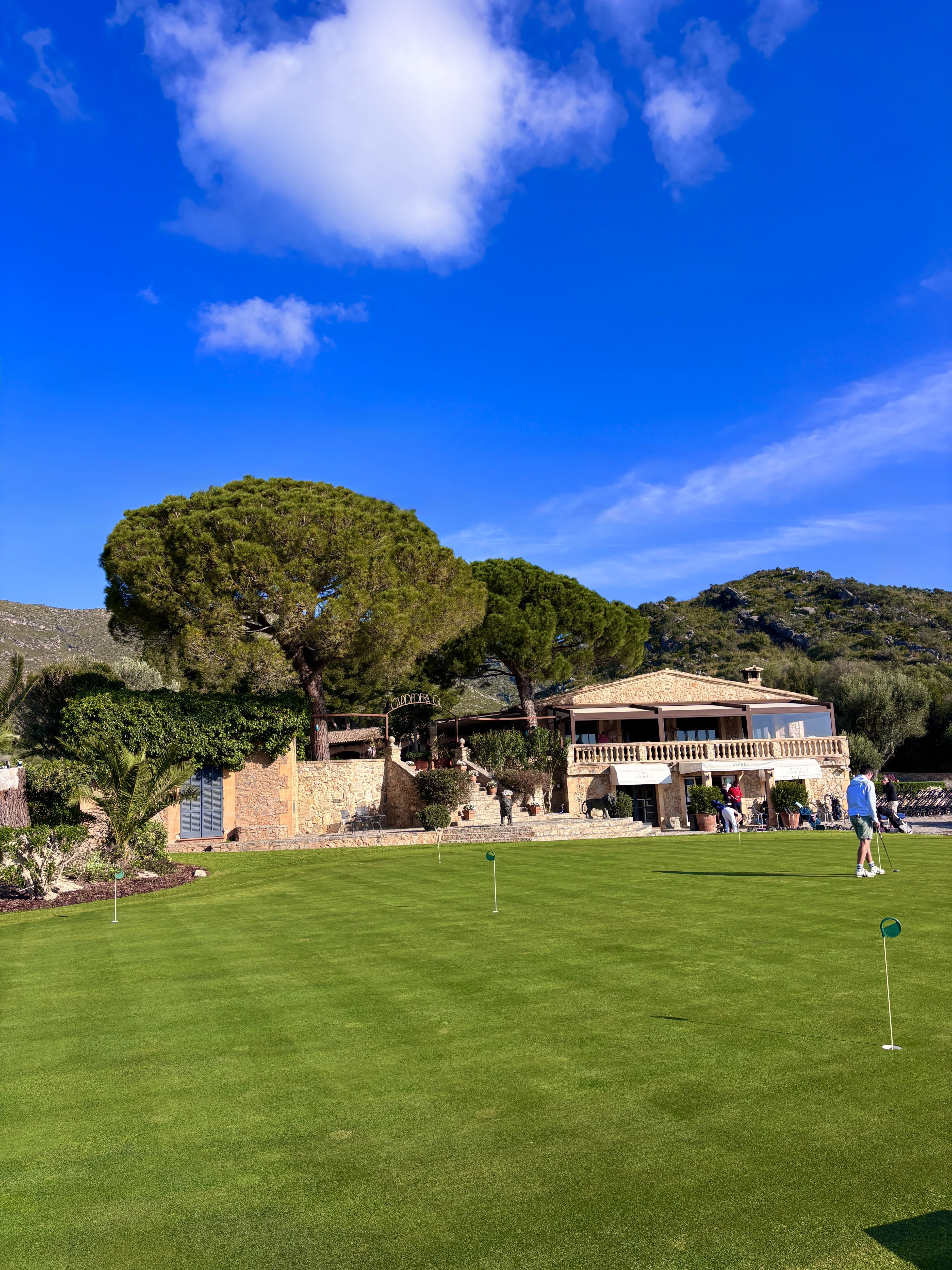
These decisions cannot be learned through theory alone. In our advanced golf courses at Capdepera Golf, we therefore work directly with real situations on the golf course. Together, we look at what the shot needs to achieve, which target area makes sense and how the next shot already influences the current decision.
One of the major advantages is that we can connect theory, practice and on-course play directly. We can first discuss an idea, then test it on the driving range and finally apply it to a real situation on the golf course.
You can learn more about this approach to golf instruction in our advanced golf course for handicap golfers in Mallorca.
[booking]
Golf shot planning – an overview of the topics
The task of a golf shot is one part of a larger decision-making process. Good golf shot planning connects what the shot needs to achieve with target selection, dispersion, risk, ball flight and the position we want to create for the next shot.
The following articles show how these different parts of shot planning influence one another and help golfers choose a solution that fits both the playing situation and their own game.
Golf shot planning
The main overview explains how golfers turn the information in a playing situation into a clear plan for the next shot.
What is the task of a golf shot?
The current article explains why the first decision is not always where to aim, but what the shot actually needs to achieve.
When is a golf shot really an opportunity?
Whether the task should be to attack depends on how much room the situation offers, how well the shot fits the golfer and what happens with a normal miss.
Why the best possible result is not always the right target
The task of a shot should reflect realistic outcomes rather than being based only on the perfect result we would like to achieve.
Why the next shot belongs in the current decision
One important task of the current shot may be to create a better distance, angle or lie for the shot that follows.
How target zones and dispersion change golf shot planning
Once the task is clear, the target zone needs to provide enough room for the golfer’s normal shot pattern rather than only the ideal ball.
How golfers can assess risk and margin for error more effectively
The task of a shot also depends on how much variation the situation can tolerate and how costly a miss may become.
How playable windows influence golf shot planning
In difficult situations, the task must be matched to a ball flight that actually fits the available space, lie and normal variation.
How to recognise a good golf decision even after a bad result
After the shot, we can check whether the chosen task and plan were sensible even when the actual result was poor.


