


Before a golf shot, it is easy to think about the best possible result. We want the ball close to the flag, on the green, or perhaps to save par after a poor previous shot.
Wanting a good result is not the problem. The problem begins when we base our decision only on that one perfect outcome.
A golf shot does not have just one possible result. It has a whole range of possible outcomes.
The perfect shot is only one possibility
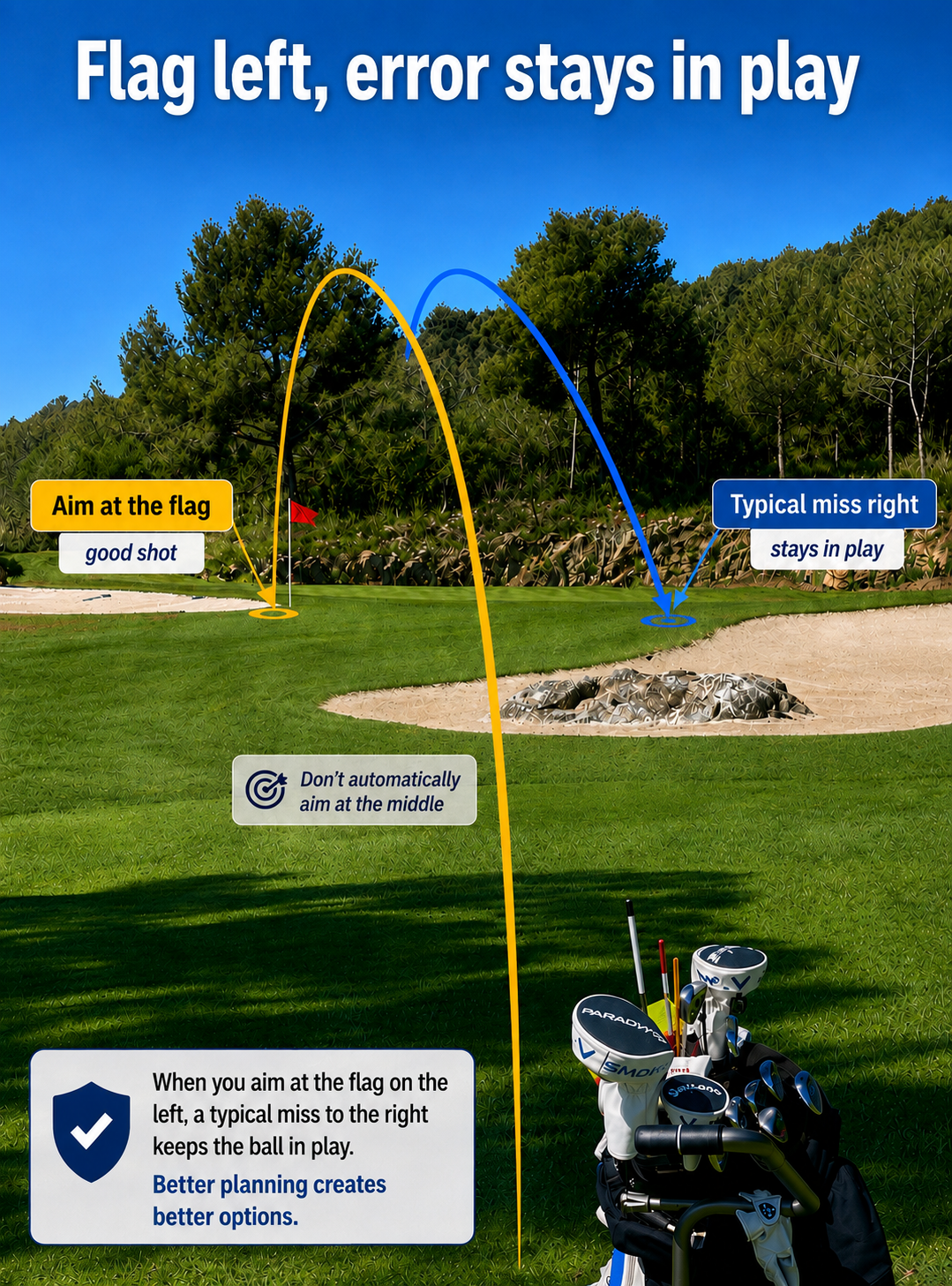
Imagine a flag positioned just beyond a greenside bunker. The perfect shot carries the bunker, lands softly and finishes a few metres from the hole.
Of course we can play that shot.
But we should not look only at that ball. A normal shot may finish slightly shorter. Another may start a few metres to the right. Perhaps we do not strike the ball quite cleanly, or the wind changes the distance it carries.
That changes the question we should ask before the shot.
Not only: What happens if everything works perfectly? But also: What happens with a normal shot?
Best case, normal shot and acceptable miss
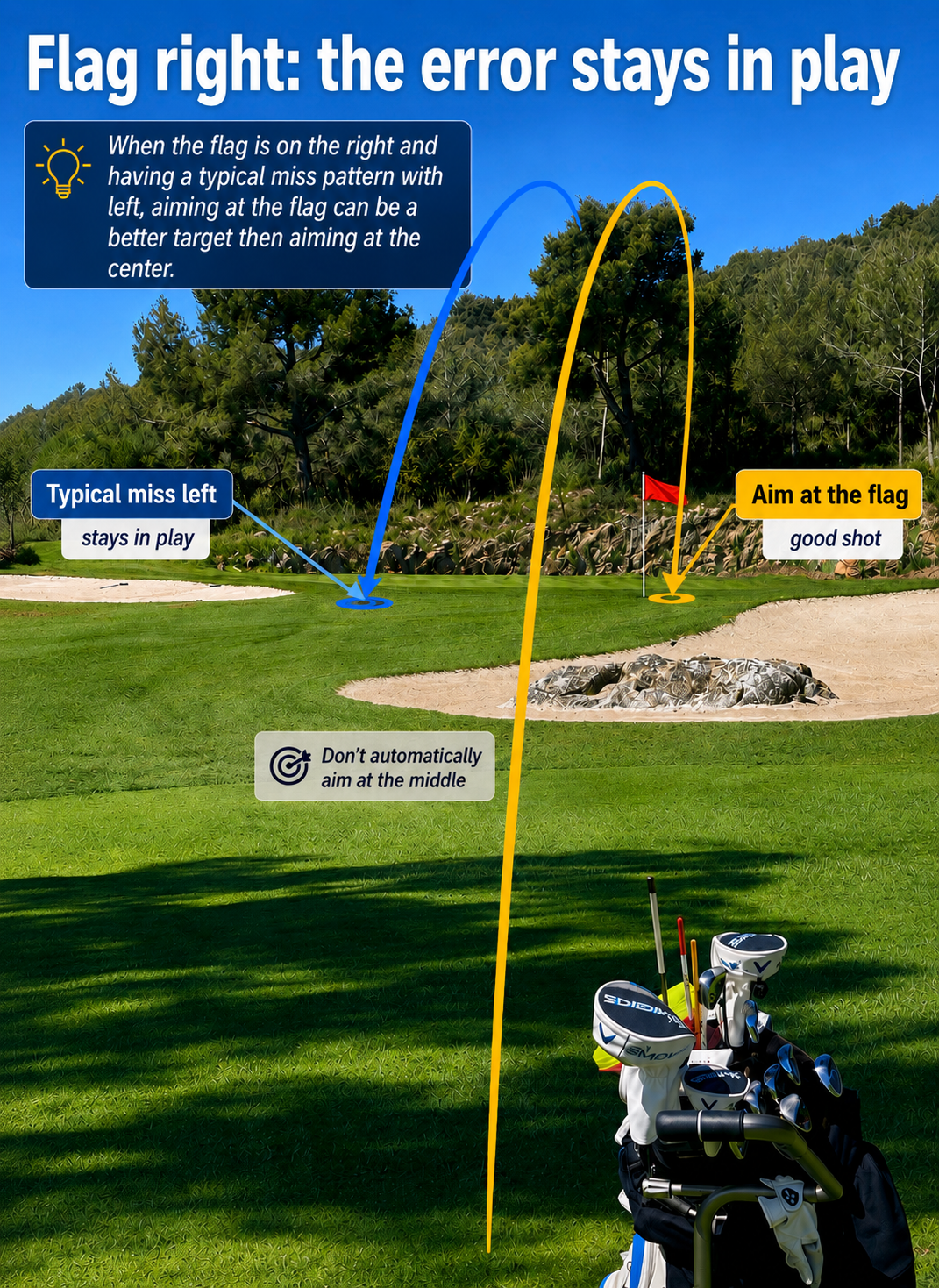
In our lessons, it helps to consider several possible outcomes before an important shot.
What would be the best case? What do we expect from a normal shot? Which miss would still be completely acceptable? And which result do we particularly want to avoid?
These questions often change the target before we have even selected a club. A flag close to the edge of the green may look attractive. But if a small miss on that side finishes immediately in the water, a larger target zone may make much more sense.
The target for a shot should not only suit the perfect ball. It should also leave room for normal shots.
We look more closely at how target zones can allow for normal variation in “How target zones and dispersion change golf shot planning”.
Not every poor shot produces a poor result
A ball can finish ten metres farther right than planned and still leave us in a very good position. Another shot may not feel particularly good but still finish safely in the middle of the green.
For our score, those results may be perfectly good enough.
That is why we distinguish between a shot that was not perfect and an outcome that is actually a problem.
Golf becomes much easier when every small mistake is no longer treated as a failure.
The big miss deserves particular attention
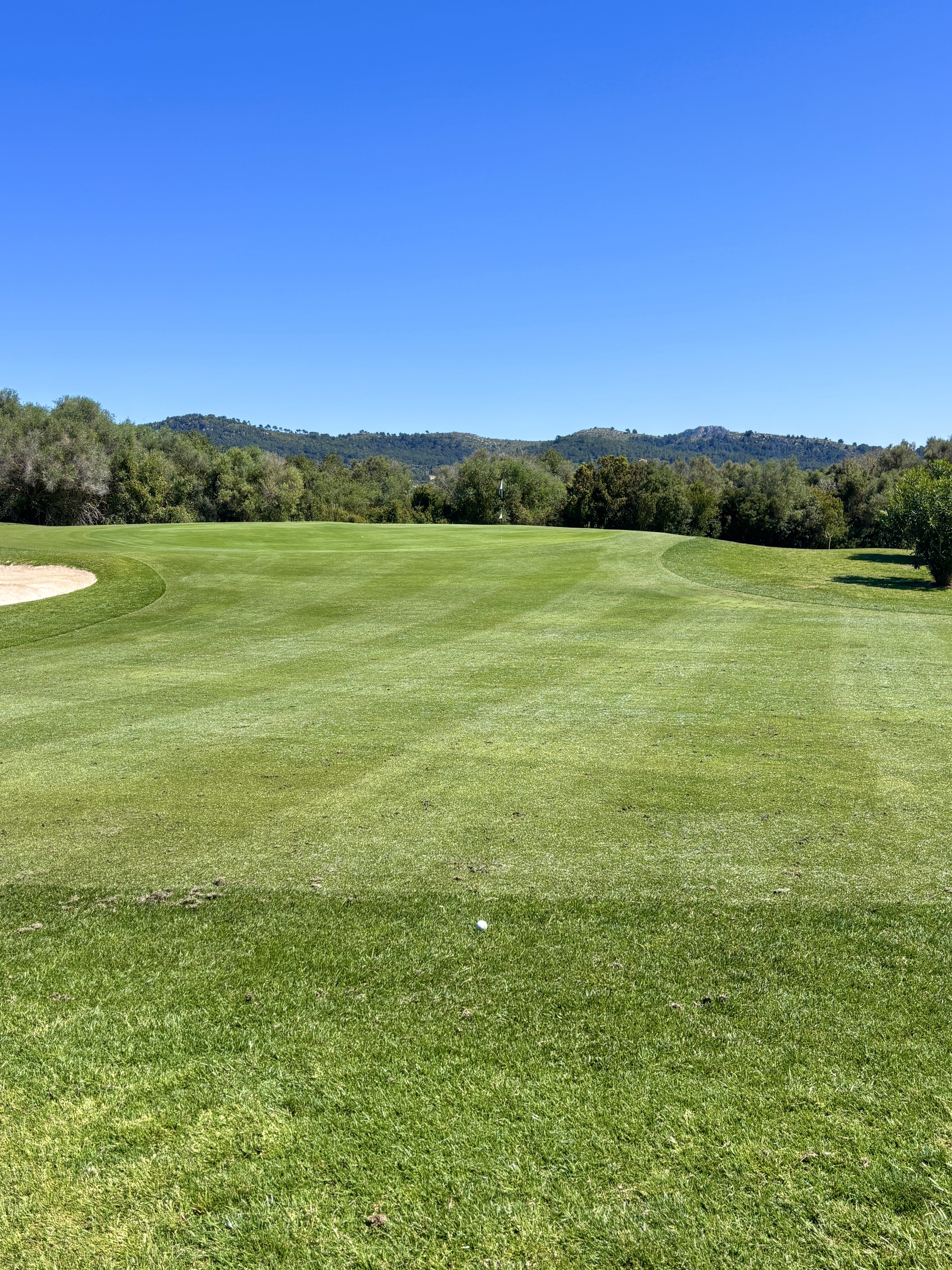
Not all misses cost the same. A ball slightly right of the green may leave a straightforward chip. A ball the same distance left might finish in the water.
This is why, in golf shot planning, we look not only at the likelihood of a miss but also at its consequences.
If there is very little room on one side, that information should influence our target zone. Not because we are afraid of the miss, but because we know that it would be considerably more expensive than other possible misses.
Good golf shot planning does not try to eliminate every mistake. Above all, it tries to make the costly mistakes less frequent.
We look more closely at how much room a shot needs for normal misses in “How golfers can assess risk and margin for error”.
Our dispersion belongs in our expectations
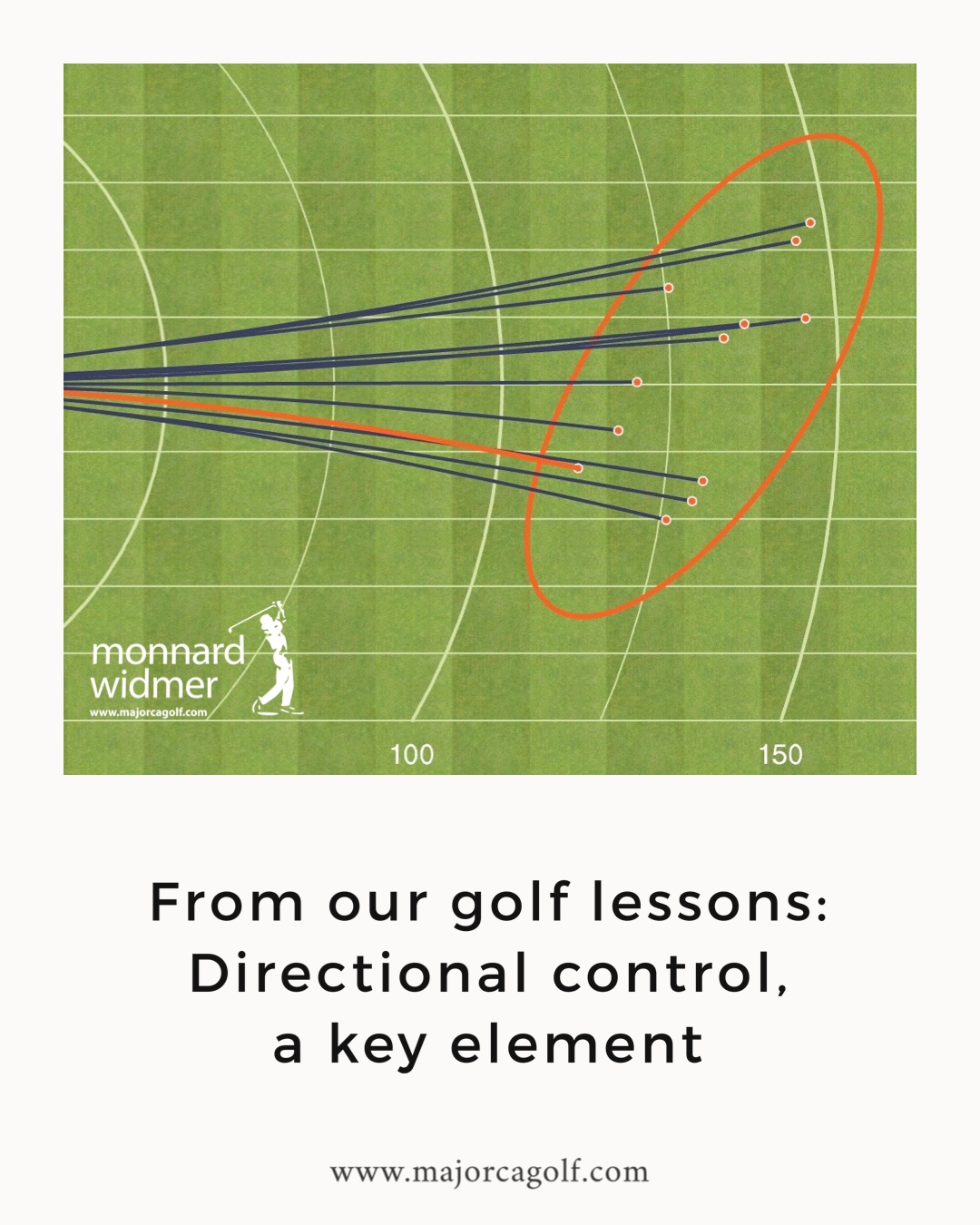
The more realistically we understand our own dispersion, the better we can judge which outcomes we should actually expect from a shot.
On our driving range in Mallorca, we can observe exactly these patterns. How far does a club normally carry? How wide is the lateral dispersion? Where does the most common miss tend to finish?
At Capdepera Golf, this information then becomes part of a practical decision. Does this dispersion fit the available target zone? Which side gives us more room? And which miss still leaves the ball playable?
The better we understand our normal shot pattern, the less we have to base our decisions on hope.
A good target allows for several good outcomes

A good target zone is not defined only by how good the perfect shot will be if it finishes there.
Ideally, it should also accommodate normal shots. A ball that finishes slightly shorter remains playable. A ball a little to the right still has room. A small distance error does not immediately create the next problem.
This is exactly why larger target zones are often more useful than a single target point.
We are not only looking for the best possible result. We are looking for a target zone in which as many of our likely outcomes as possible still work.
We explain in more detail how target zones and dispersion work together in the article “Golf dispersion – strategy and target zones”.
The score can distort our expectations
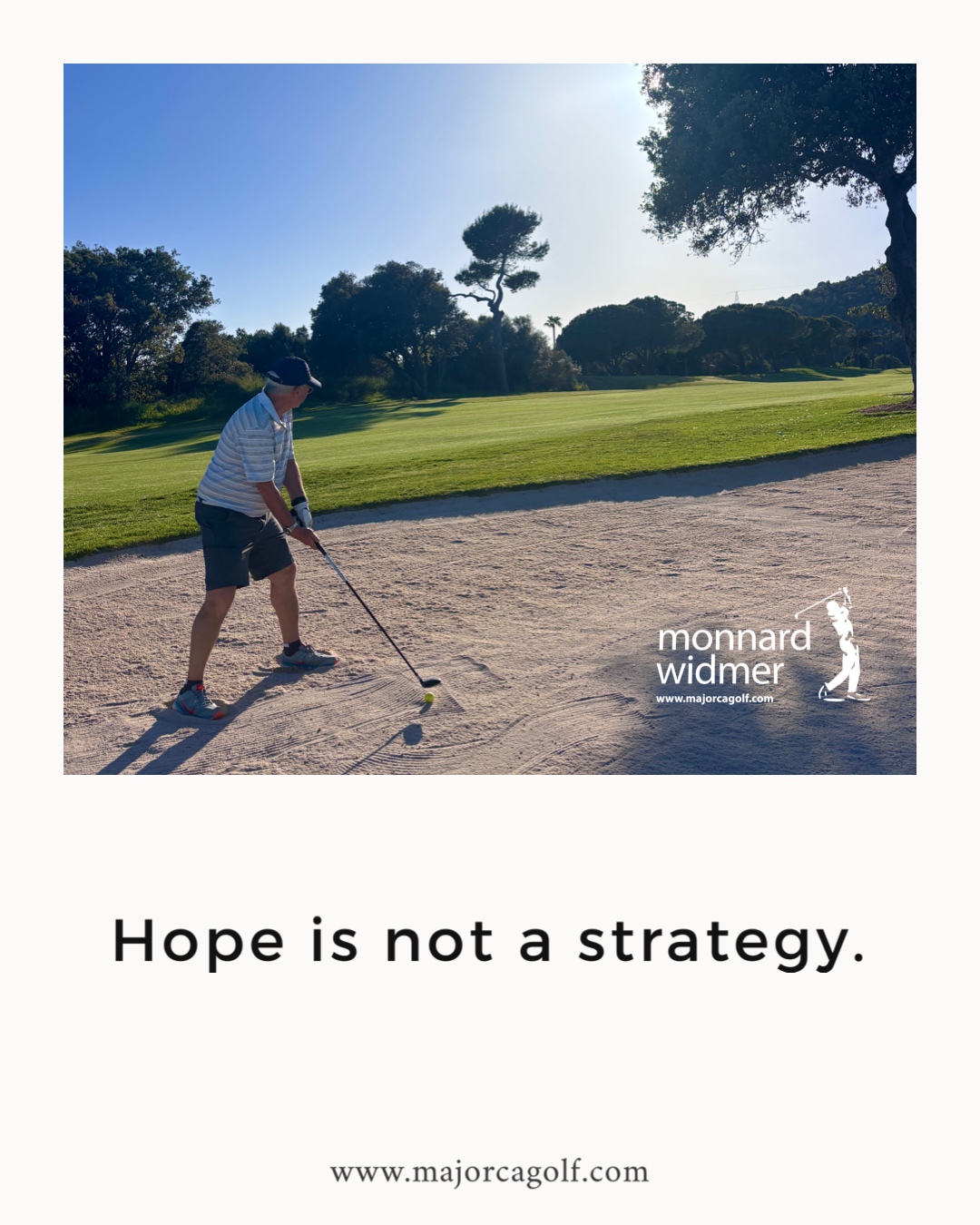
This way of thinking becomes particularly difficult when we are unhappy with our score. After a double bogey, we may feel that we need to make a birdie to win the shot back. After a poor tee shot, we may expect the next shot to be exceptionally good.
Trying to recover a mistake immediately is also one of the ways chains of mistakes develop on the golf course.
But that does not change the golf course in front of us.
A difficult flag position remains difficult. Water remains water. A narrow gap between trees does not become wider.
The score we want should not make our expectations greater than the opportunity the situation actually offers.
We look more closely at whether a situation genuinely offers enough room to attack in the article “When is a golf shot really an opportunity?”.
After the shot, compare expectation and outcome
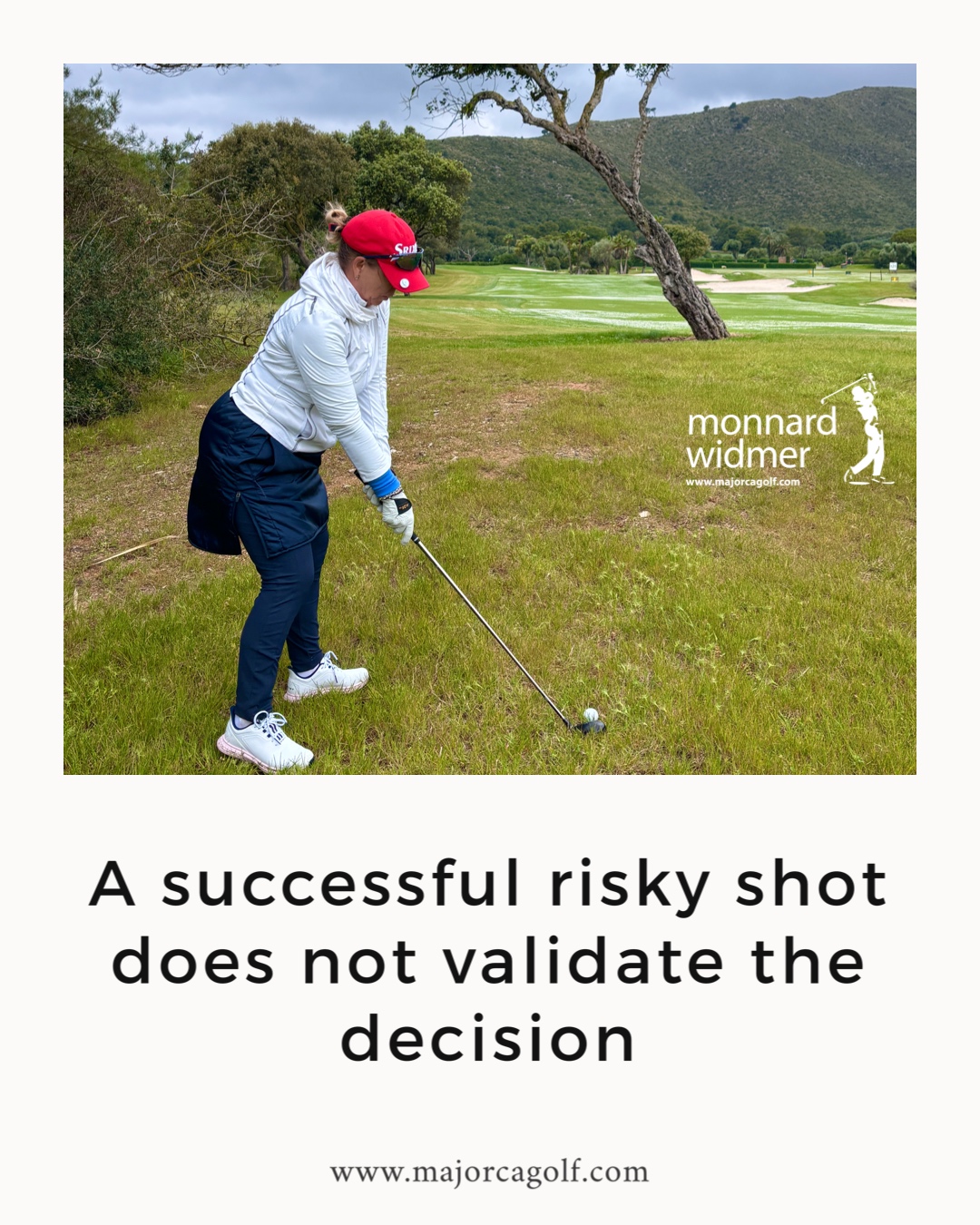
After the shot, we can learn a great deal if we look beyond the number that eventually goes on the scorecard.
Was the result roughly within the range we would have accepted beforehand? Did exactly the big miss occur that we wanted to avoid? Or was the decision good and the execution simply unusually poor?
This distinction matters because a good result does not automatically prove that the decision was good. In the same way, a poor shot does not make a sensible decision wrong in hindsight.
We look more closely at why a good decision can still lead to a bad result in “How to recognise a good golf decision after a bad result”.
We learn better when we ask not only where the ball finished, but whether our expectations beforehand were realistic.
We also explore how expectation, decision-making and the actual result fit together in the Golf Learning Insight “A good golf result cannot be forced”.
One simple question before the shot
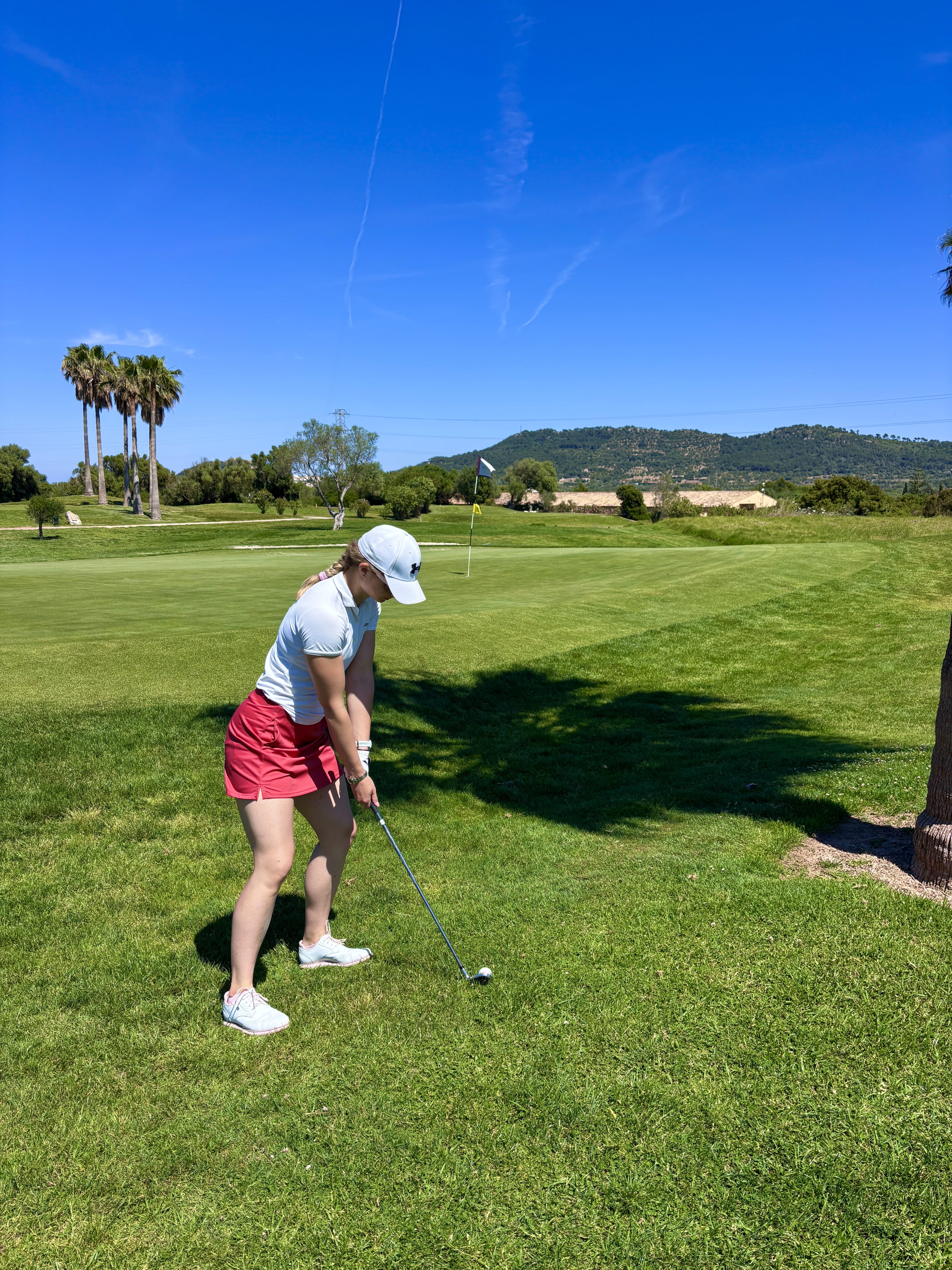
Before a shot, it therefore helps not only to ask what could happen in the best case.
We can also ask:
What happens with my normal shot, and can I play comfortably from that result?
This question does not make golf any less attacking. It simply stops us from basing our decisions entirely on the perfect ball.
This way of comparing possible outcomes is also part of the decision-making work in our Strategy Lab.
How this connects to golf shot planning
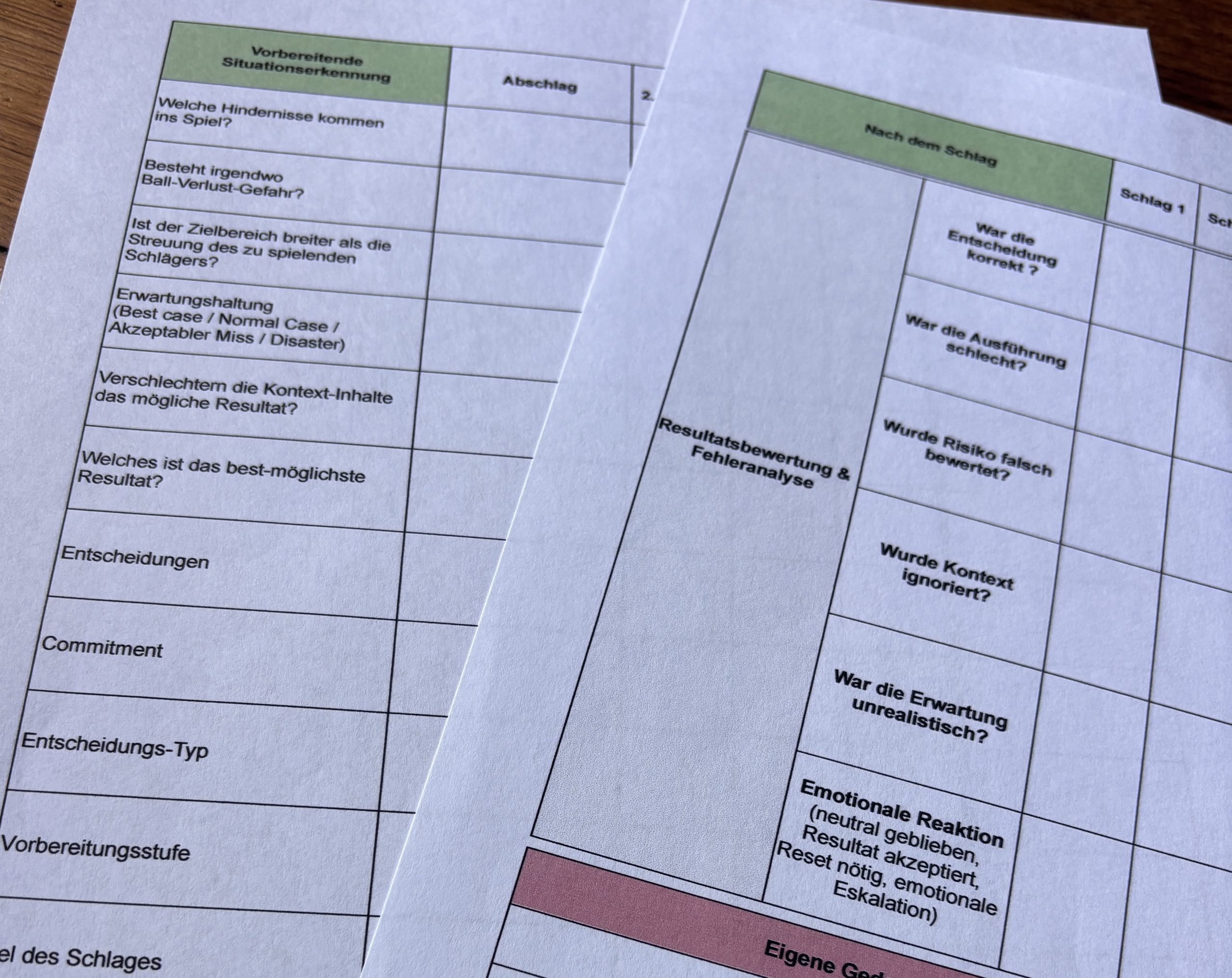
Our expectations for a shot are an important part of golf shot planning. We consider not only the result we would like, but also normal shots, acceptable misses and the outcomes we particularly want to avoid.
Those expectations also influence the task of a golf shot. Depending on how much room the situation offers, the appropriate task may be to attack, to choose a larger target zone or first to create a better situation for the next shot.
A good decision is therefore based not only on the best possible result, but on the full range of situations that may result from the shot.
Testing expectations in our advanced golf course
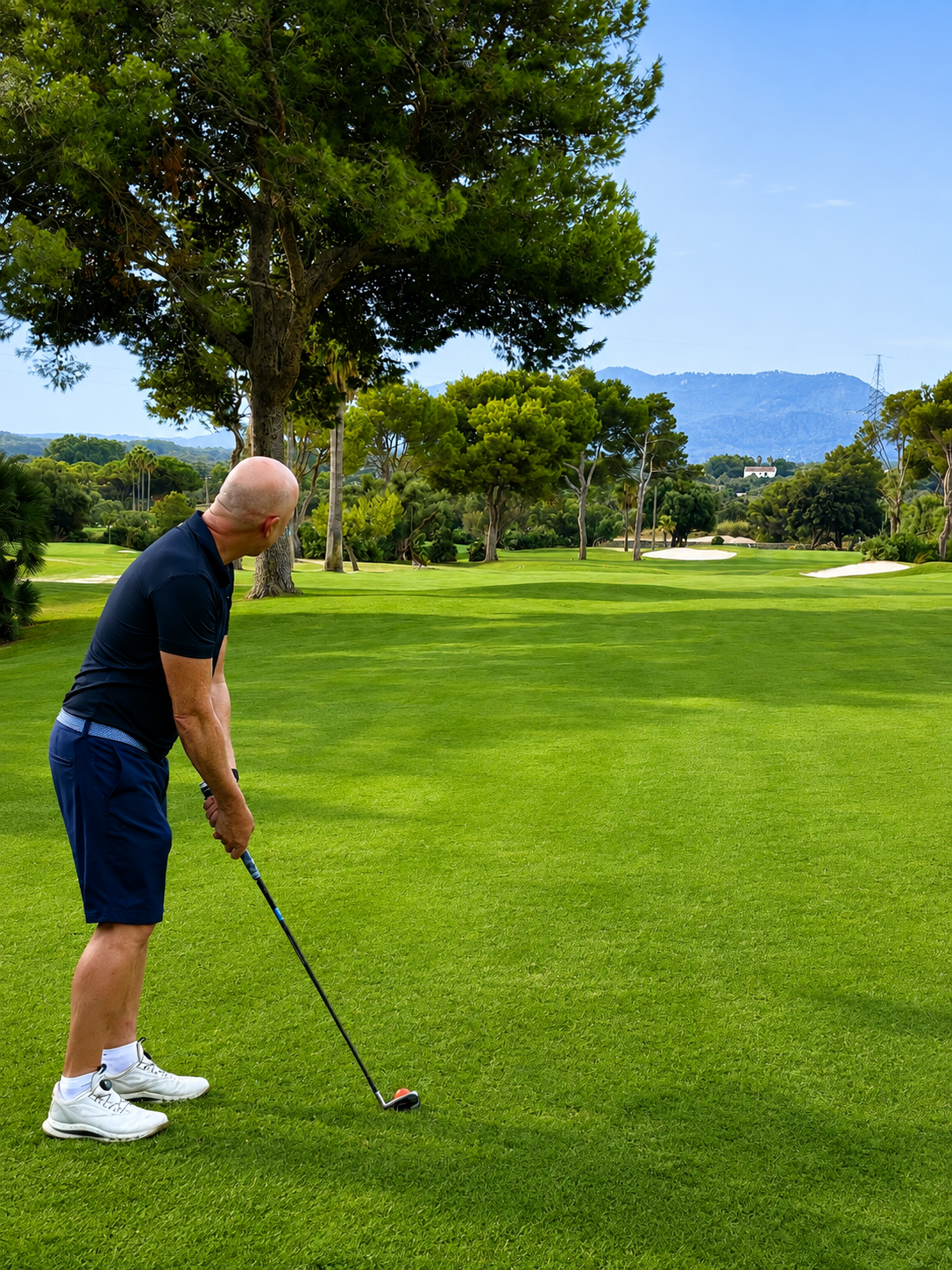
These are exactly the situations we discuss and test in our advanced golf courses at Capdepera Golf. We compare target zones, look at normal misses and consider before the shot which outcomes would be acceptable and which miss could become genuinely costly.
One advantage of our training environment is that we can first observe shot patterns on the driving range and then transfer that information directly into real decisions on the golf course. Afterwards, we compare the plan, the execution and the actual result.
In this way, the golfer does not learn to play more cautiously. The golfer learns to set more realistic expectations and to take advantage of good opportunities more deliberately.
You can learn more about this form of golf instruction in our advanced golf course for handicap golfers in Mallorca.
[booking]
Golf shot planning – an overview of the topics
Good golf shot planning is not based only on the best result a golfer can imagine. It also considers what normally happens, which misses are still acceptable and which outcome would create unnecessary trouble.
The following articles show how realistic expectations connect with the wider decision-making process: defining the task of the shot, recognising genuine opportunities, choosing target zones, understanding dispersion, managing risk and preparing the next playing position.
Golf shot planning
The main overview explains how golfers combine situation analysis, realistic outcomes, target selection and risk before committing to a shot.
What is the task of a golf shot?
The task of the shot helps define which result is actually useful. Getting as close to the hole as possible is only one of several possible objectives.
When is a golf shot really an opportunity?
A promising best-case result does not automatically make a shot a good opportunity. The normal outcome and the consequences of an imperfect shot matter as well.
Why the best possible result is not always the right target
The current article explains why good decisions should be built around realistic outcome ranges rather than around the single perfect result a golfer hopes to achieve.
Why the next shot belongs in the current decision
A slightly less ambitious result can be strategically better when it creates a more manageable distance, angle or lie for the next shot.
How target zones and dispersion change golf shot planning
Target zones help golfers plan for the range of shots they normally produce instead of choosing a target that only works for the perfect strike.
How golfers can assess risk and margin for error more effectively
Realistic planning also means identifying which misses the situation can absorb and which result would create a disproportionately large penalty.
How playable windows influence golf shot planning
A theoretically excellent result has little value when the required trajectory leaves too little room for the golfer’s normal variation.
How to recognise a good golf decision even after a bad result
Evaluating a decision against realistic expectations helps golfers avoid judging every shot only by whether the final result happened to be good or bad.


