

What shot dispersion in golf really means
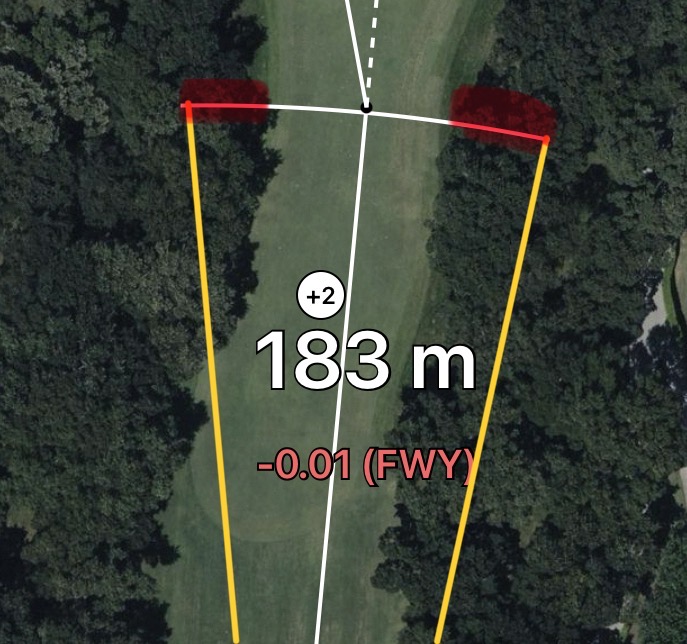
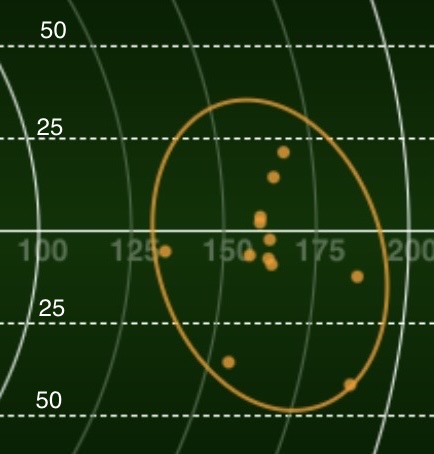
Many golfers associate dispersion with bad shots. In reality, dispersion is neutral. A series of shots produces a pattern with both lateral and distance variation. Even tour players do not repeatedly hit the ball to a single point. They learn to understand and manage their shot patterns.
A 7 iron is not a laser. It produces a pattern. That pattern is your reality.
That pattern is not determined by whether you play a straight shot, a draw or a fade. Each of these ball flights can produce misses on either side of the target, and each creates its own lateral and distance dispersion. What matters is how reliably you can produce the intended ball flight and where your shots actually finish. In our article Straight, draw or fade: Which ball flight really makes you a better golfer?, we explain why no particular shot shape is automatically more accurate or strategically superior.
Strategic golf does not start with courage. It starts with understanding that pattern. That is the foundation of any sound dispersion golf strategy.
Shot dispersion in golf describes how your shots spread around a target and why aiming at points often leads to unnecessary risk.
The problem with the “best shot”

Many decisions are based on the question: “How well can I hit this shot?”
This is the wrong question.
The right question is: “How large is my shot pattern under normal conditions?”
It is not the perfect shot that decides. It is the normal shot.
If your shot pattern is 20 meters wide, a 10 meter gap between bunker and trees is not a realistic target. Even if you occasionally hit that shot perfectly.
This becomes especially important when the available space is restricted. A gap between trees may look playable, but if the golfer’s normal variation in starting direction and ball flight does not fit through it, the visible opening is not necessarily a realistic option. We explore this connection in how playable windows influence golf shot planning.
Strategy starts with understanding your normal shot dispersion, not remembering your best shot.
How dispersion affects your targets
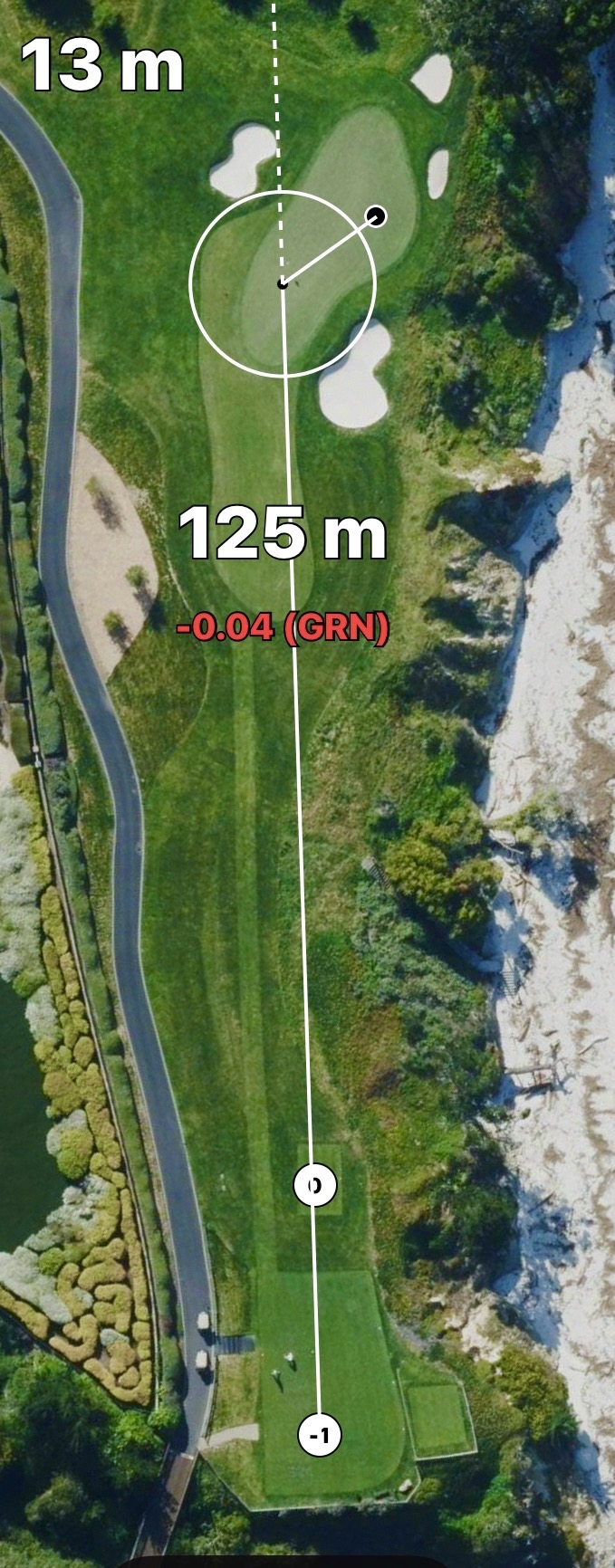
Dispersion is not only left and right. It is also short and long. Many high scores are not caused by lateral misses, but by depth errors. Too short into the bunker. Too long over the green.
This is why the key question is: Where should I position my normal shot pattern so that as many shots as possible finish in a playable area, while reducing the likelihood of costly misses?
This is where dispersion connects with safe miss planning and playing to zones. The safe zone only becomes clear when you define where your miss is allowed to finish.
But dispersion alone is not enough. How you adjust decisions based on the situation is explained in situation rules.
You are not planning for your best shot. You are planning for your normal miss.
This is why dispersion is a central part of golf shot planning. A sensible plan does not only consider where we want the ball to finish, but whether the golfer’s normal shot pattern actually fits the available target area and what the consequences of the different misses would be.
Why honesty improves consistency in golf

Confidence matters.
But false confidence creates risk.
A player with an honest understanding of dispersion can play aggressively, because he knows when it is statistically justified.
A player without that picture plays emotionally.
Sometimes brave. Sometimes cautious.
Knowing your dispersion creates clarity.
How we use dispersion in the Strategy Lab
In the Strategy Lab, we do not guess dispersion. We measure first, then observe real shots on the course. We use a strategy app to make these dispersion distances visible.
We analyze:
- typical miss side
- typical depth error
- effect under pressure
- decision quality
Only then do we define target zones. Playing to zones without understanding dispersion remains theory. With dispersion, it becomes measurable and trainable.
The size of your dispersion often decides whether an attacking decision makes sense or not. How risk decisions are made in golf is explained in the article When to Attack in Golf.
In the Practice Lab, this picture is tested further under structured conditions. The first ball counts. Not the third.
Why dispersion defines strategy
You do not need to become more perfect to shoot better scores. You need to become more realistic. Golfers who know their dispersion plan more intelligently. Golfers who plan more intelligently reduce big mistakes.
And golfers who reduce big mistakes play more consistently.
Sometimes it is not talent that stabilizes the score, but honesty.
How dispersion fits into the Strategy Lab
Dispersion is not an isolated concept. It forms the foundation for target zones, miss sides and rule based decisions. In the Strategy Lab, this shot pattern is analyzed deliberately and translated into clear decision frameworks.
Dispersion is one of the central building blocks of golf strategy. How these building blocks work together is shown in Golf Strategy Fundamentals.
- Playing to Zones in Golf – How target zones grow out of dispersion
- Rule Based Golf Strategy – How reality turns into clear decision rules
- When to Attack in Golf – When risk makes sense and when it becomes statistically expensive
- Stabilization After Mistakes – Why the decision after an error matters most
- Three Basket System – How decisions are built step by step
- Practice Lab – How strategic decisions are reinforced in training (coming soon)


