

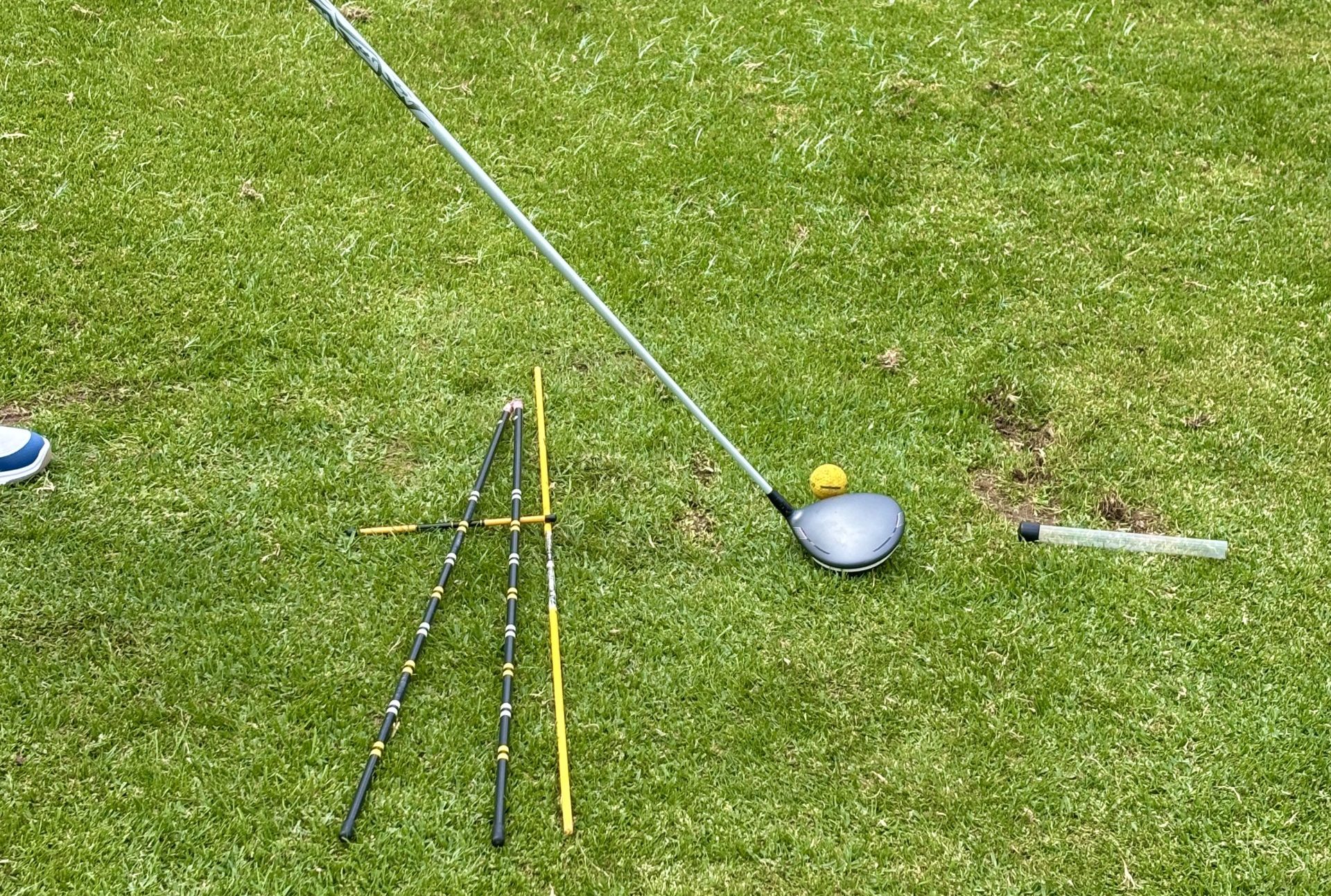
Many golfers try to hit the ball as straight as possible. Yet as players improve, we often see them develop a preferred ball flight: a gentle draw, a controlled fade or at least a recognisable tendency.
This can create the impression that a curved ball flight is naturally easier to control. A fade starts left of the target and curves back to the right. A draw starts right and curves back to the left. The ball appears to be working towards the target.
But does that actually lead to better results?
For a golfer working towards a single-figure handicap, there is a more important question:
How well does the player understand and control their ball flight, and what shot dispersion does it produce?
A draw is not automatically better than a straight shot. A fade is not automatically safer. And a straight ball flight is not necessarily more difficult to produce.
What matters is what the player can produce reliably.
A straight ball flight is not the real goal
Many golfers develop their idea of a good golf shot as beginners: the ball should fly straight towards the target. That sounds logical, but over time it can create an unnecessarily narrow definition of a successful shot.
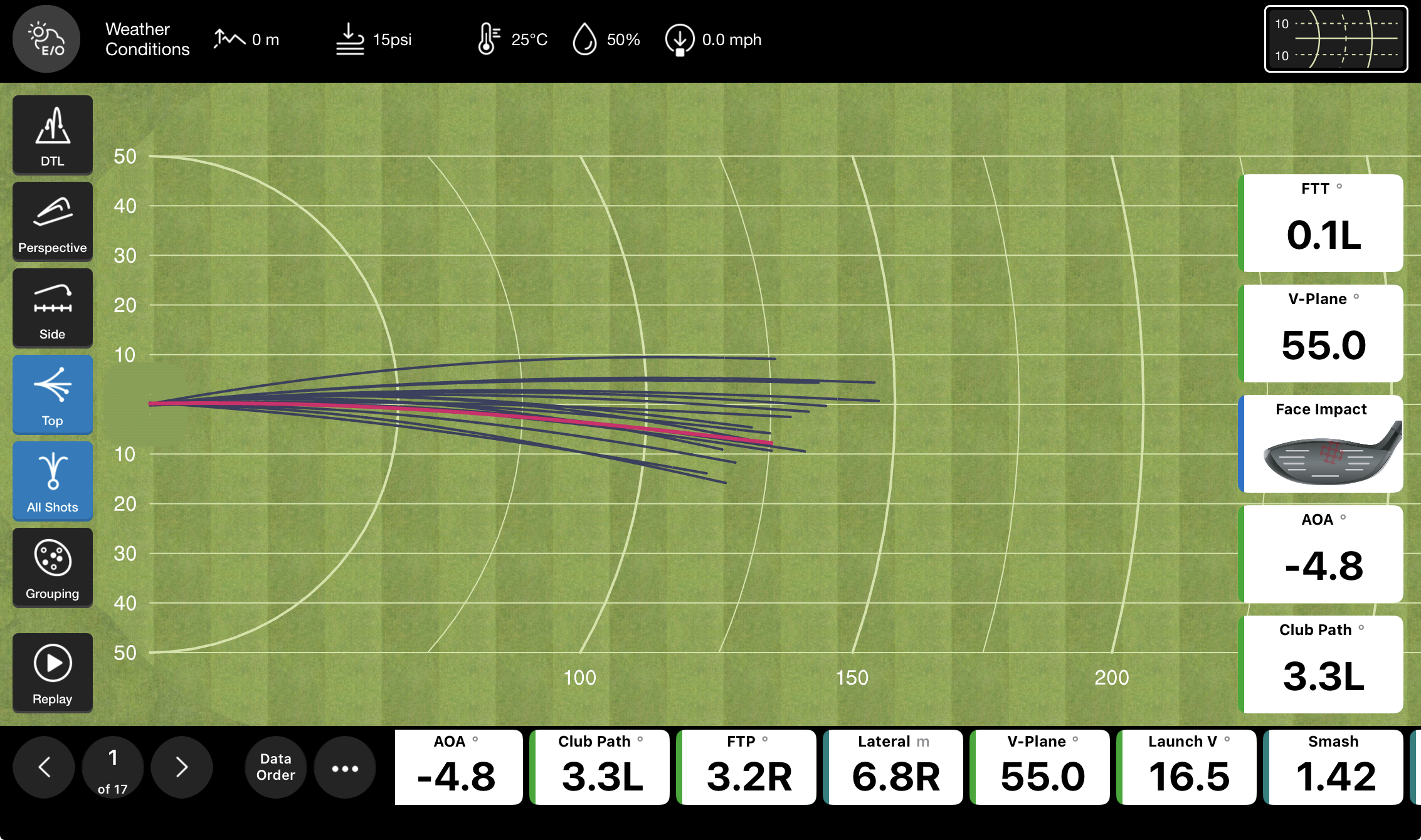
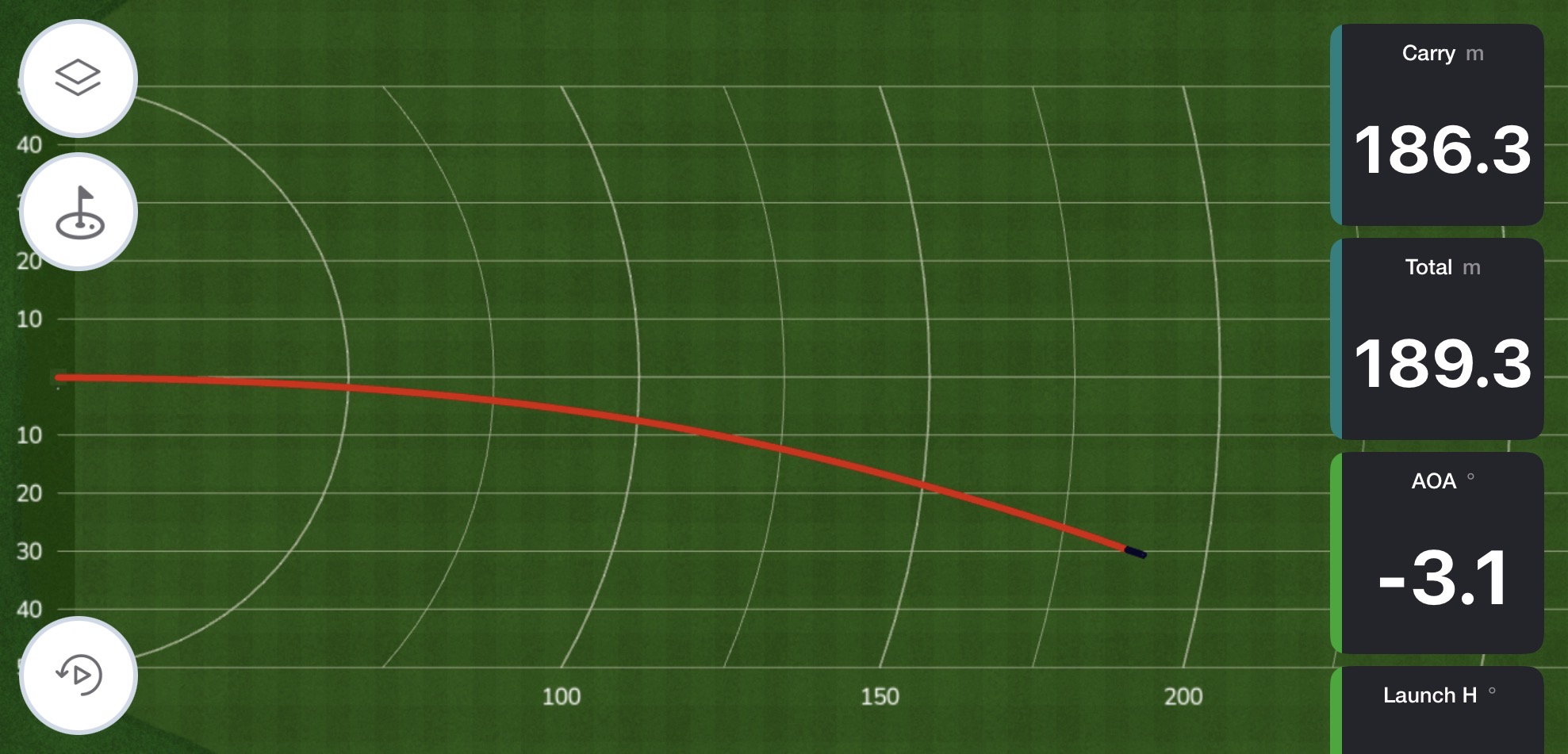
A ball can start five metres left of the target, curve to the right and finish in an excellent position. Another ball can fly almost perfectly straight and still finish ten metres right of the target.
The shape of the ball flight alone tells us very little about its quality.
For an improving golfer, a different understanding becomes important:
The ball does not have to fly straight. Its flight needs to be controllable. A repeatable curve only becomes strategically useful when the player understands how to combine it with appropriate alignment and target selection.
This also changes the way we practise. Instead of treating every curved shot as a mistake, the player begins to understand why the ball starts in a particular direction, why it curves during flight and how reliably that pattern can be reproduced.
Ball flight control begins with understanding
As golfers progress from a mid-handicap towards a Handicap Index of 10 or lower, they should ideally have developed a practical understanding of the basic principles of ball flight.
Three factors are particularly important:
Clubface angle. The orientation of the clubface at impact has a major influence on the ball’s initial starting direction.
Club path. The relationship between club path and clubface angle influences whether the ball curves and in which direction.
Strike location. Contact away from the centre of the clubface can affect launch direction, ball speed and curvature. With the driver in particular, off-centre strikes can have a considerable influence on ball flight.
Player alignment is another important factor. Even a repeatable swing is of limited value if the starting direction, alignment and intended curvature do not work together.
Golfers do not need to calculate these relationships before every shot.
But they should understand them and have experienced them in practice.
Not just hitting a draw or fade, but learning to produce one

There is an important distinction here.
A golfer may regularly hit a fade without really understanding why the ball curves to the right. At that stage, the fade is simply an observed pattern.
A more developed skill begins to emerge when the player learns to change ball flight deliberately.
- Can I start the ball further left?
- Can I reduce the amount of curve?
- Can I deliberately produce a stronger fade?
- What happens when I change the clubface angle?
- What happens when I strike the ball away from the centre of the face?
These tasks are not designed to turn every golfer into a shotmaker who constantly plays spectacular curves.
They develop an understanding of which aspects of ball flight the player can actually influence.
A golfer who has explored different ball flights also gains more information about their own stock shot.
Learning to change ball flight is part of training
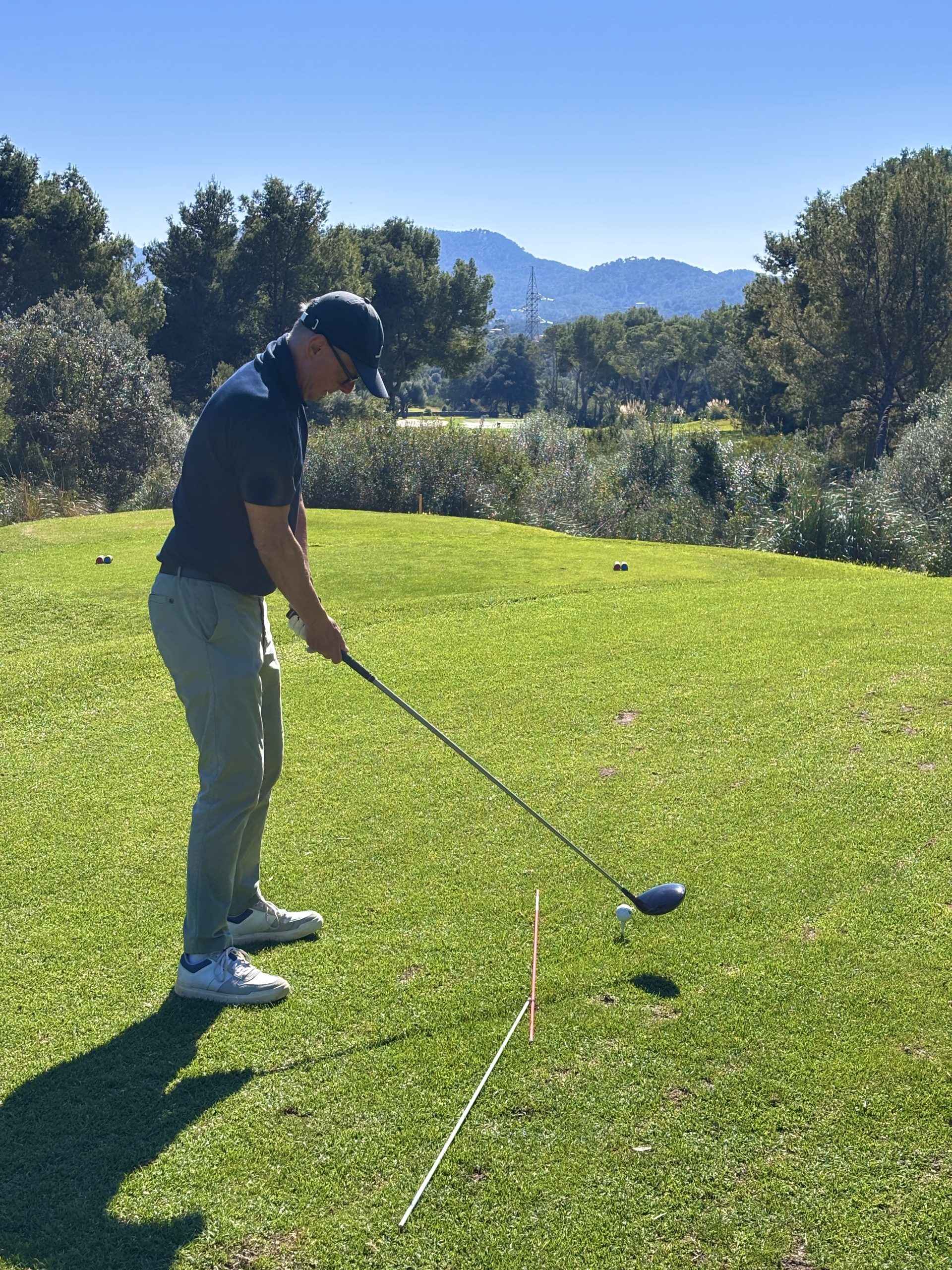
Of course, we deliberately practise different ball flights during golf lessons. A player who hooks the ball can learn to reduce the curve, hit a straighter shot or deliberately produce a fade. The same applies to a player with a strong fade or slice.
We also recognise that certain ball flights come more naturally to some golfers than others. Their habitual movement patterns, club path and particularly the way their hands and clubface behave through impact can make one type of curvature easier and more reliable to produce.
But that does not mean we regard their existing ball flight as something that cannot be changed. Quite the opposite: we work deliberately on reducing unwanted curvature, changing starting directions and, when appropriate, developing a straighter ball flight.
What matters is that the player understands and experiences which changes are required and how reliably they can make them.
We do not simply accept the existing ball flight. We develop the player’s ability to influence it, change it and gradually gain greater control over it.
Face and path explain ball flight, but not its quality
Consider a right-handed golfer with a club path of +4 degrees and a clubface angle of +2 degrees relative to the target line.
The clubface is therefore closed relative to the path. With a centred strike, this combination can produce a draw.
Another player might have a club path of -4 degrees and a clubface angle of -2 degrees. The clubface is open relative to the path and, with a centred strike, this combination can produce a fade.
These examples illustrate the basic principles of ball flight laws. The actual flight also depends on the club being used, strike location and other variables. With the driver in particular, the gear effect caused by off-centre contact can significantly change the amount and direction of curvature.
One shot is not shot dispersion
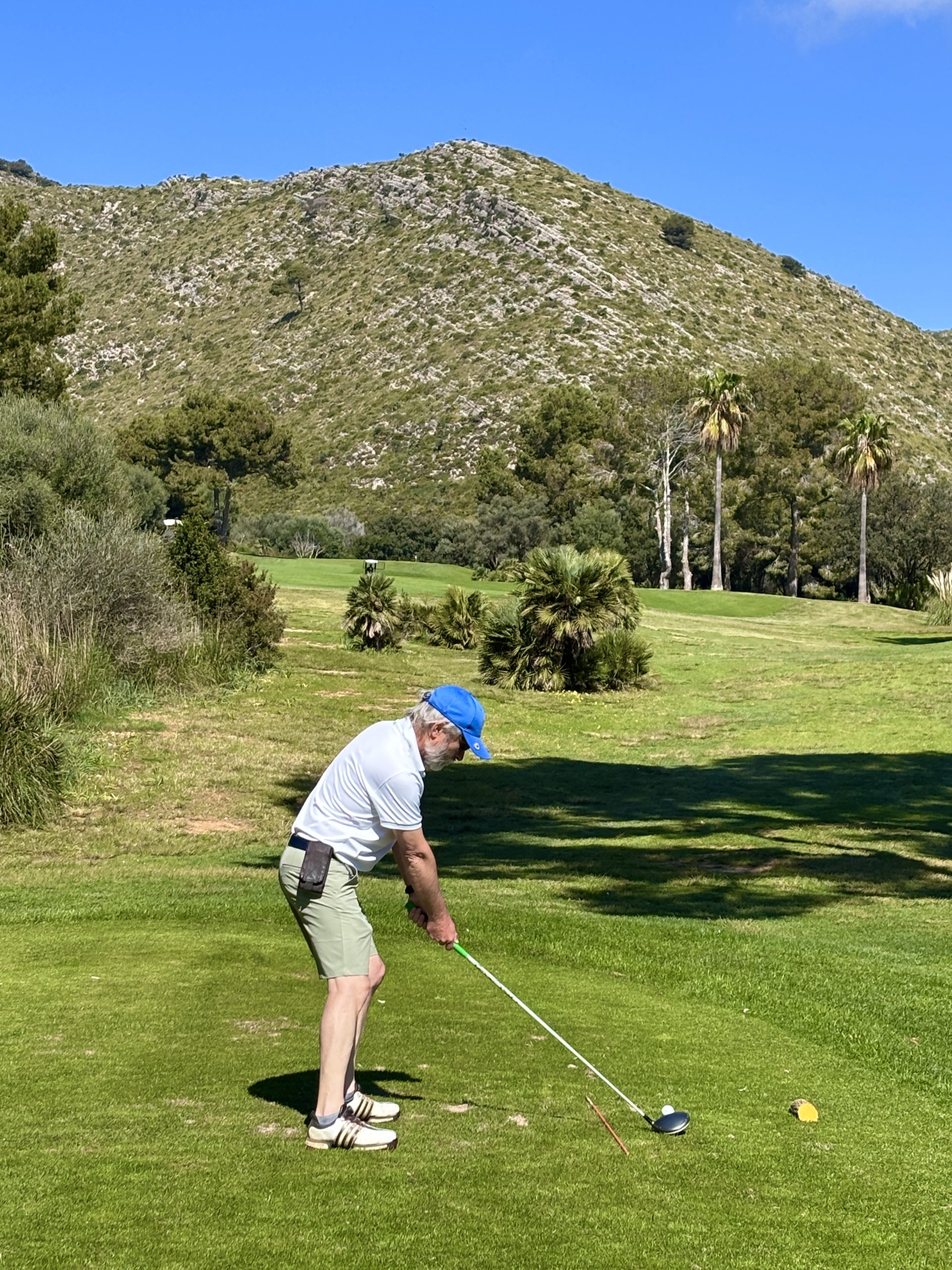
This becomes increasingly important as golfers improve.
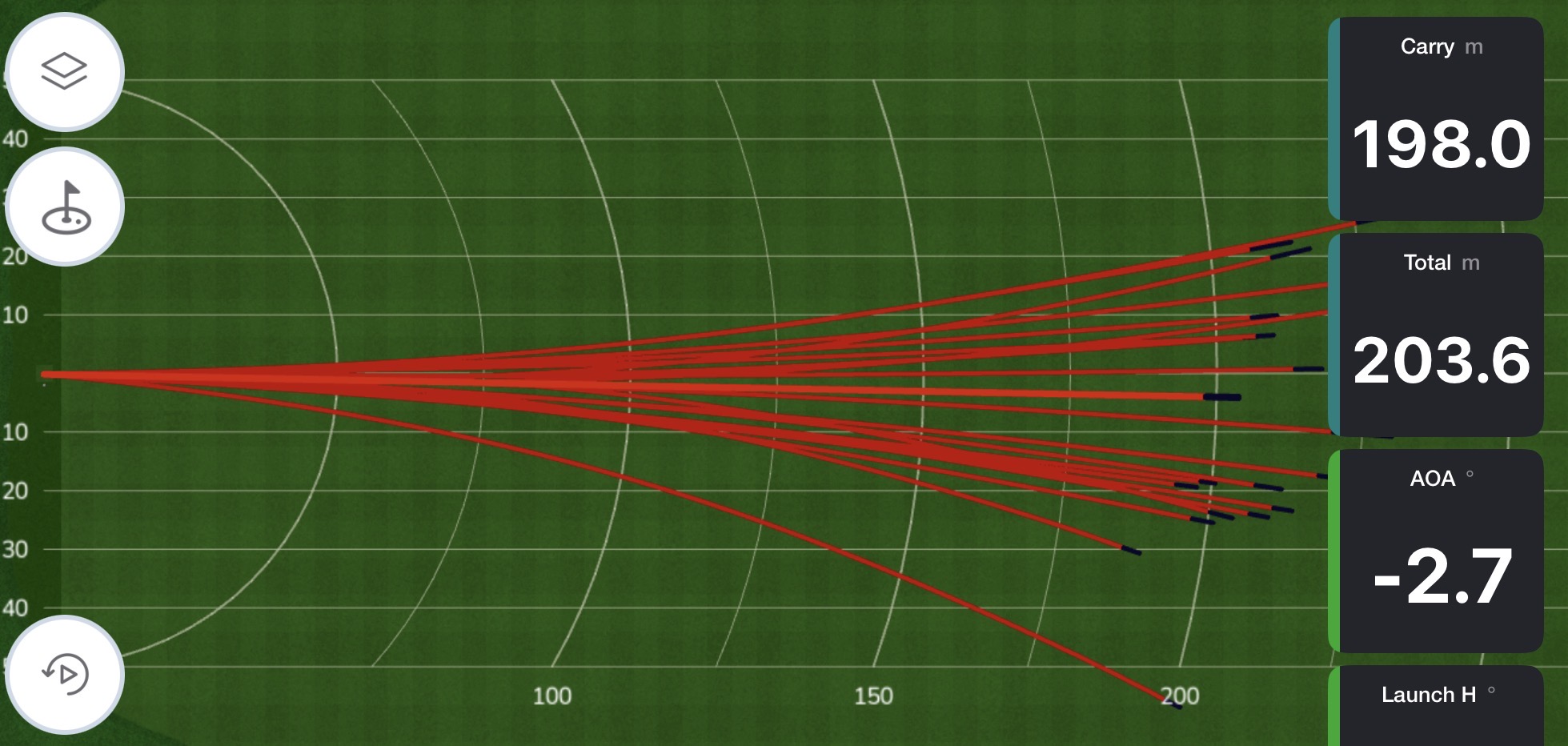
Imagine a player hitting a perfect fade with a 7-iron towards the flag. The ball starts left, curves back and finishes two metres from the hole. It was an excellent shot. But it tells us very little about the player’s overall ability. We learn much more from a series of shots.
Perhaps the next balls finish left, right, short and long of the target. Perhaps they form a relatively tight pattern. Or perhaps there is a clear tendency towards one side.
As we collect enough shots, their landing positions begin to reveal a dispersion pattern.
For both training and strategy, that pattern is far more informative than the most impressive individual shot.
Draws, fades and straight shots can all miss on both sides
This is where a common misunderstanding appears.
When a player plans to hit a fade, it can be tempting to believe that one side of the golf course has effectively been eliminated. The ball starts left and curves right. With a draw, the opposite appears to be true.
In reality, clubface angle, club path, strike location, speed and other variables change from shot to shot.
As a result, even a player who prefers a fade can miss the target on either side. The same applies to a draw, and of course to a relatively straight ball flight.
The important question is therefore not: Which curve do I play?
It is: What distribution of results do I produce when I attempt that ball flight?
That is a significant difference.
Which ball flight produces the most reliable results?
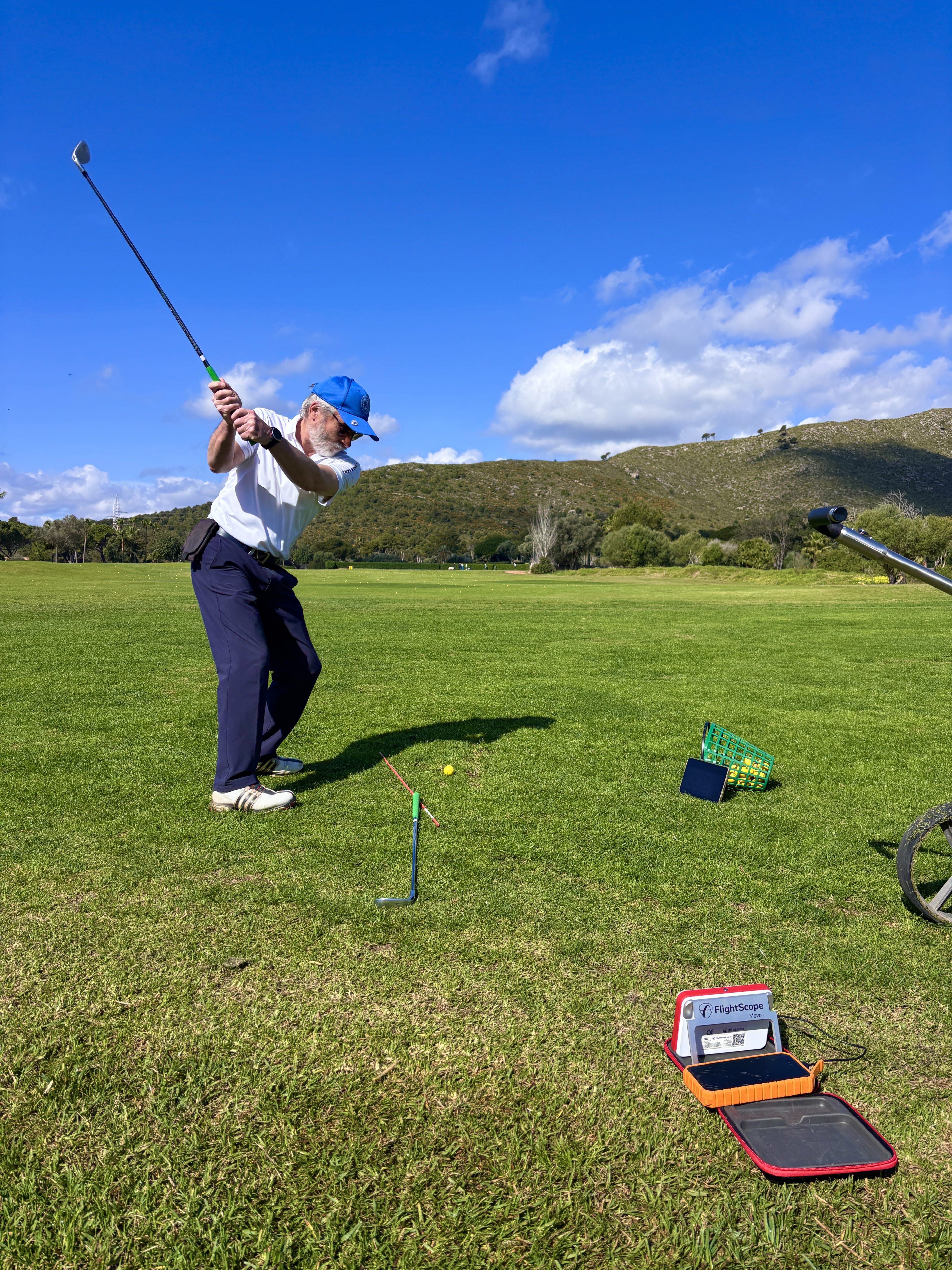
Consider three golfers with single-figure handicaps.
One prefers a draw. Another predominantly plays a fade. The third produces a relatively straight ball flight.
All three hit 30 balls with the same club towards the same target area.
We can now examine:
- How wide is the lateral dispersion?
- How large is the distance dispersion?
- Where is the centre of the shot pattern?
- Is there a noticeably more frequent miss on one side?
- How large are the worst deviations?
- How does the pattern change under different conditions?
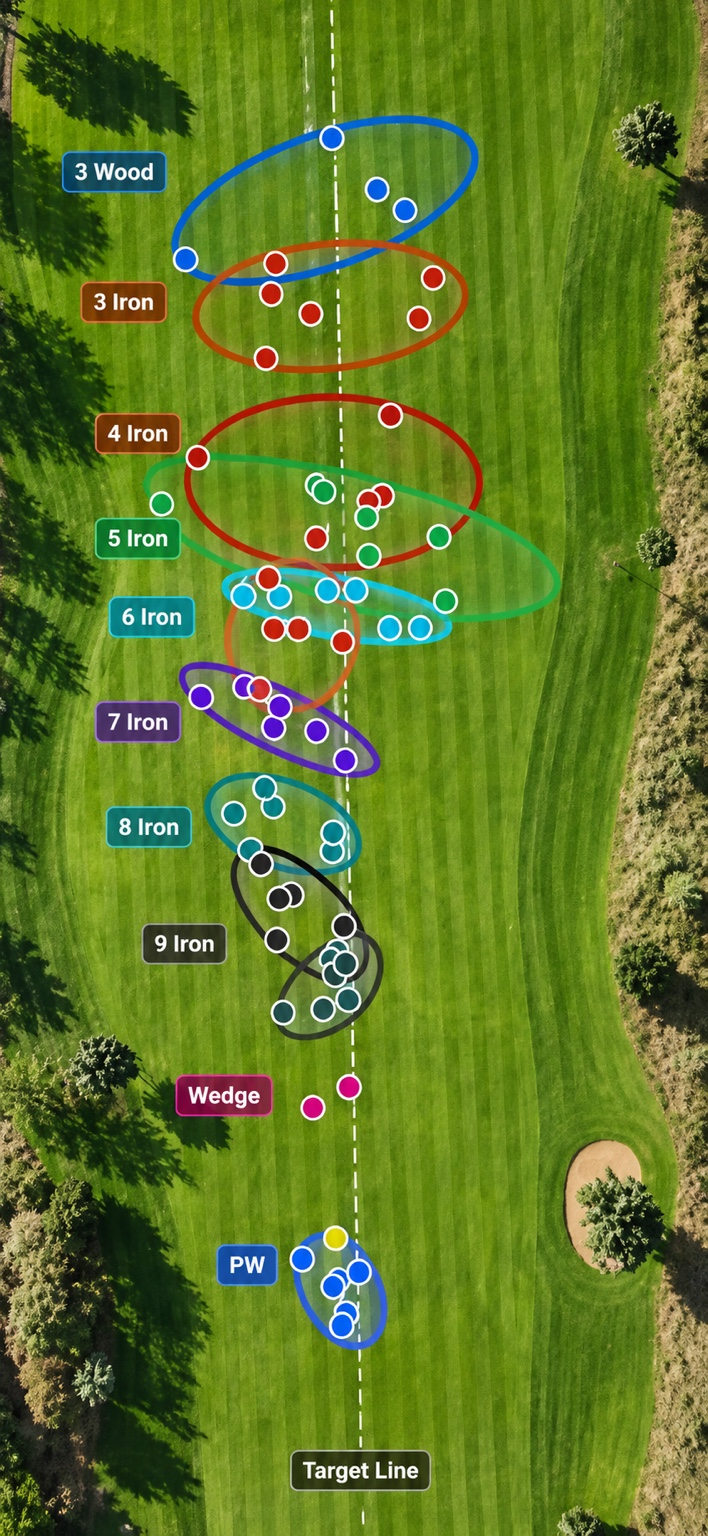
Such a series initially provides only a snapshot. To understand how stable the dispersion pattern really is, we need to compare results across several practice sessions and under changing conditions.
The player who hits a draw might have the tightest dispersion.
But it could just as easily be the fade player. Or the golfer with the straighter ball flight.
The curve alone cannot tell us.
Understanding a player’s actual shot dispersion is therefore essential. It reveals more than the shape of an individual shot and helps us distinguish between an attractive ball flight and a reliable playing pattern. We explore this relationship further in Golf dispersion and strategy.
Why swing mechanics and strategy belong together
This is where a technical question becomes a strategic one.
Imagine a golfer who knows their typical dispersion with a 7-iron. Ahead is a green with the flag positioned on the right and a deep bunker immediately beside it.
Where should the player aim?
The simple answer might be to start the ball left and fade it towards the flag.
But that only makes sense if the player’s actual abilities support that decision.
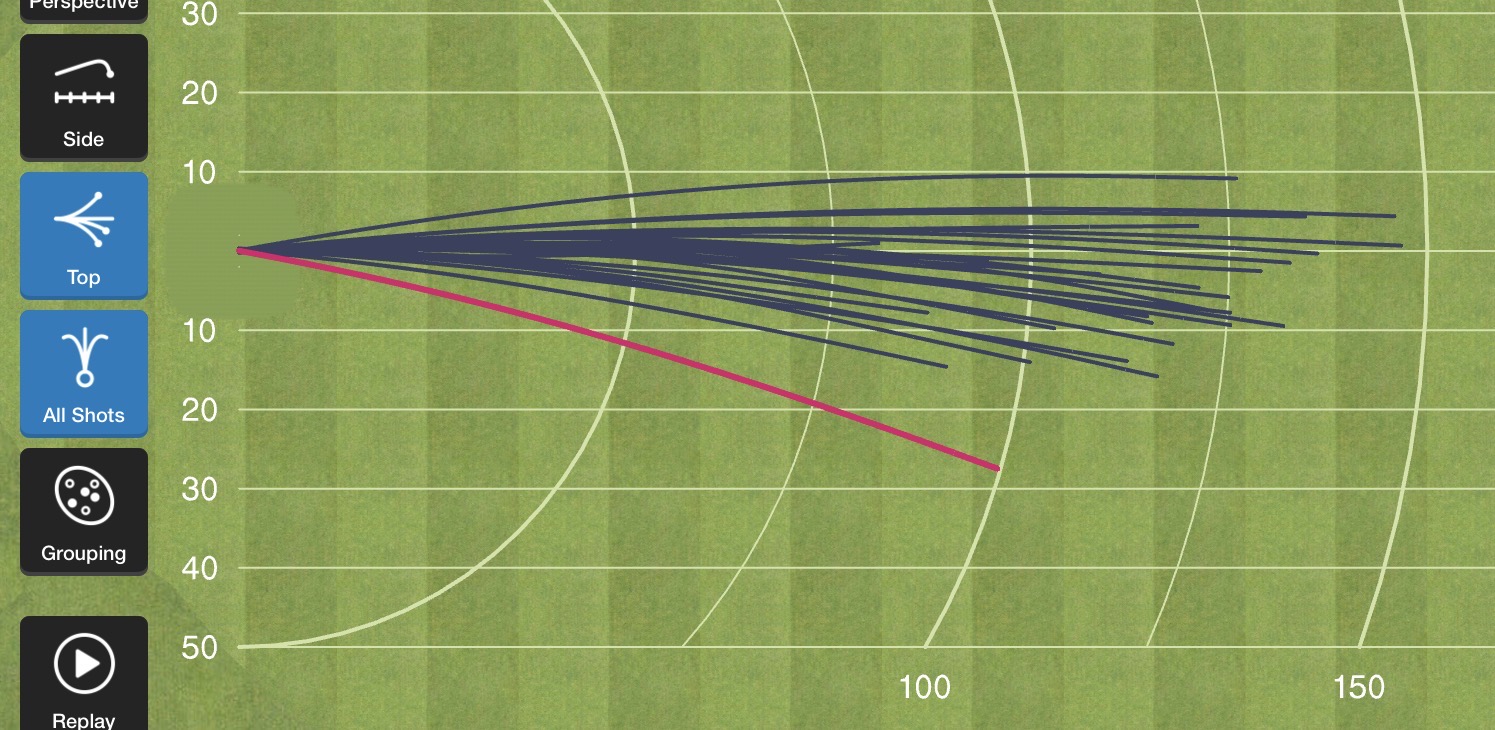
Perhaps the player’s dispersion pattern shows that the largest misses with their fade tend to finish on the right. In that case, it may be strategically sensible to shift the intended landing area further left without changing the preferred shot shape.
Only when the situation does not allow the stock shot to be used sensibly do we need to consider a different shot solution.
The ball does not need to curve towards the flag.
The dispersion pattern needs to fit the available space.
Understanding how actual shot dispersion relates to available landing areas is essential when choosing targets. The flag is not always the best place to aim. In our article on target zones, dispersion and golf shot planning, we explain how golfers can use their typical shot patterns to select more realistic landing areas.
We do not plan for the perfect shot
On the golf course, we often picture a particular ball flight in our mind. Start here. Gentle fade. Land there.
That picture can be helpful when preparing for a shot. Strategically, however, we cannot plan as though we are guaranteed to produce that exact result.
A good player plans around a distribution of possible outcomes. A golf shot is not a laser beam. It is more like a shotgun pattern.
That does not mean the player is thinking negatively or expecting a poor shot.
Quite the opposite.
The player accepts a basic reality of golf: no golfer produces exactly the same clubface angle, club path, speed and strike location on every attempt.
The strategic task is therefore to choose a target area that keeps as many realistic outcomes as possible in playable positions.
Even a perfectly executed shot does not necessarily prove that the strategic decision behind it was a good one. Decision quality must be judged by the information available before the shot, not simply by the final result.
This also changes the path towards a single-figure handicap
Ideally, this development should begin well before a golfer reaches a Handicap Index of 9.9.
A player progressing from a Handicap Index of 20 towards 10 should gradually learn to observe, understand and influence different ball flights. In our advanced golf instruction courses at Capdepera Golf in Mallorca, we therefore work not only on swing technique but also on understanding ball flight, stabilising available skills and applying them on the golf course.
The player should have experienced that a good shot does not always need to fly straight.
They should understand the relationship between alignment, clubface angle, club path and strike location.
And they should begin to recognise the difference between the intended ball flight and the actual result.
Gradually, something important develops:
Ball flight understanding → Ball flight control → Shot dispersion awareness → Ball flight management
This development is not a strictly linear progression. A player may move back and forth between these areas several times. But it describes how someone who initially just observes their ball flight can gradually become a golfer who understands it and uses that knowledge to make better decisions.
A preferred ball flight is still valuable
None of this means that a golfer with a single-figure handicap should avoid having a preferred ball flight. Quite the opposite.
If a player can produce a particular ball flight more reliably than others, it can become their stock shot. That might be a gentle draw, a fade or a relatively straight ball flight.
What matters is not simply that the player can deliberately produce a particular curve. It is that they know their preferred ball flight, understand its typical outcomes and can reproduce it with sufficient reliability under different conditions.
That does not automatically reduce statistical dispersion. But it can simplify the task.
The player knows the movement, the starting window and the typical flight pattern. They have experience with it and can adapt their target selection accordingly.
The important distinction is this: A preferred ball flight is not a wish. It is an available solution.
On a wide fairway, that solution may work perfectly. Beneath an overhanging branch, in a strong crosswind, from a sloping lie or through a restricted launch window, another solution may be required.
A reliable stock shot is a valuable foundation. At the same time, we deliberately expand the player’s repertoire of ball flights and specialist shots so they can solve situations in which their usual shot is not suitable.
The goal is not to master as many different shots as possible. It is to develop and stabilise the skills that are genuinely needed on the golf course.
What we actually want to stabilise in golf coaching
This also changes the role of repetition.
When a player works on their preferred ball flight, repeated shots under comparable conditions can be useful. They allow the player to practise a technical solution several times and observe the results.
Whether this is developing into a more stable skill is then examined through variation, testing and transfer to the golf course.
But eventually, the conditions need to change.
- Different targets.
- Different distances.
- Different clubs.
- Different lies.
- Different starting windows.
- And eventually, real playing situations on the golf course.
Only then do we begin to see how available the skill has really become.
In our Practice Lab, we explore, develop and test ball flight and shot outcomes, while using performance trackers to observe progress over time. On the golf course, our Strategy Lab adds another dimension:
Which of these available solutions makes sense in this particular situation?
Now it is no longer just about face angle, club path and strike location. Shot dispersion, target areas, hazards, lie, wind, safety margins and the consequences of different misses all become part of the decision.
From ball flight to better decisions
For us, this represents an important step towards becoming a golfer with a single-figure handicap.
At first, the question is often: “How do I hit the ball straight?”
Later, it should become: “Why does my ball fly like that?”
Then: “How can I influence that ball flight?”
And eventually: “Which ball flight and target area should I choose for this situation?”
This is more than technical development. It connects swing mechanics, perception, ball flight control and course strategy. These relationships are central to our Golf Learning System, which combines technical development, skill stabilisation and application on the golf course.
Conclusion: It Is Not About Draw, Fade or Straight
No ball flight is inherently superior simply because it flies straight or curves deliberately to the left or right.
A draw can be extremely well controlled. So can a fade. And so can a relatively straight shot.
For an improving golfer, other questions matter more:
- Do they understand why the ball flies the way it does?
- Can they influence its starting direction and curvature?
- How consistent is their strike location?
- What dispersion does their preferred ball flight produce?
- And do they account for that dispersion when choosing targets on the golf course?
Becoming a better golfer is therefore not about finding the perfect ball flight.
It is about understanding your own ball flights, learning how reliably they are available, recognising their dispersion patterns and using that knowledge to make better decisions.

Monnard Widmer Coaching Insight:
A controlled ball flight is not the one that looks most impressive. It is the one whose possible outcomes the golfer understands and can use effectively.
This article brings together three essential skills:
1. Understanding and influencing ball flight.
2. Understanding the actual dispersion and availability of your shots.
3. Making better strategic decisions based on that information.
The central message remains: Not every golfer needs to play the same ball flight. But every golfer can learn to understand their ball flight, change it deliberately and use their available skills more effectively on the golf course.


