

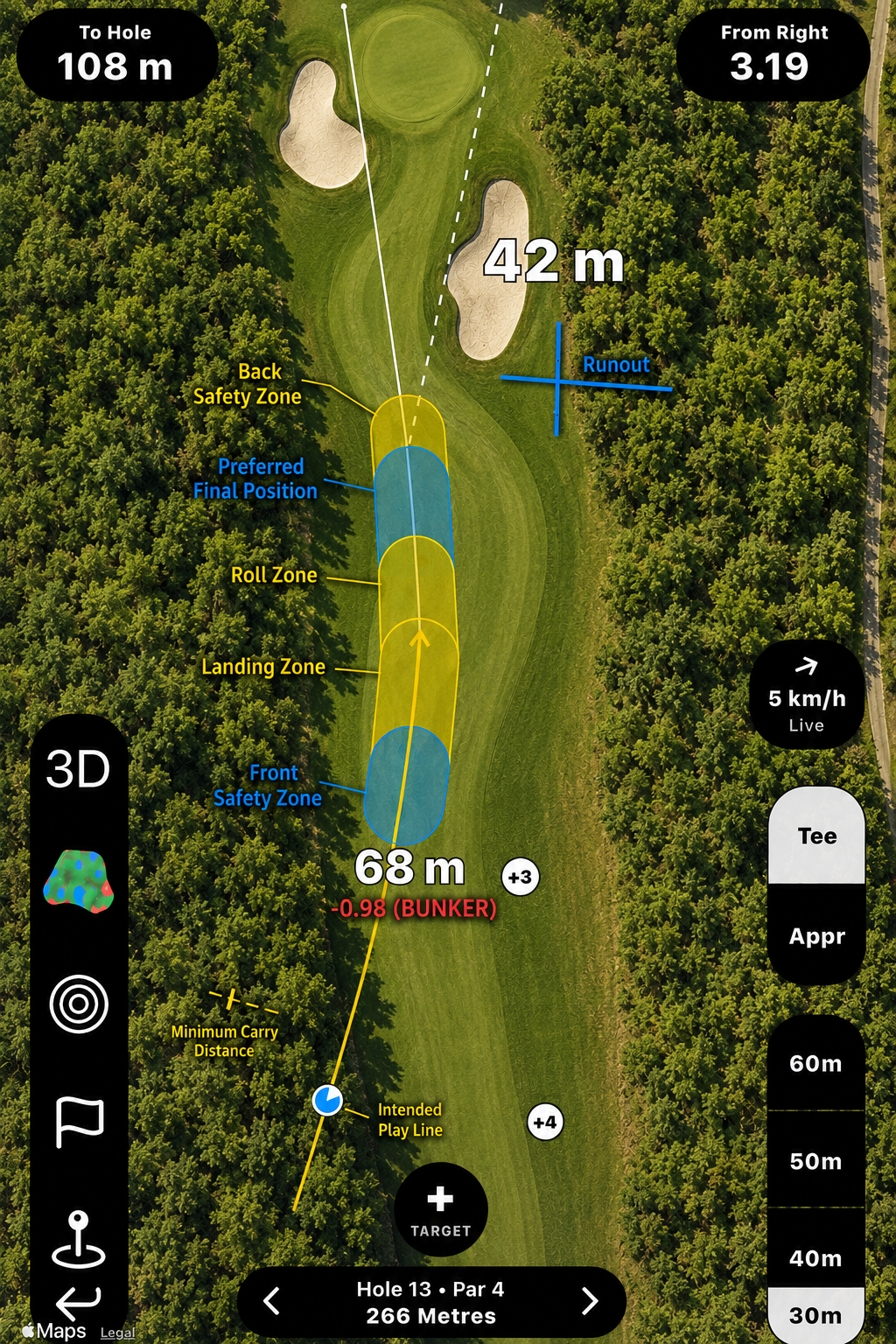
A golf shot is not only about playing the ball as far as possible or as close to the target as possible. Where the ball finishes also determines the starting position for the next shot.
That is why shot planning should also consider which lie, angle and distance will remain after the current shot.
Ideally, a good shot does not only improve the current situation. It also prepares the next one sensibly.
Closer to the green is not automatically better
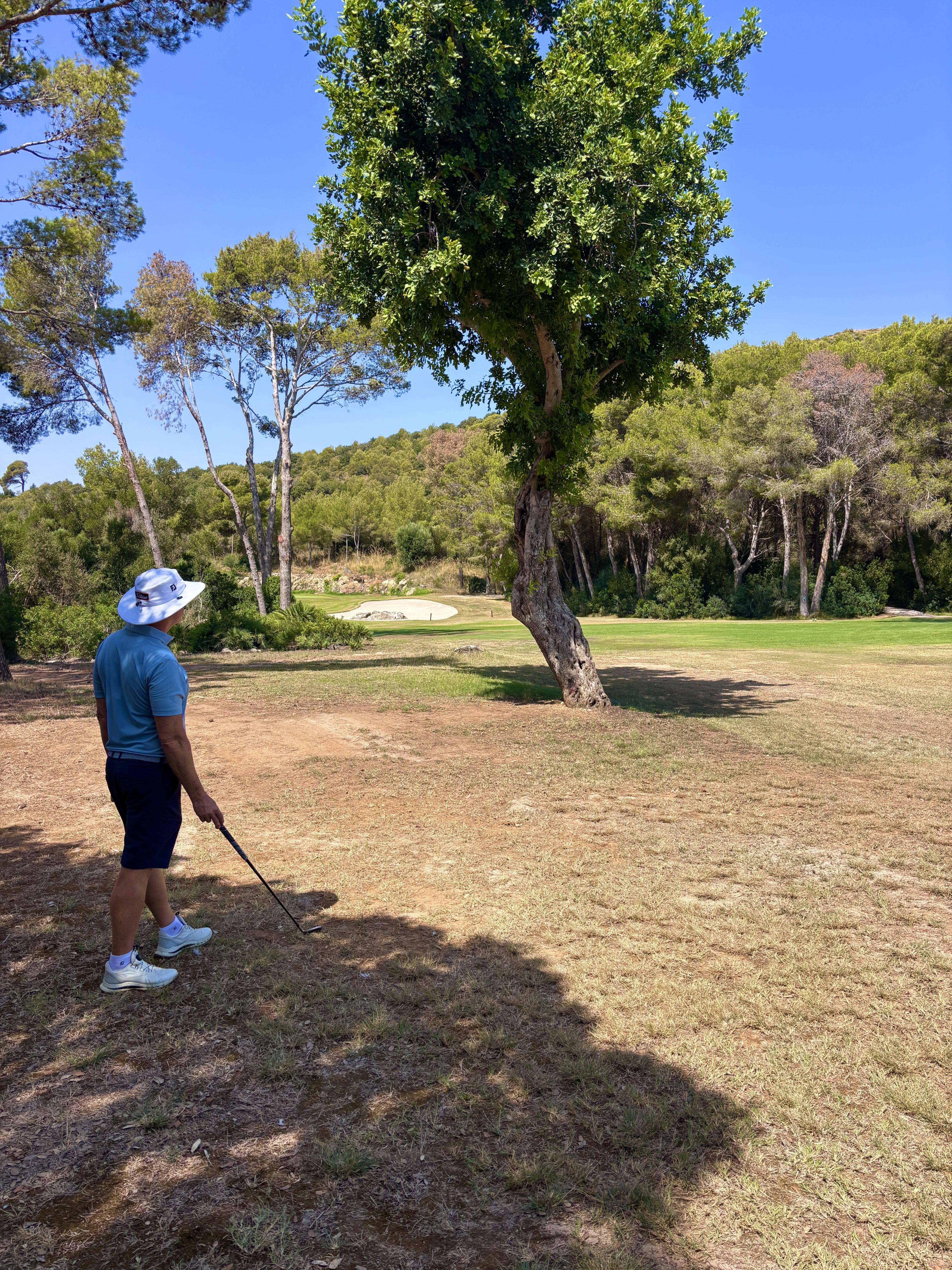
A ball can finish 20 or 30 metres closer to the green after a shot and still be in a much worse situation.
There may suddenly be a tree blocking the playing line. The ball may finish on the wrong side of the fairway. Or the remaining distance may not suit the clubs and types of shots the golfer is comfortable playing.
A slightly shorter shot, on the other hand, may finish in the middle of the fairway and leave a clear next shot.
Extra distance is only an advantage if it actually improves the next situation.
This is also why the best possible immediate result is not always the best target. We explore this further in “Why the best possible result is not always the right target”.
The next angle can be more important than extra metres
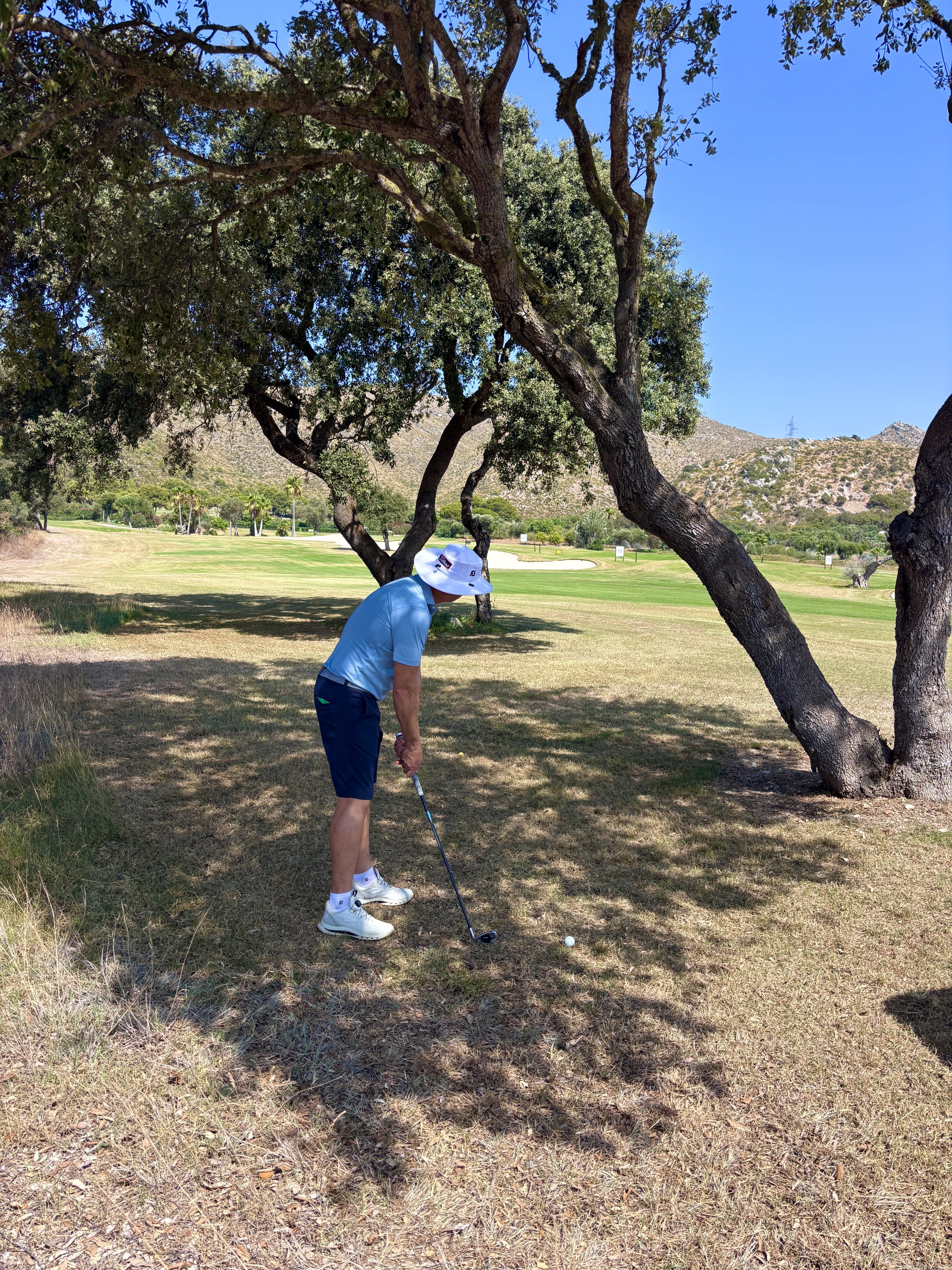
On many golf holes, there are areas from which the next shot becomes considerably easier. From one side, the flag may be openly accessible, while from the other the ball may have to be played over a bunker or around a tree.
The task of the current shot can therefore be to prepare exactly that better angle.
This is particularly important with lay-ups, par 5s, doglegs and recovery shots.
We are not only playing to a distance. We are playing towards the next situation.
A recovery shot does not have to go as far as possible
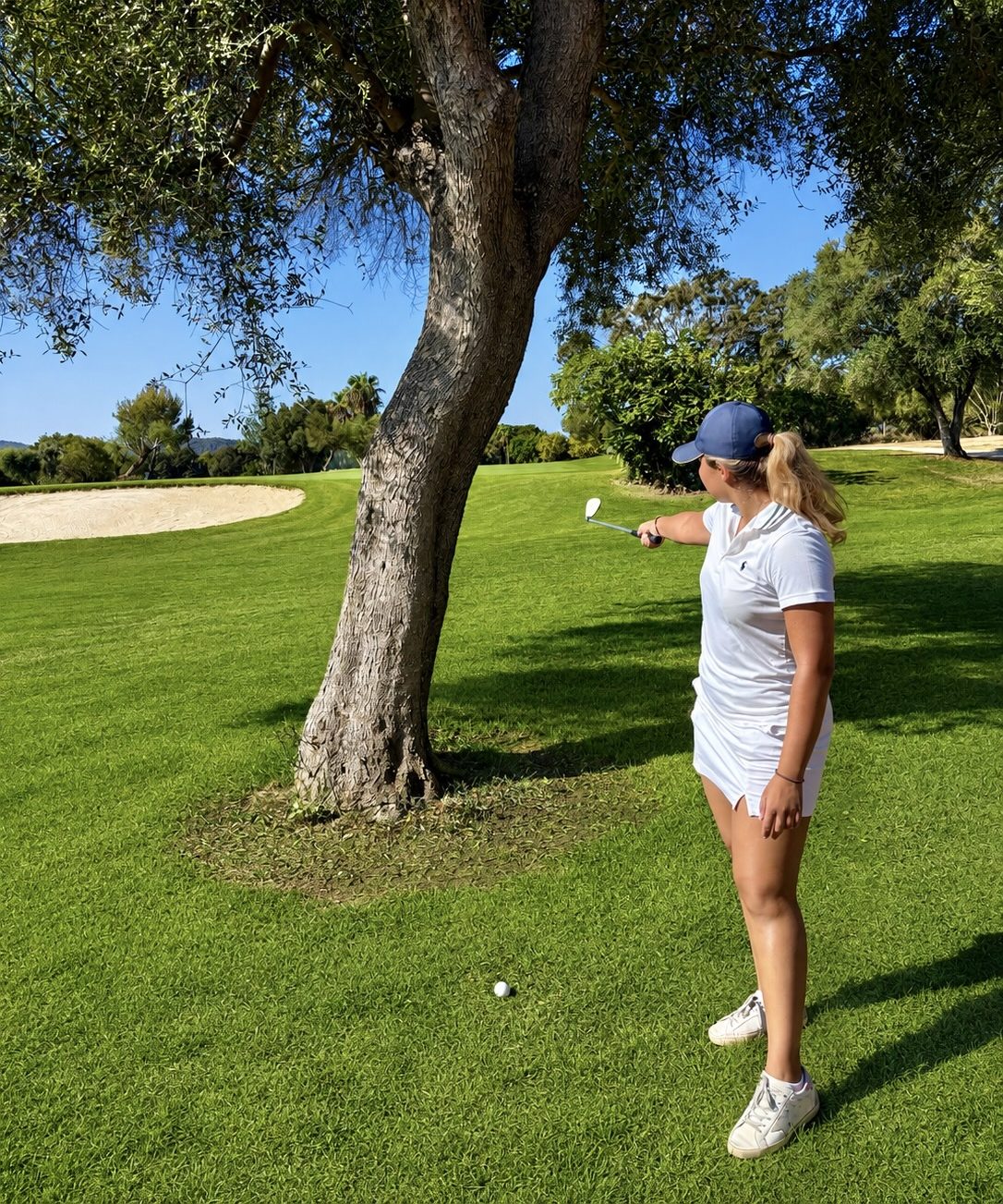
After a poor tee shot, many golfers want to recover as much distance as possible. That is understandable, but it is not always helpful.
If the ball lies between trees, a longer recovery shot may move the ball farther forward but at the same time create another difficult position. A shorter shot back into an open area can be strategically much stronger.
In recovery situations, this also means checking whether the intended ball flight actually fits the available playable window.
This is one of the ways chains of mistakes can develop on the golf course.
The important question is therefore not only:
How far can I advance the ball from this lie?
But also:
Where can I play the ball now so that the next shot becomes as normal as possible again, without taking too much risk with the current shot?
We look more closely at how much risk a situation can tolerate in “How golfers can assess risk and margin for error”.
A lay-up does not simply mean playing shorter

When golfers think about a lay-up, they often first think about leaving a safe distance short of a hazard. That is part of the decision, but it is not the only consideration.
We can also consider which distance will be comfortable afterwards, from which side the next shot becomes easier and whether the intended landing zone provides enough room for our dispersion.
A good lay-up therefore does more than prepare the next shot. It tries to make that next shot as simple as possible.
The quality of a lay-up is not only shown by where the ball finishes now, but by the task that remains afterwards.
Our own dispersion also belongs to the next situation
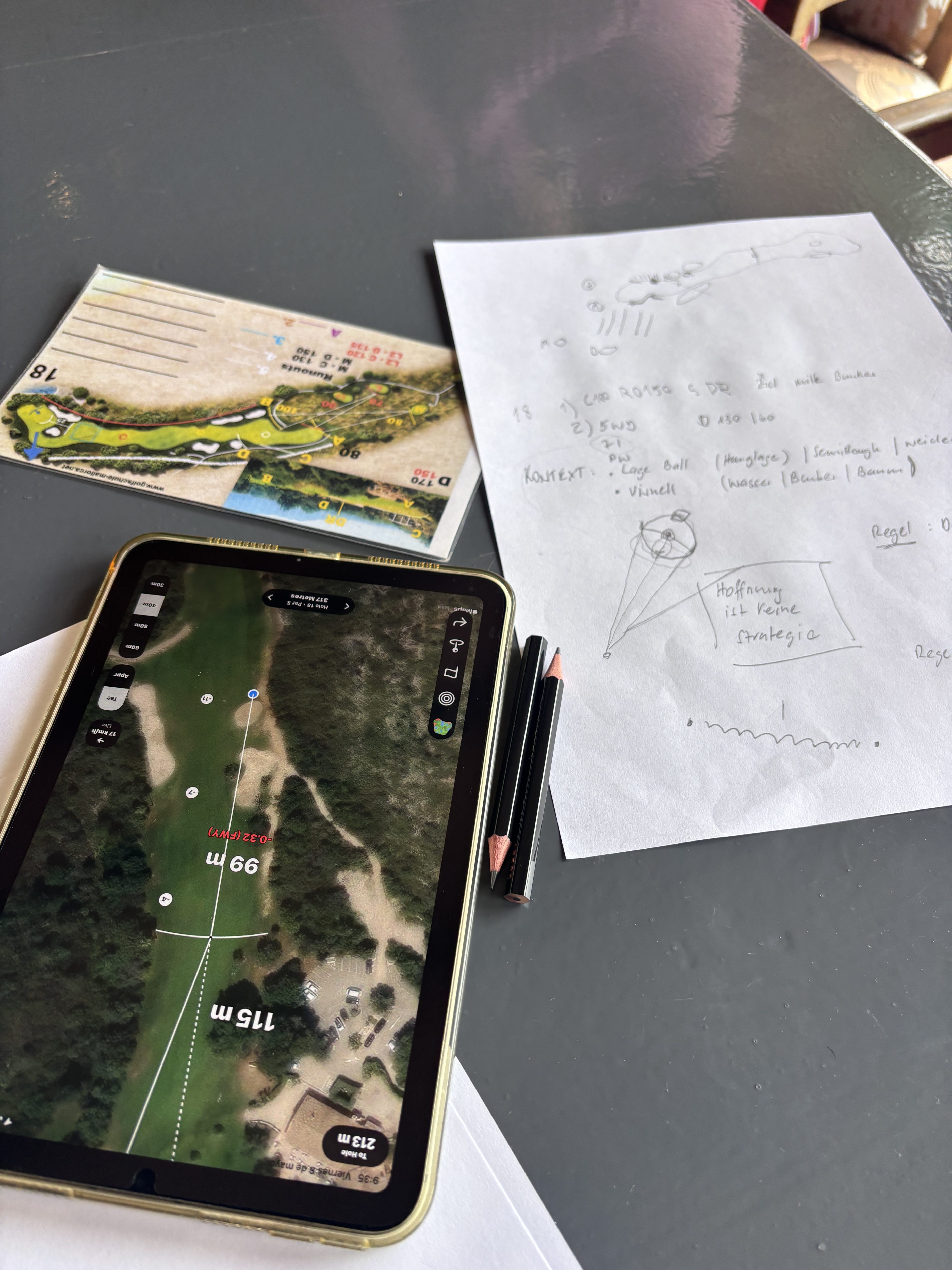
Of course, we cannot prepare the next shot to the exact metre. Every golfer has dispersion.
That is why we do not plan only for one perfect landing point. We look for an area from which as many of our normal shots as possible will create a useful next situation.
If there is a tree on the left and plenty of room on the right, a target zone farther to the right may make sense. Not because the perfect ball has to finish there, but because even a normal miss can still leave a clear next shot.
A good target zone does not only protect the current shot. It also protects the next one.
We look more closely at this in “How target zones and dispersion change golf shot planning”.
We explain in more detail how target zones and dispersion work together in the article “Golf dispersion – strategy and target zones”.
The next situation can change the task before we even play the shot

If we know that a difficult next position is waiting beyond the current target area, that information already changes the task of the shot.
Perhaps maximum distance is not what we want. Maybe the other side of the fairway is more important. Or we deliberately choose a club that leaves enough distance from an area where the following shot would become particularly difficult.
This shows why the task of a golf shot is not determined only by where the ball currently lies.
The task comes from what lies in front of us and from what we want to create afterwards.
The perfect current shot can still create the wrong next situation
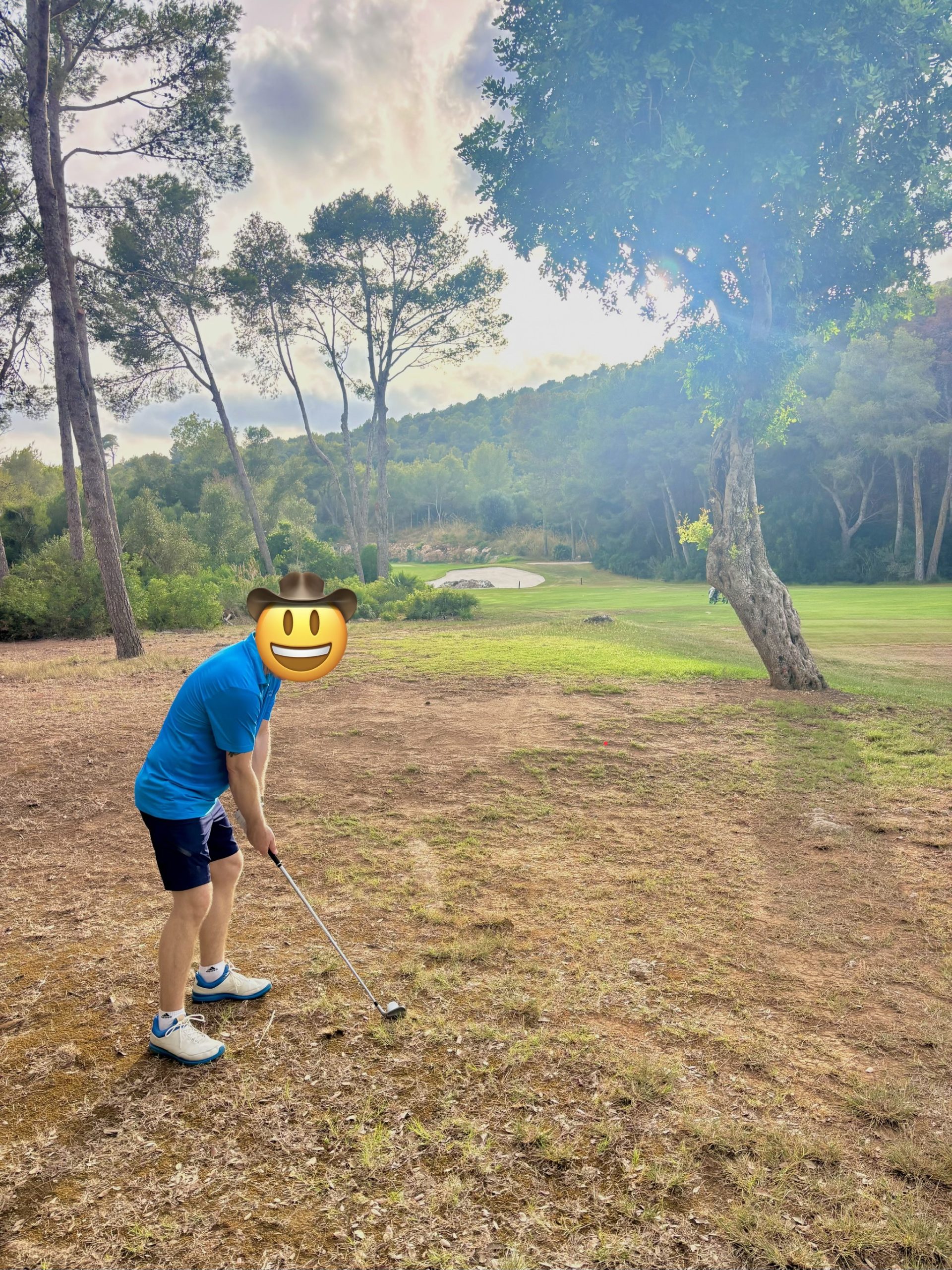
A shot can be technically excellent and finish exactly where we intended. Yet the next situation can still be poor.
This shows why shot quality and decision quality are not the same thing.
We look more closely at this distinction in “How to recognise a good golf decision after a bad result”.
If the planned target area leaves us behind a tree, on the wrong side of a slope or with a poor angle to the flag, the shot may have been executed well, but the planning beforehand was not optimal.
A good shot is only truly helpful when the situation it creates also fits our plan.
We show a specific example of this in the Golf Learning Insight “Why a good golf shot can finish in a bad position”.
On the golf course, this planning becomes practical
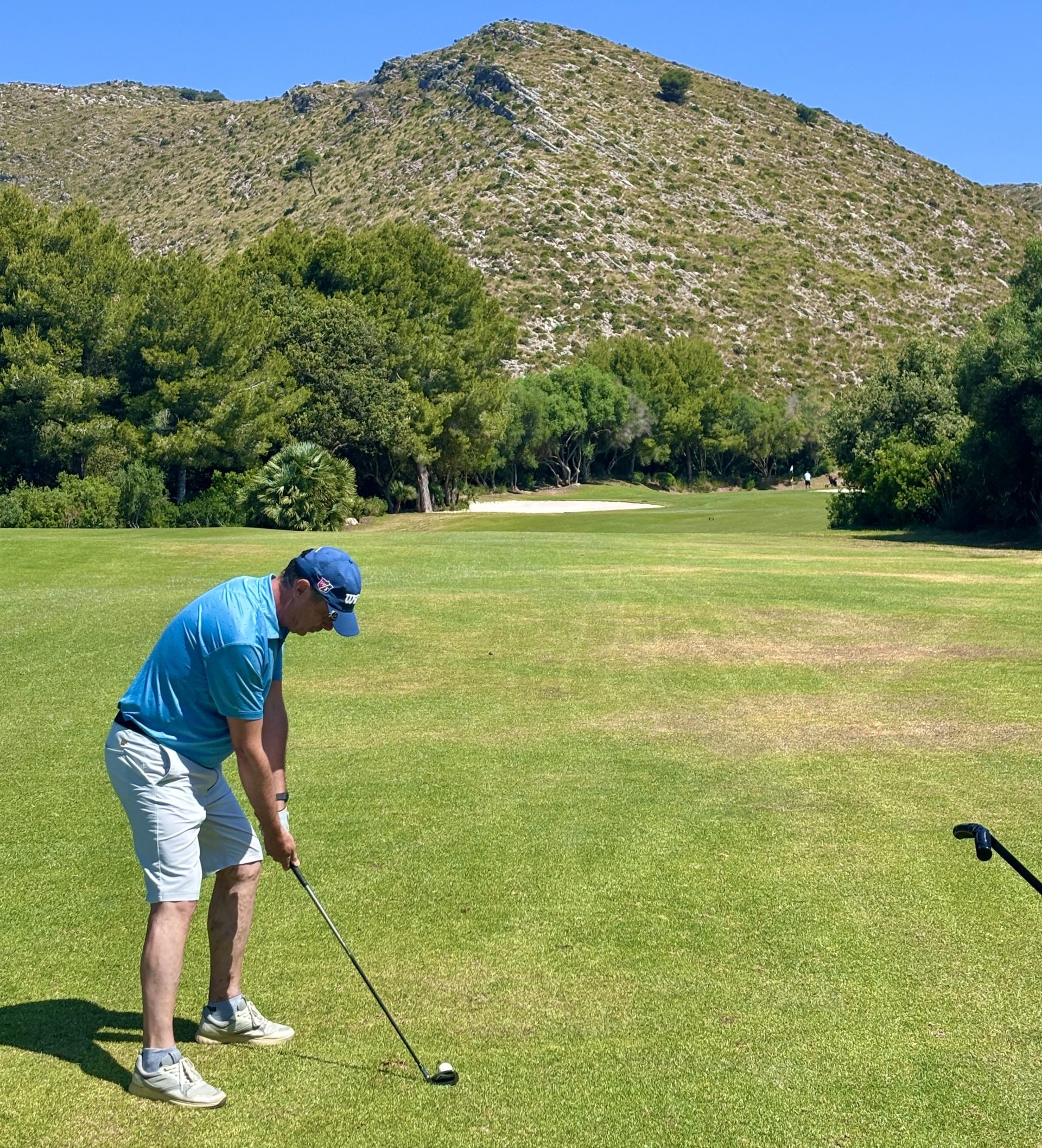
At Capdepera Golf, we can practise these situations directly on the golf course. We compare different target areas, look at possible finishing positions and consider what the next task would be from each one.
The aim is not to make the golfer plan every shot in a complicated way. Over time, the golfer should learn to recognise typical patterns: Which side is favourable? Where does a normal miss remain playable? Which position opens up the next shot?
Recognising and comparing these different options is also part of the decision-making work in our Strategy Lab.
The better we become at recognising these patterns, the less we need to improvise on the golf course.
How this connects to golf shot planning
Thinking about the next shot is a central part of golf shot planning. We do not only consider where the current ball should finish, but also which playing situation that position will create.
Target zone, dispersion, risk, lie and the realistically achievable next situation therefore work together to influence the decision.
We do not start planning the next shot only when we arrive at the ball. Part of that planning begins with the current shot.
Thinking one shot ahead in our advanced golf course

This is exactly the type of shot planning we practise directly on the golf course in our advanced golf courses at Capdepera Golf. We do not only compare different shot options. We also look at the next situation each option is likely to create.
On the driving range, we can first test distances, dispersion and different ball flights. On the golf course, the next step is to use that information so that the current shot works while also preparing the next task as well as possible.
In this way, the golfer learns to see a golf hole not as a series of isolated shots, but as a sequence of connected decisions.
You can learn more about this form of golf instruction in our advanced golf course for handicap golfers in Mallorca.
[booking]
Golf shot planning – an overview of the topics
Good golf shot planning does not end with the current shot. The position created now becomes the starting point for the next decision, so distance, angle, lie and the likely task of the following shot all belong in the current plan.
The following articles show how this forward-looking approach connects with the other parts of golf shot planning: defining the task, recognising genuine opportunities, setting realistic expectations, choosing target zones, managing dispersion and risk, and learning from the result.
Golf shot planning
The main overview explains how individual shot decisions connect situation analysis, target selection, risk, expected outcomes and the playing position created for what comes next.
What is the task of a golf shot?
One important task of a shot may be to create a better next situation rather than simply maximising the immediate result.
When is a golf shot really an opportunity?
An attacking option becomes more attractive when it improves the current position without creating a significantly more difficult next shot if the result is only average.
Why the best possible result is not always the right target
A slightly shorter or wider result can be strategically better when it leaves a more favourable angle, lie or distance for the following shot.
Why the next shot belongs in the current decision
The current article explains why shot planning should include the playing position we are trying to create and how one decision can either simplify or complicate the next one.
How target zones and dispersion change golf shot planning
Target zones should not only protect against the current miss. They can also increase the chance of finishing in an area that leaves a manageable next shot.
How golfers can assess risk and margin for error more effectively
Risk includes what happens after an imperfect shot. A miss that leaves a straightforward recovery is very different from one that starts a chain of increasingly difficult decisions.
How playable windows influence golf shot planning
When several trajectories are possible, the best window may be the one that produces the most useful next position rather than the most ambitious immediate outcome.
How to recognise a good golf decision even after a bad result
After the shot, decision quality can also be judged by whether the plan gave the golfer a reasonable chance of creating the intended next situation.


