
Since 1996 I have been teaching golf in Mallorca – continuously at the permanent location of Capdepera Golf in Mallorca in the north east of the island.
As a trained PGA Golf Professional with 30 years of teaching experience, I work with beginners, improving golfers and ambitious handicap players who want to build a more reliable and playable golf game.
Alongside daily teaching, I have helped shape and develop the content structure and methodological direction of our golf school in Mallorca over many years.
My Swiss background has influenced my teaching approach above all in one way: clear planning, clear communication and a long term view of development. Even when quick solutions are needed in training, the real goal remains the same: that the golfer becomes more independent and more playable afterwards. Especially in beginner training and first handicap preparation, this is where the difference becomes visible: whether someone only passes a test, or whether they can actually play golf afterwards.
Profile overview
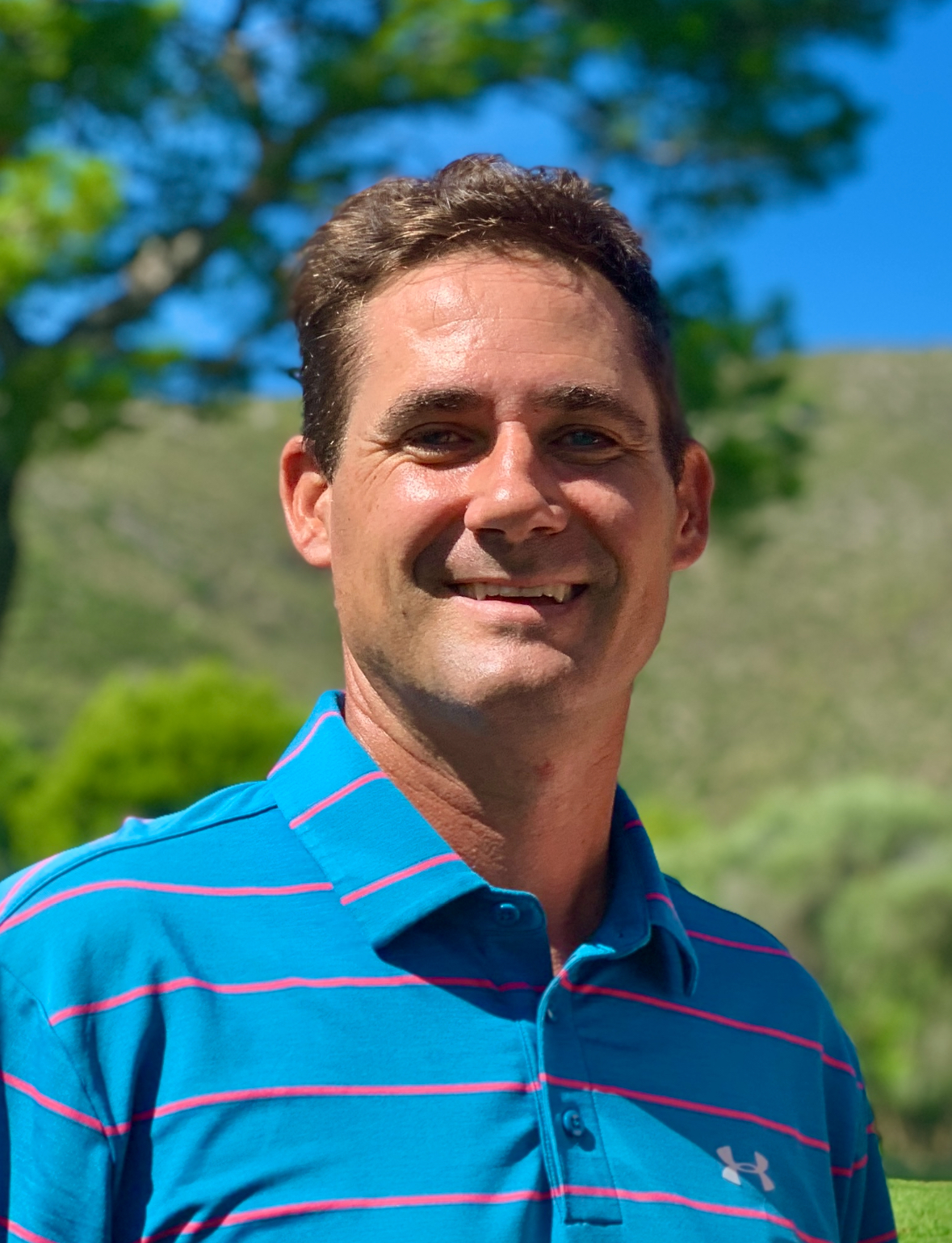
Michel Monnard – PGA Golf Teaching Professional | Golf Education & Player Development
Owner
Location
Capdepera Golf, Mallorca
Grown up in
Gossau SG, Switzerland
Languages
In golf coaching, language is more than basic communication. Over the years, golfers have repeatedly confirmed something simple: ideas only work when they are explained clearly and with the right nuance. Golf is already a demanding learning process, and fluent, controlled language makes it easier. Broken or overly simplified language usually does the opposite.
As your understanding grows, my input naturally becomes smaller. That is the best sign that your learning process is working.
Qualifications
- Member of the PGA of Spain
- Técnico Deportivo de Golf (Spanish official golf coaching qualification)
- Listed as a golf professional by the Balearic Golf Federation
Further education and professional development
- Accredited Instructor – Putting Schools (Harold Swash), Level 2
Advanced education in putting mechanics, stroke structure and cause-and-effect relationships in putting, led by world-renowned putting coach Phil Kenyon. - TPI Certified Golf Fitness Instructor
Understanding how physical capabilities influence movement patterns and swing efficiency. - TPI Certified Junior Coach – Level 2
Long-term athlete development, age-appropriate learning and motor skill progression in junior golfers. - TPI Certified Golf Professional – Level 2
Advanced integration of biomechanics, swing patterns and player tendencies. - TPI Certified Power – Level 1
Speed, ground interaction and efficient force production in the golf swing. - Short Game & Wedge Play – James Ridyard Wedge Matrix
Structured approach to wedge distances, spin control and shot selection around the green. - Director of Golf Facilities – Advanced Diploma (University of Castilla-La Mancha)
Academic training in golf facility management, operations and long-term development structures.
Over time, I have completed many additional courses and attended daily workshops. Not all of them are listed here, intentionally.
What matters to me is not the number of certificates, but whether the knowledge behind them improves the learning experience for the golfer standing in front of me.
Continuous education is only useful when it leads to clearer explanations, better decisions and more confidence on the golf course.
What we work on in lessons
Over the years, certain topics come up again and again in coaching. Not because they are fashionable, but because they have a real impact on how golfers play, decide and score.
My work usually focuses on combinations of the following areas, always adapted to the golfer in front of me:
- Swing fundamentals and strike quality
Learning new clubs, expanding basic shot types, improving contact consistency and direction control across the whole set. This is not about building a “perfect swing”, but about creating movements that hold up under real conditions. - Ball flight understanding and control
Helping golfers understand why the ball starts where it does, why it curves, and how small changes influence direction and outcome. This applies equally to irons, woods and wedges. - Short game structure and feedback
Chipping, pitching, bunker play and putting, approached with clear concepts and measurable feedback so progress becomes visible and repeatable, not guesswork. - On-course decision making, shot planning and strategy
Club selection, target choice, risk management and recognising recurring situations on the course. This also includes golf shot planning: understanding what the shot needs to achieve, choosing a target that fits your dispersion and checking whether the required trajectory and margin for error actually fit the situation. The goal is fewer emotional decisions and more logical, repeatable ones. - Round and hole planning
Preparing rounds in advance, understanding when patience is required and when aggression actually makes sense, always relative to the golfer’s own ability level. - Practice structure and self-coaching skills
Learning how to practise with purpose, how to test skills under pressure and how to recognise and correct problems independently over time.
Not every golfer works on all of these areas at once. Part of my job is deciding what matters now, and what can wait.
This is where experience makes the difference:
setting priorities, connecting topics instead of isolating them, and guiding development so improvement shows up where it counts, on the course.
How my coaching works
My coaching is grounded in modern sports science, biomechanics and learning research. These tools help me decide what makes sense. Teaching, however, means translating that knowledge into a form that is useful for the golfer standing in front of me.
Some players benefit from understanding cause and effect. Others play better when information is reduced to simple tasks, images or feels. Both approaches are based on the same foundation – only the language and depth change.
I do not teach theory for its own sake. Science works in the background. On the lesson tee, clarity, relief and practical application matter more than terminology.
That also means I am not limited to one teaching style. When a situation requires it, I can introduce clear corrections quickly and effectively. Short-term adjustments are sometimes necessary to restore confidence, safety or basic control.
At the same time, I am careful about why something is changed and how it fits into the bigger picture. Quick fixes are used when they help. Deeper changes are developed when they are realistic and sustainable.
Some golfers want technical clarity. Others need simplicity. Most need a combination that changes over time. My role is to recognise what helps now, and what should be built step by step.
This flexibility does not come from a teaching theory alone, but from years of experience working with very different golfers, goals and situations.
I can’t afford to follow a rigid, pre-defined system. After learning, we always test new elements on the course to see if they actually hold up under real conditions. Depending on how quickly you progress, we repeat, simplify, or build the next step. The balance between driving range and course work changes from day to day, because that is how real learning works in golf. Progress is rarely linear; it develops through small adjustments and steady steps.
Together with Tobias Widmer, I work as part of the Golf School Monnard Widmer at Capdepera Golf Mallorca. While my focus is particularly on learning processes, player development and methodology, Tobias places greater emphasis on practical transfer and reliable performance on the course.
If you’d like a deeper look into how our system works, from teaching philosophy to training structure and on-course application, you can explore it here:
- Our teaching philosophy – the principles behind how we think about golf and learning
- Our teaching methodology – how we structure learning and training, and long-term development
- How we decide what to change: our process for choosing what to adjust and what to leave alone
- Verified reviews from golfers who trained with us
Teaching concepts and learning systems
Many of the concepts used in my coaching have developed from recurring situations in daily lessons and on the golf course. I document these areas in more detail so golfers can understand not only what we work on, but also how the different parts of learning, practice and decision-making connect.
- Golf Learning System
The overall framework connecting learning, practice, decision-making and play on the golf course. - Golf shot planning
How golfers read a situation, define the task of a shot, choose a target and build a realistic plan before they play. - Playable Windows
How available space, ball flight, trajectory, height and margin for error determine whether a shot is actually playable. - Practice Lab
How golf skills are developed, tested and adapted through structured practice before they are transferred to changing situations on the golf course. - Strategy Lab
Decision-making and strategy on the golf course, using real playing situations to understand risk, options and consequences.
[booking]


